

Story
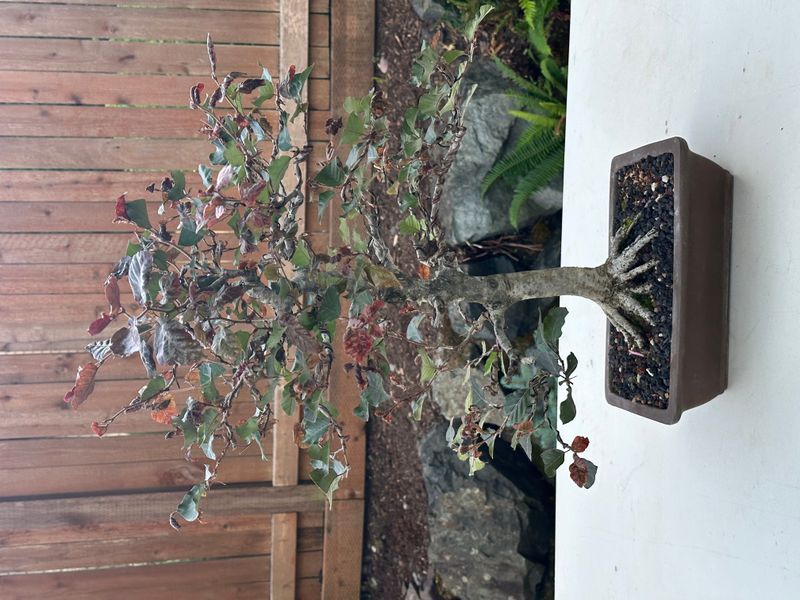
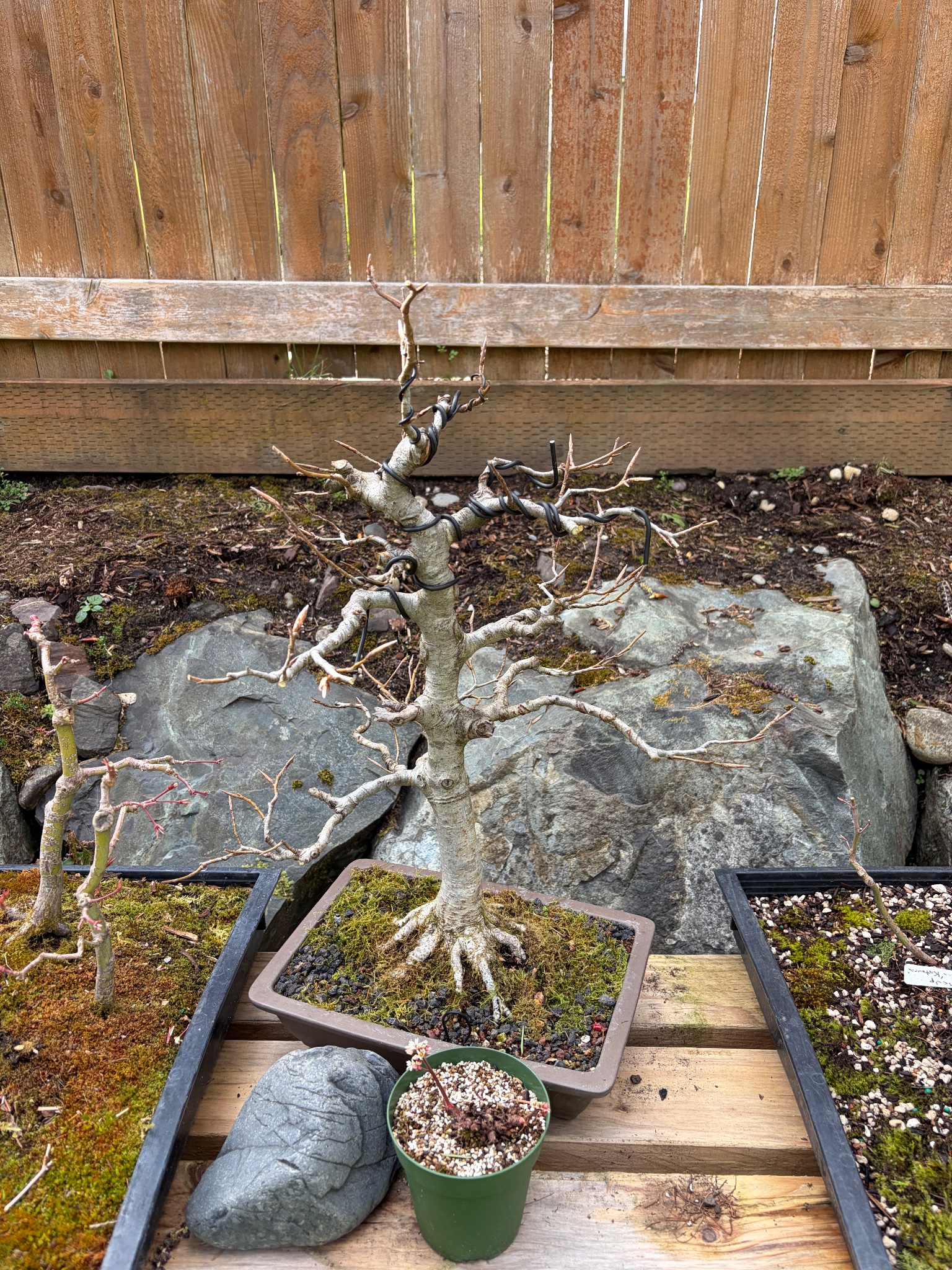
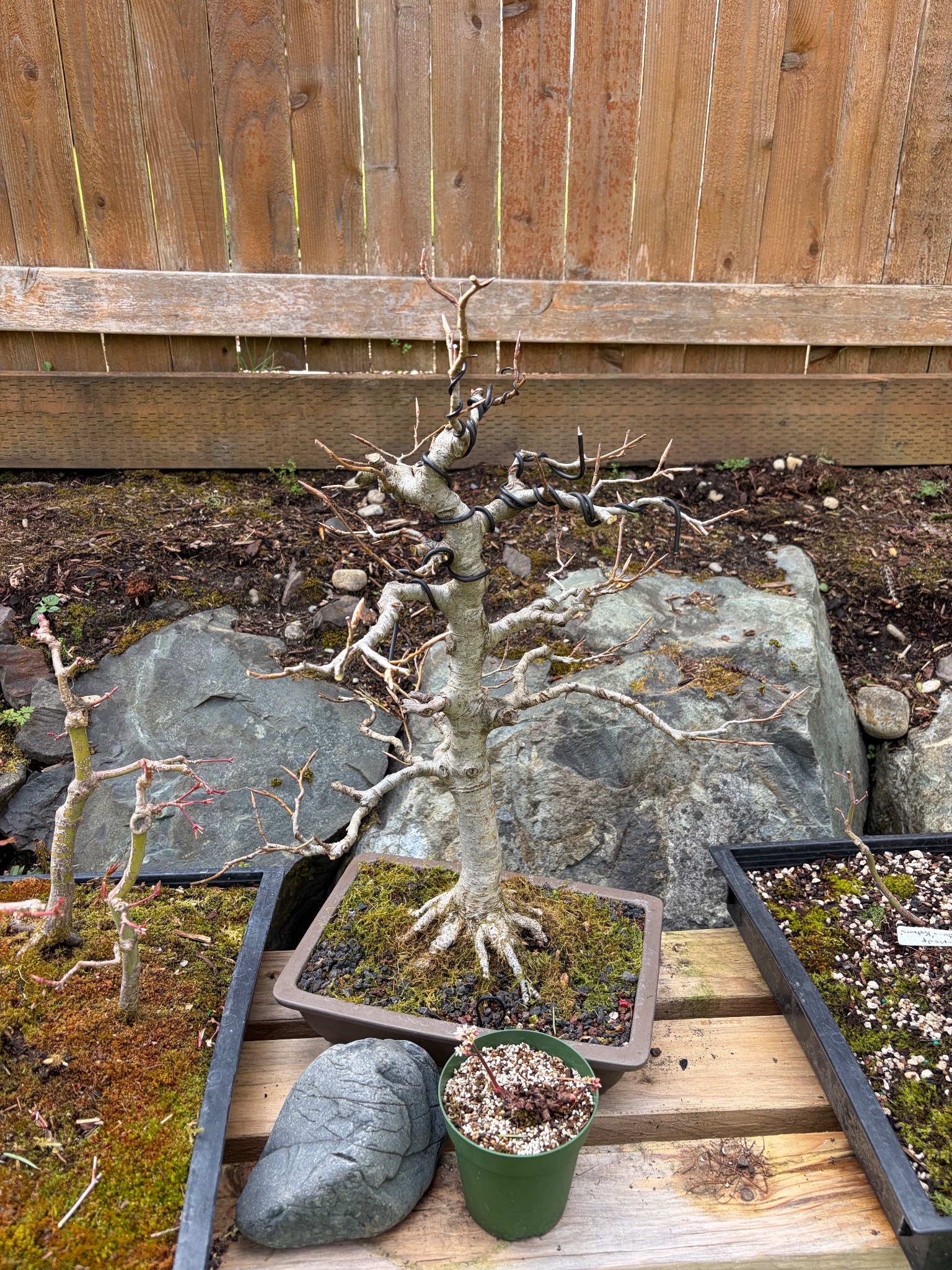
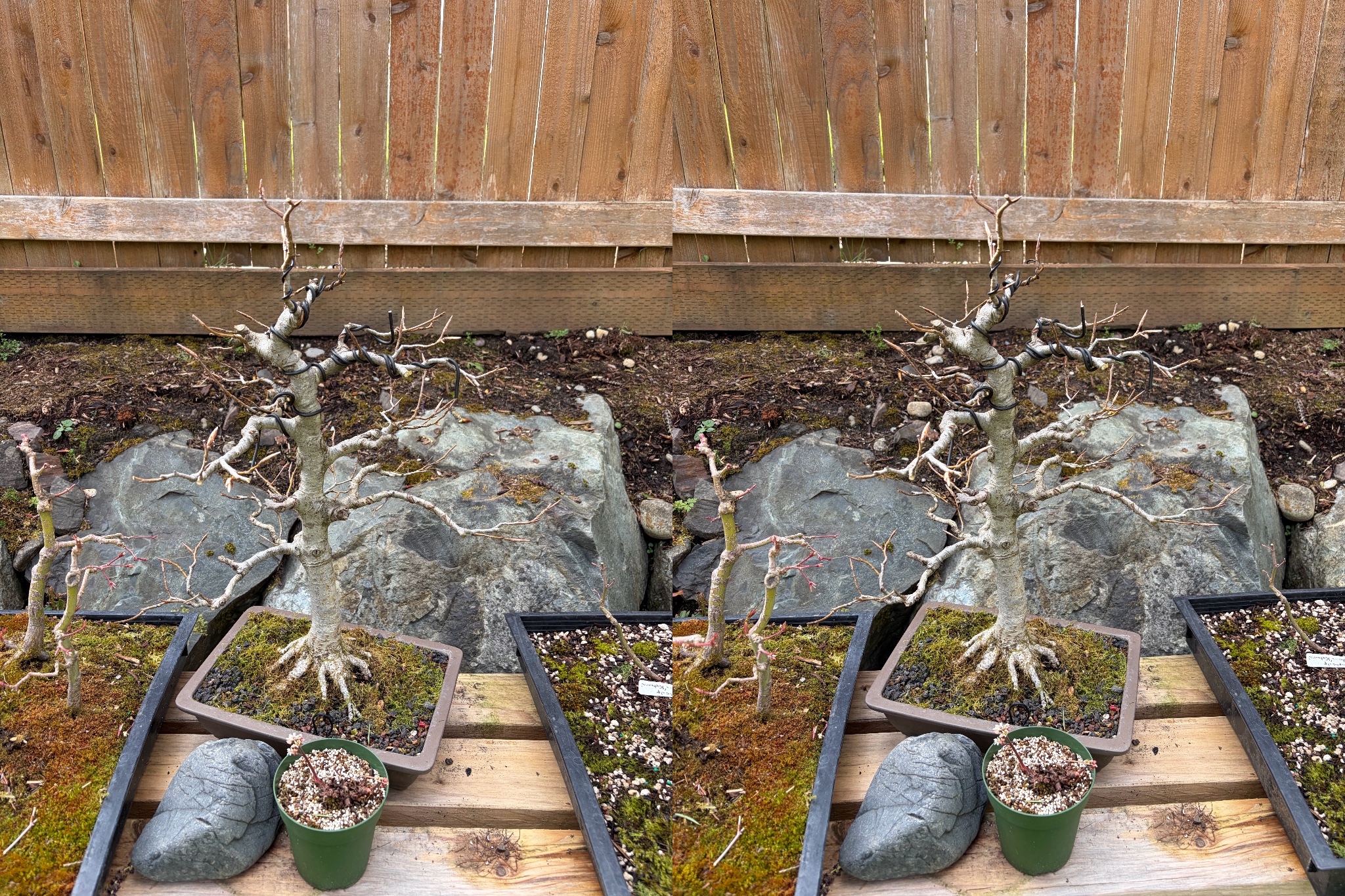
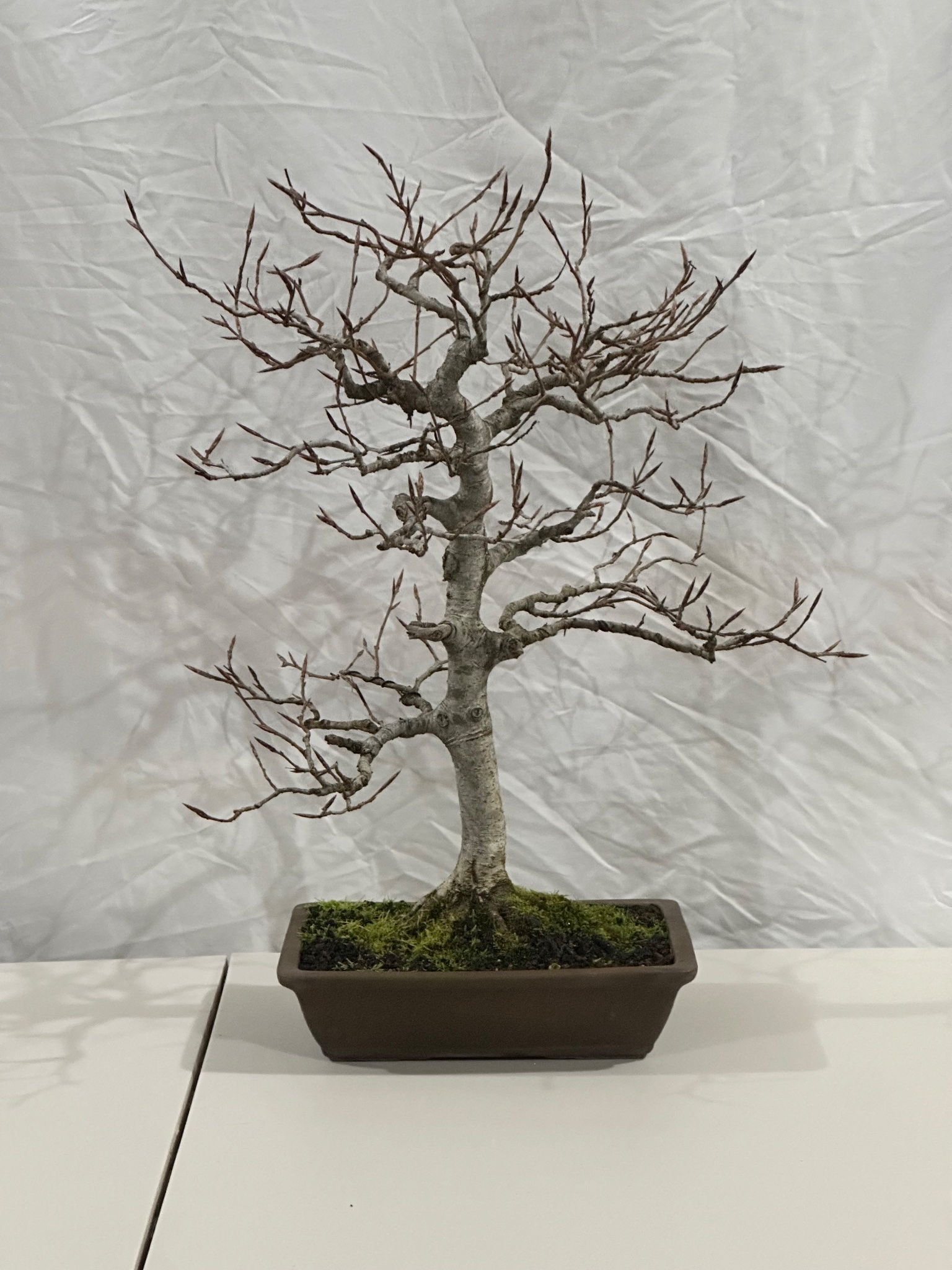
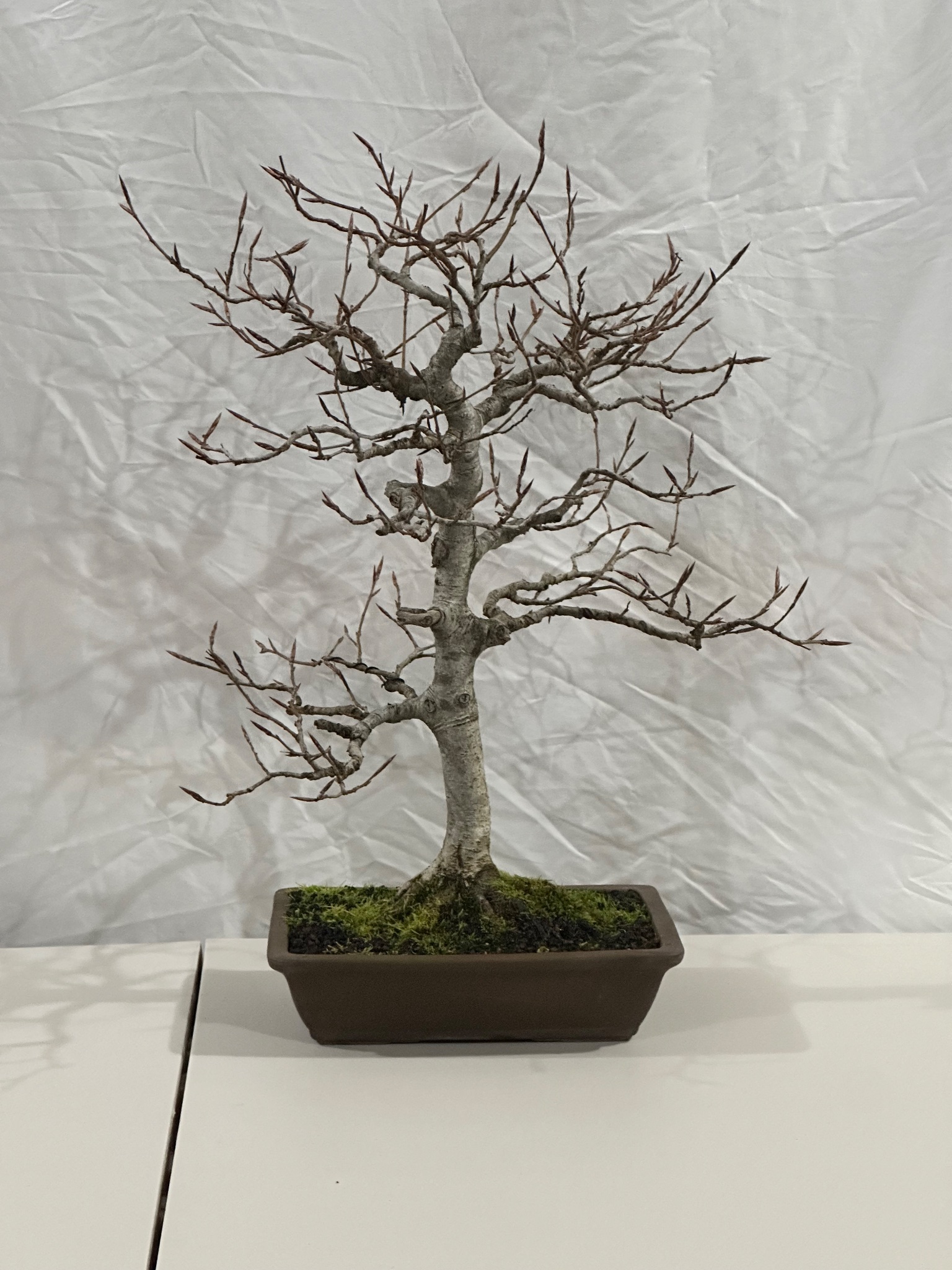
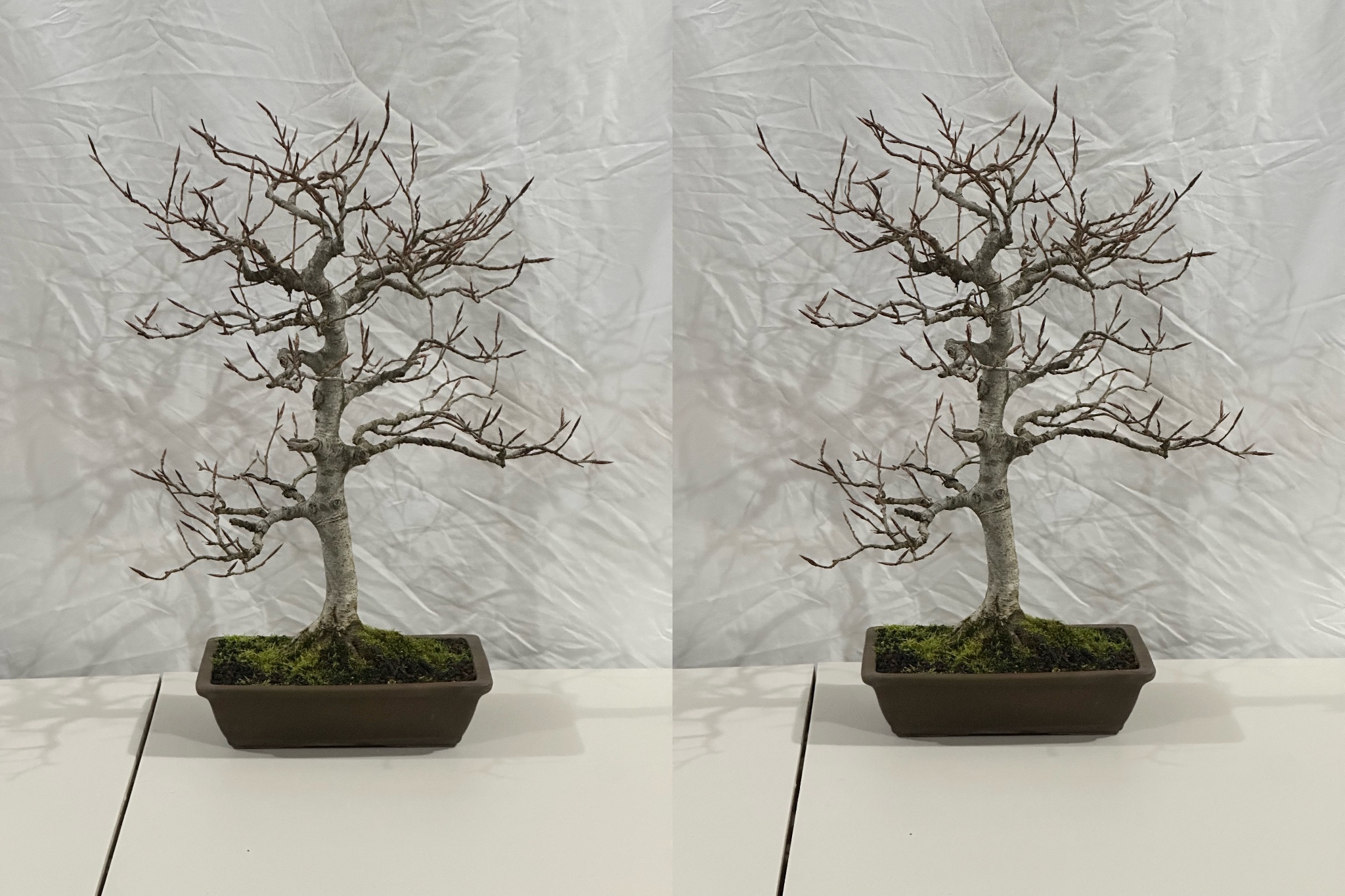
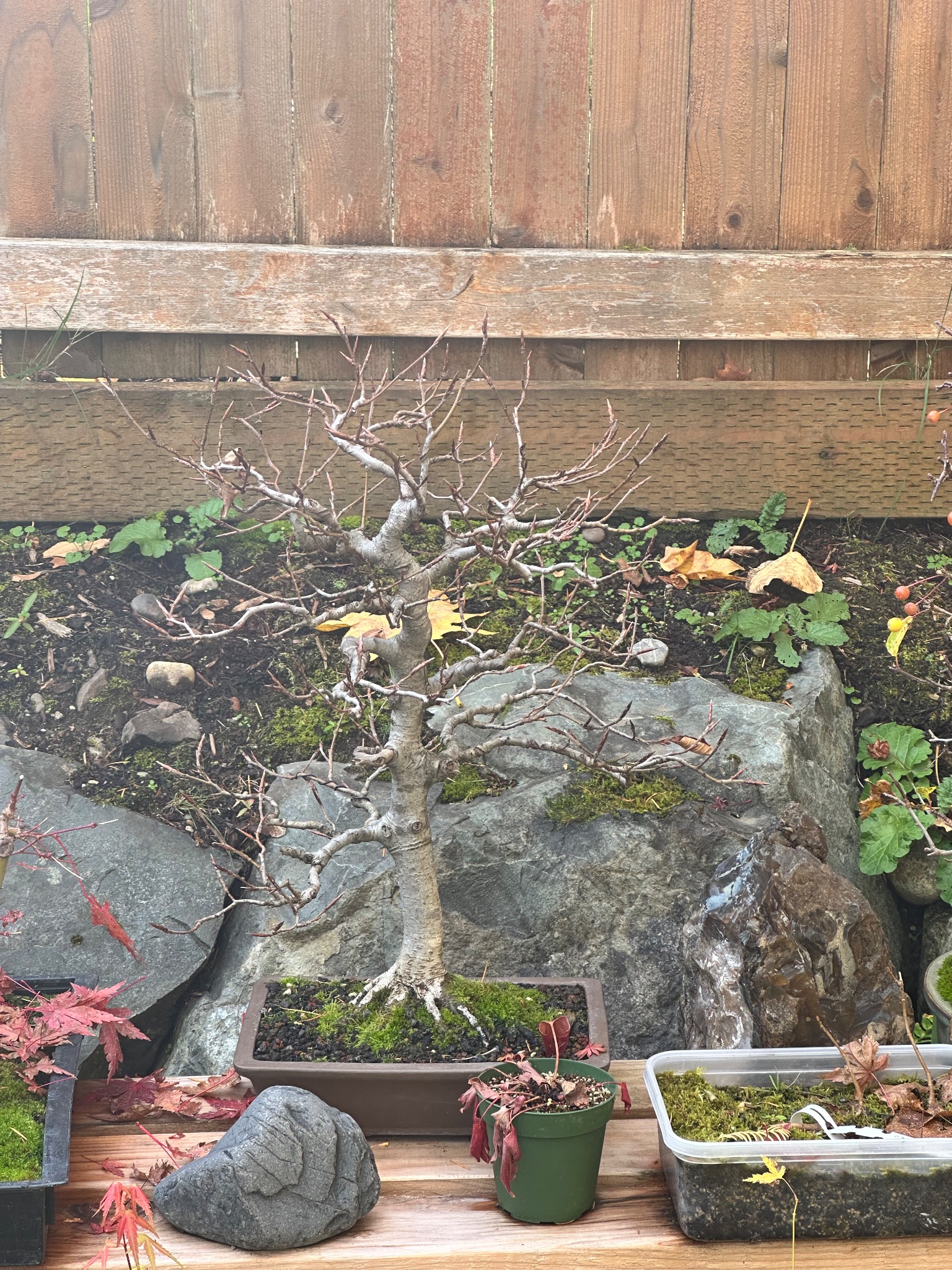
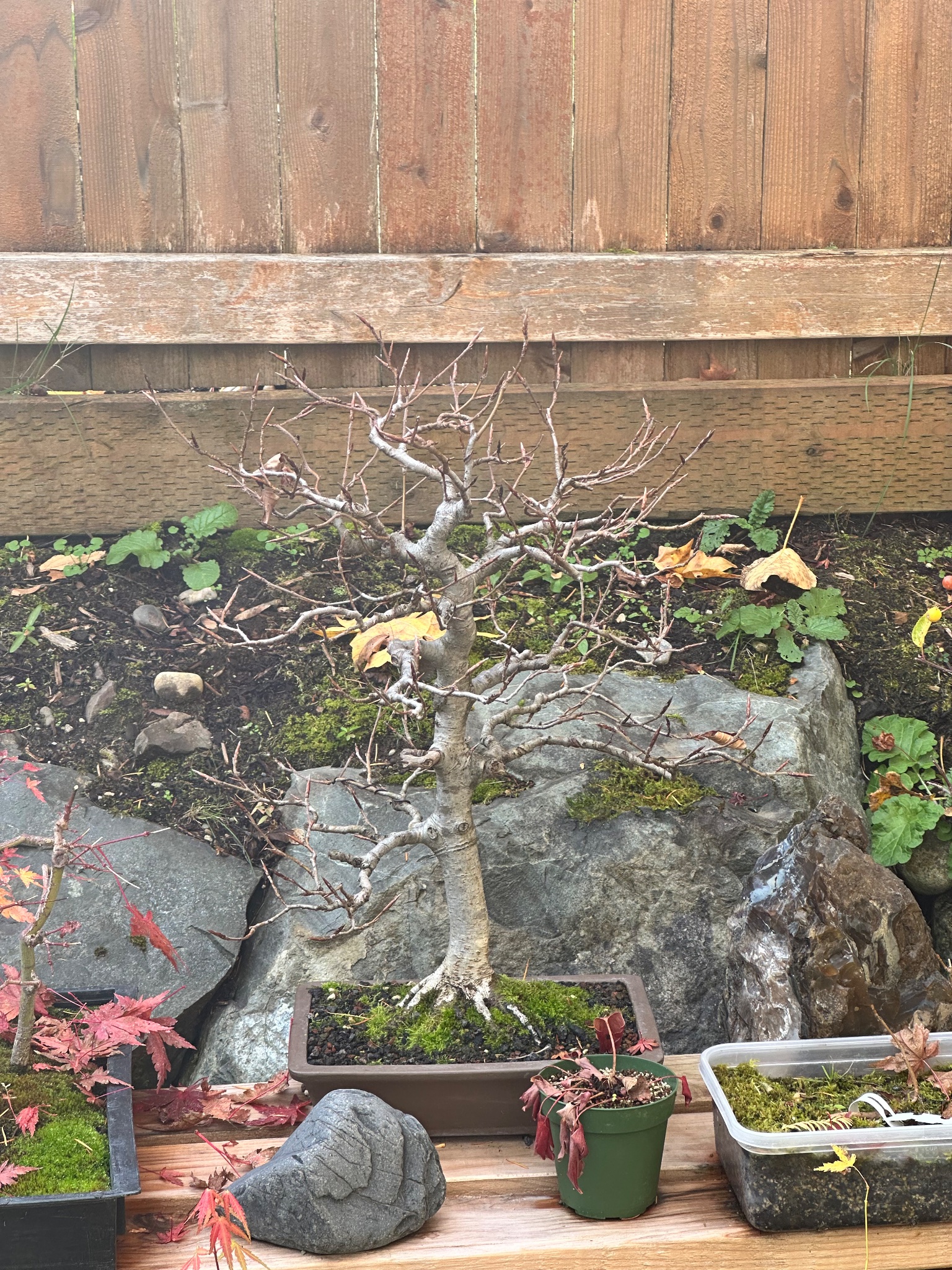
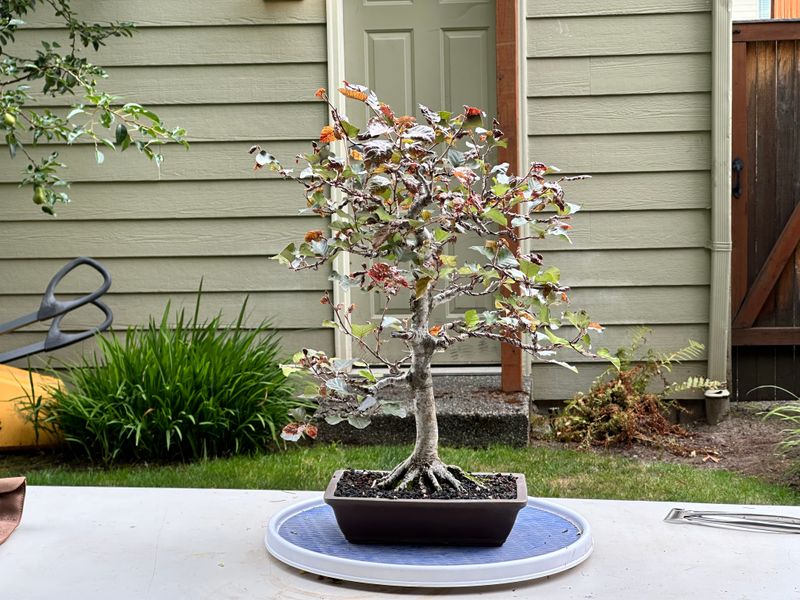
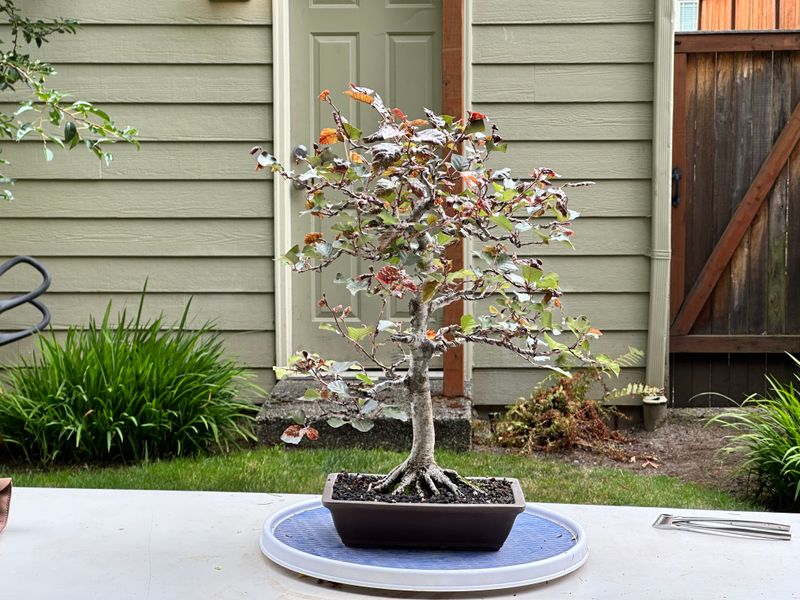
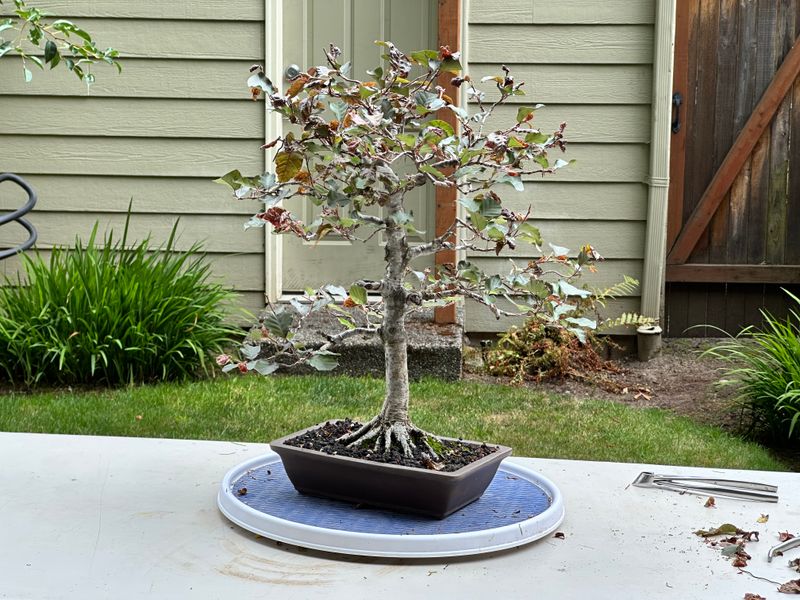
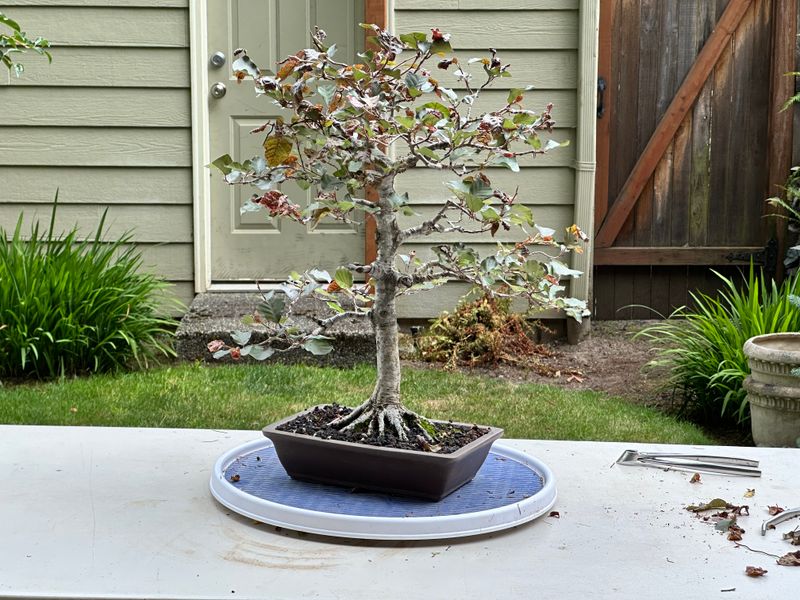
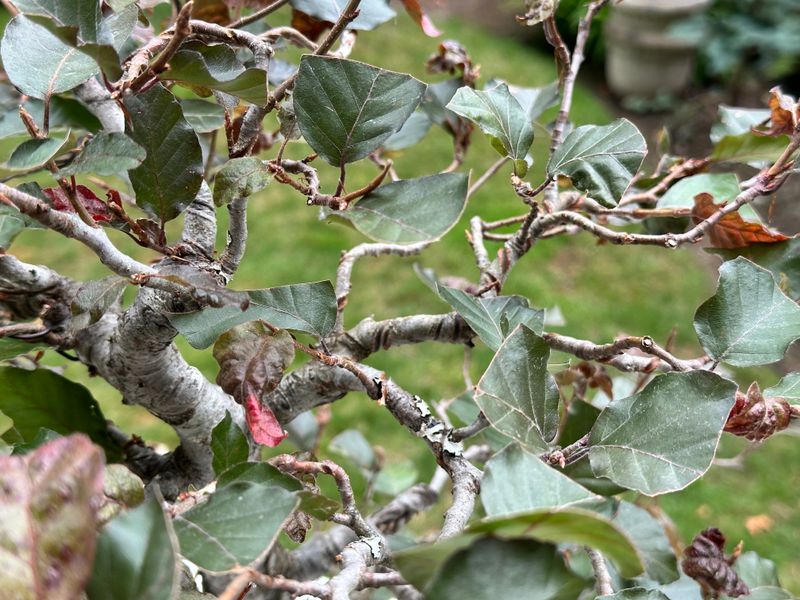
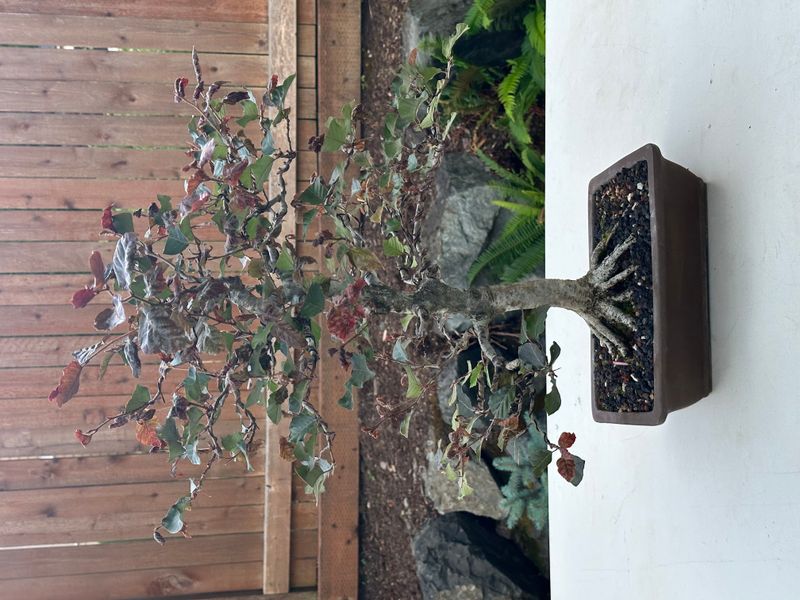
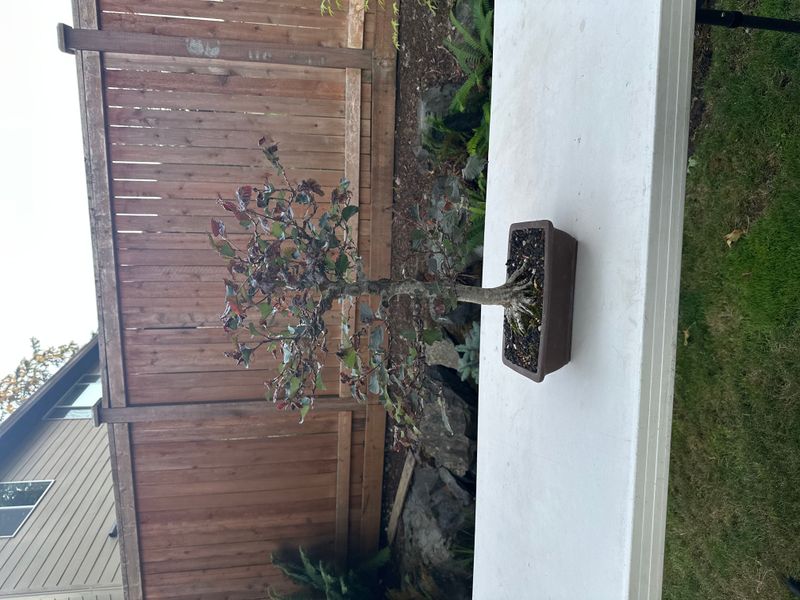
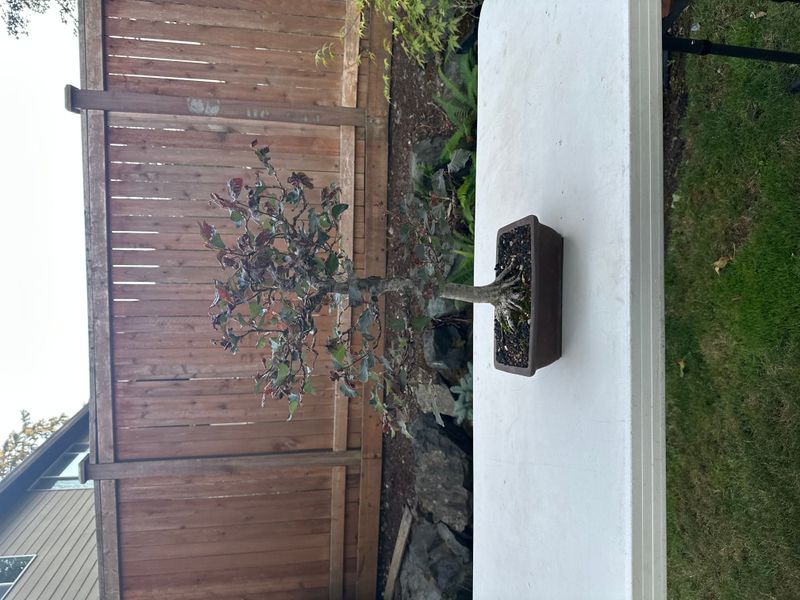
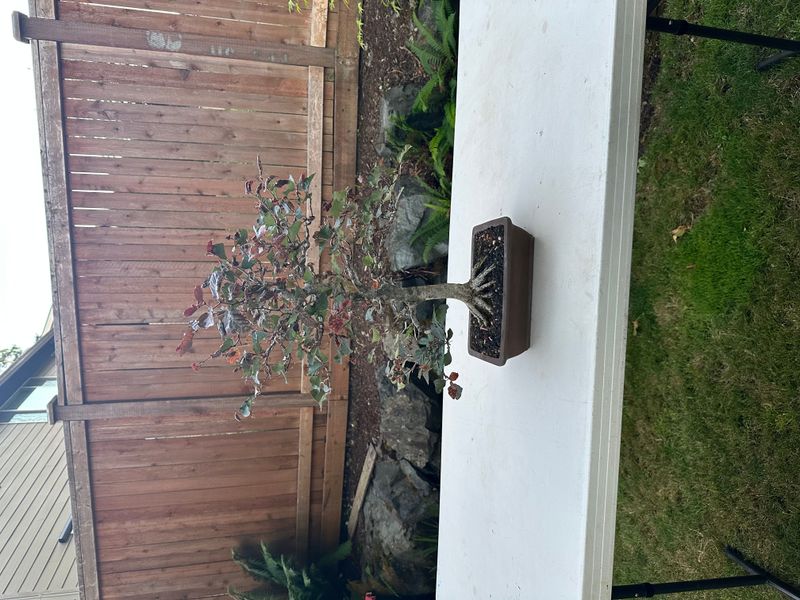
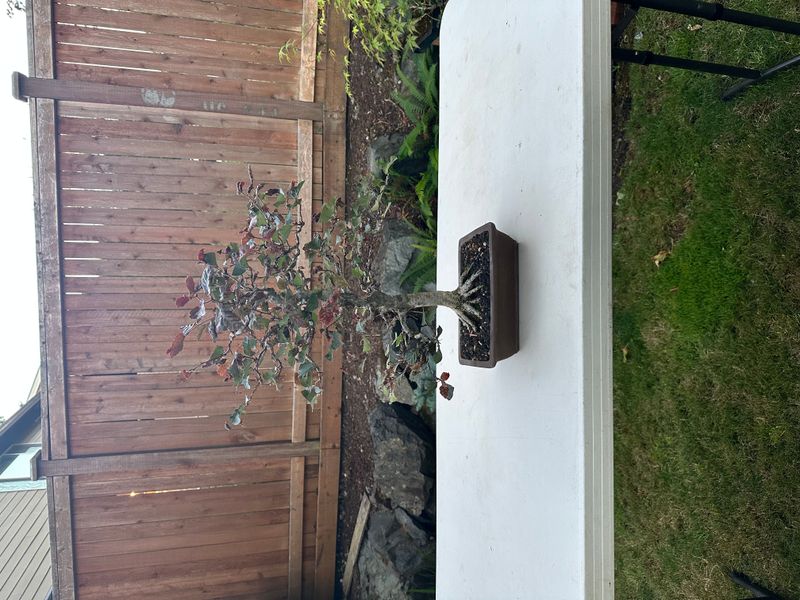
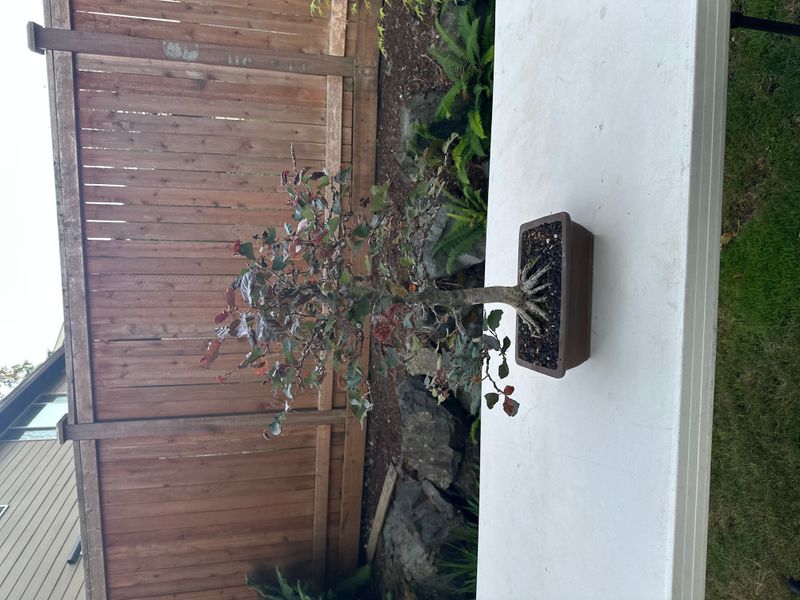
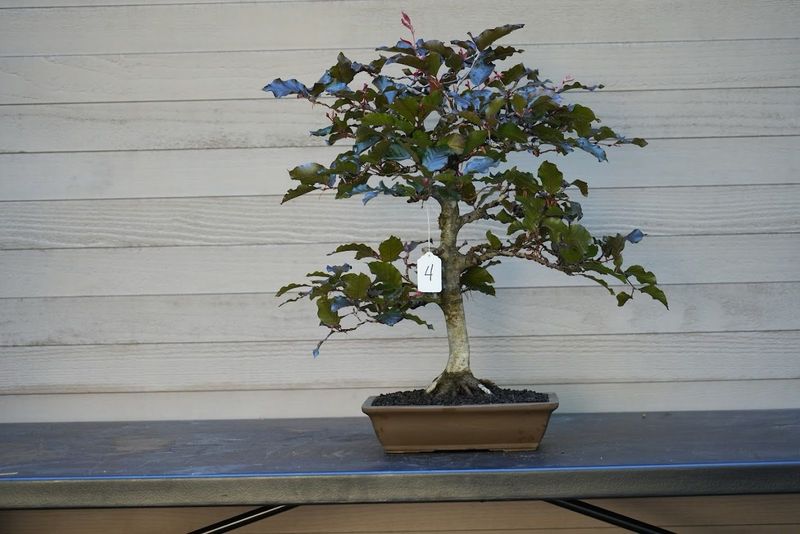
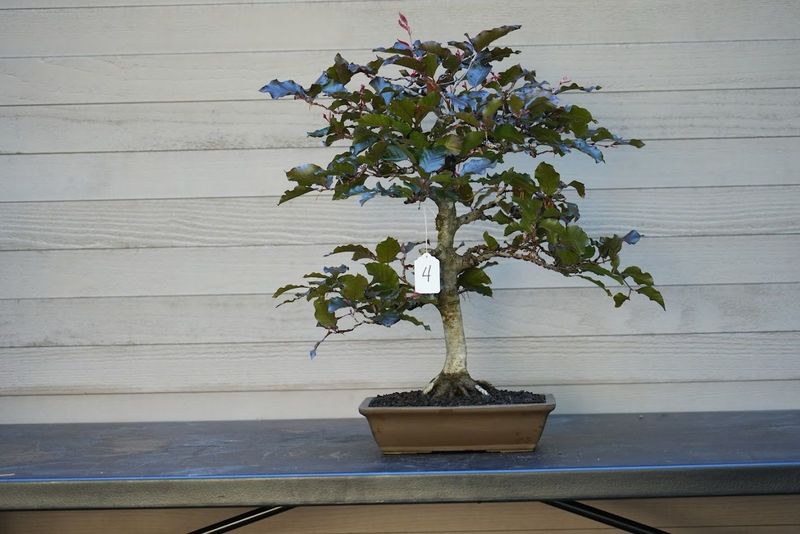
This copper beech carries over a decade of refinement and a lineage that likely stretches back to Lone Pine Nursery in California. Styled in an informal upright form, the tree now stands at 22 inches tall, its silhouette a balanced canopy of deep purple foliage and textured gray bark. The base flares gently, with firm nebari anchoring it to a clean, rectangular pot.
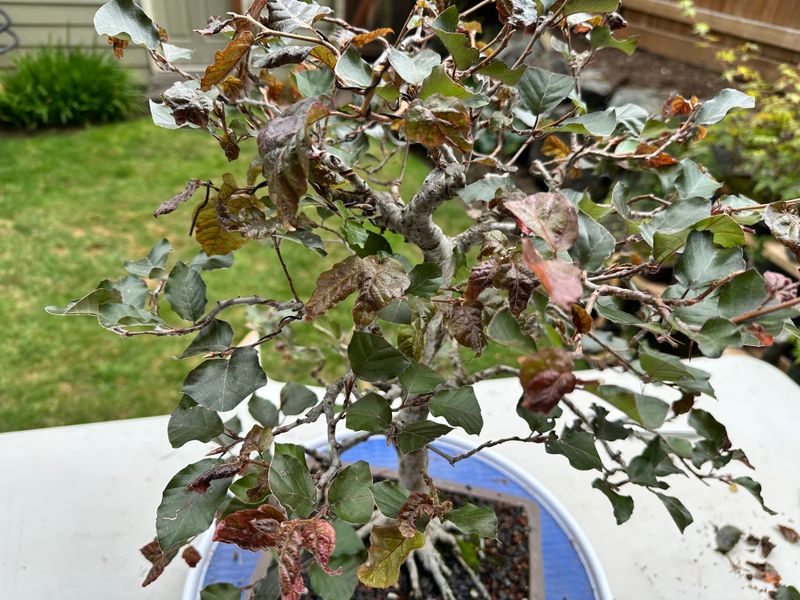
Acquired through the 2025 PSBA auction, this beech has responded well to careful leaf pruning and sensitive seasonal work. New growth has emerged following a reduction cut, offering promising internal budding and structure refinement. While not yet exhibition-ready, its structure is clear and its presence already compelling.
This is a tree of quiet resilience, a tree that doesn’t shout, but listens. Its branching is imperfect, its trunk marked by the shaping of time and intention. The more you sit with it, the more it offers. It’s not here to impress. It’s here to endure, to invite, and to teach.
10-Year Plan for {{title}}
This tree has already been listened to. Now it needs time to be understood. I don’t feel the need to push this tree. I’ll walk beside it, season after season, until it slowly becomes something inevitable.
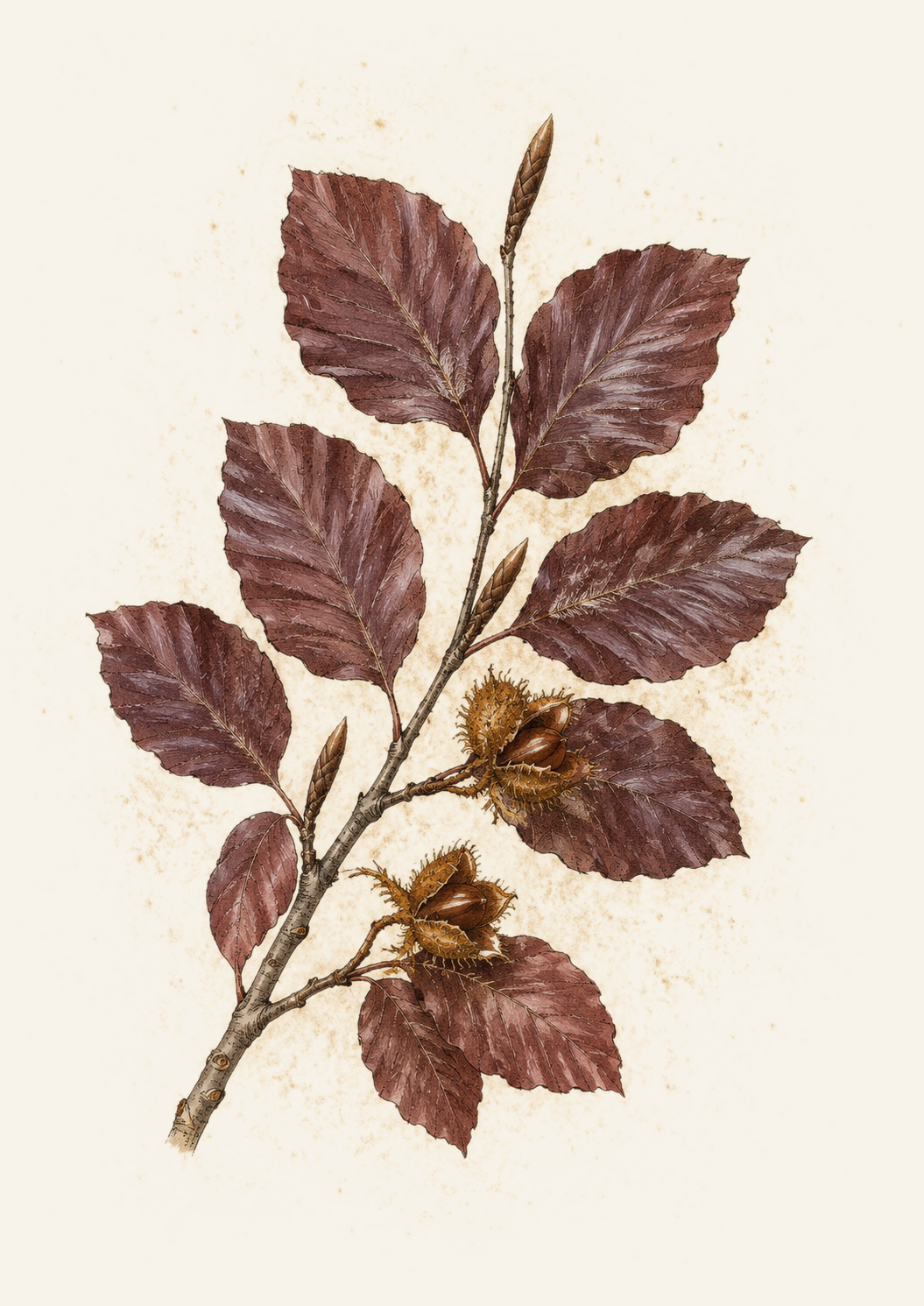
A copper beech doesn’t bloom. It doesn’t fruit. But it still dazzles.
Treated with patience, light, and dignity, it carries a richness and depth that other trees can’t fake.
In ten years, this tree won’t just be refined.
It’ll be quietly unforgettable.
Years 1–2: Stability, Light, and Observation
-
Let the tree recover from recent stress: heat, leaf work, and rewiring. No aggressive pruning.
-
Focus on watering precision and light seasonal misting. Copper beech prefers even conditions, not extremes.
-
Begin slow refinement:
- Thin interior growth to encourage back budding.
- Continue leaf reduction mid-season if health supports it to allow light internally and balance energy.
- Map the branch zones: Which will be primary structure? Which are temporary fillers?
My goal is to learn the tree’s behavior - where it wants to bud, where it resists, how it responds to heat and cuts.
Years 3–5: Structural Refinement and Form
- Early spring: clean structural pruning, refine trunk-line branches, and begin taper development on secondaries.
- Use guy wires or clip-and-grow over aluminum wire wherever possible—scarring is a long-term liability on beech, and already an issue I have to deal with.
- Continue selective defoliation mid-season, only on strong areas, to tighten internodes.
- Repot once during this period (year 3 or 4), just before bud swell. Maintain strong nebari and radial root health.
This phase is about unlocking the tree’s internal architecture, building rhythm without rushing detail.
Years 6–8: Ramification and Subtle Expression
- Focus shifts toward fine branching, silhouette layering, and balance.
- Begin seasonal silhouette shaping. Allow some flushes to extend, others to remain tight.
- If appropriate, lightly scarify or expose subtle deadwood zones to add age, but only if tree is vigorous.
- Consider upgrading the pot or planting angle if it strengthens the tree’s stance and balance.
This is when the tree begins to speak for itself. I should be mostly responding, not directing.
Years 9–10: Readiness and Sharing
- Prepare for possible display or photo documentation. Choose the season that best reveals the tree’s essence (early spring silhouette or late autumn foliage).
- Shift to minimal intervention: light pruning only, strong feeding early in the year, and stable watering.