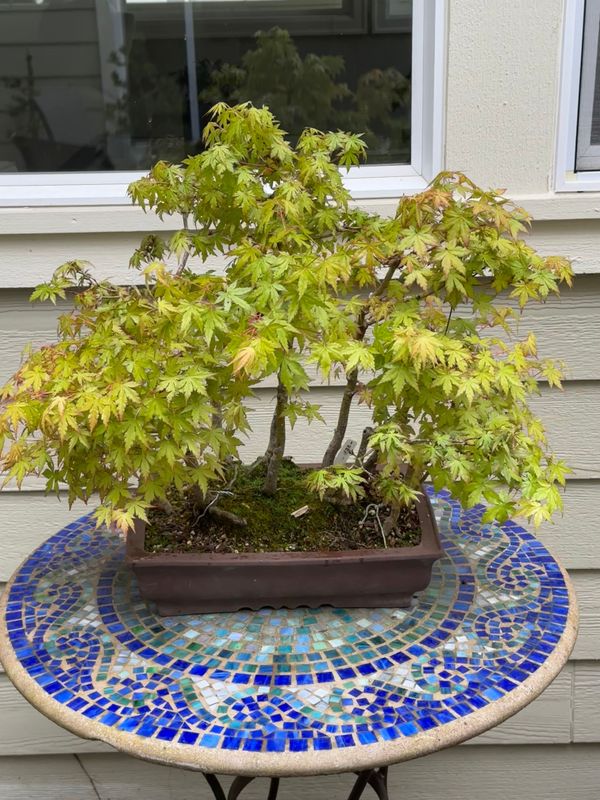
Japanese Maple 5

038-MapleJapanese-005

Japanese Maple 5

Sharp's Pygmy Japanese Maple

Japanese Maple 'Sharp's Pygmy' · Acer palmatum 'Sharp's Pygmy'

Bonsai
← PreviousJapanese Maple 44 of 6 · back to the benchNext →Japanese Maple 7

Tree facts

Acquired
2024-05-18
Training started
1994-03-01
Origin
1994-03-01
Last touched
2026-06-12
Container
—
Style
—
Size
—
Exhibition-ready
No

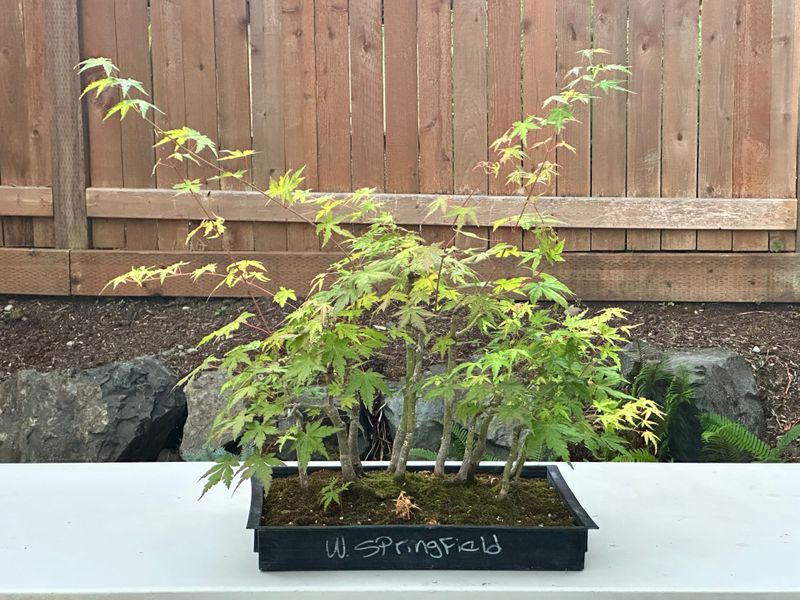
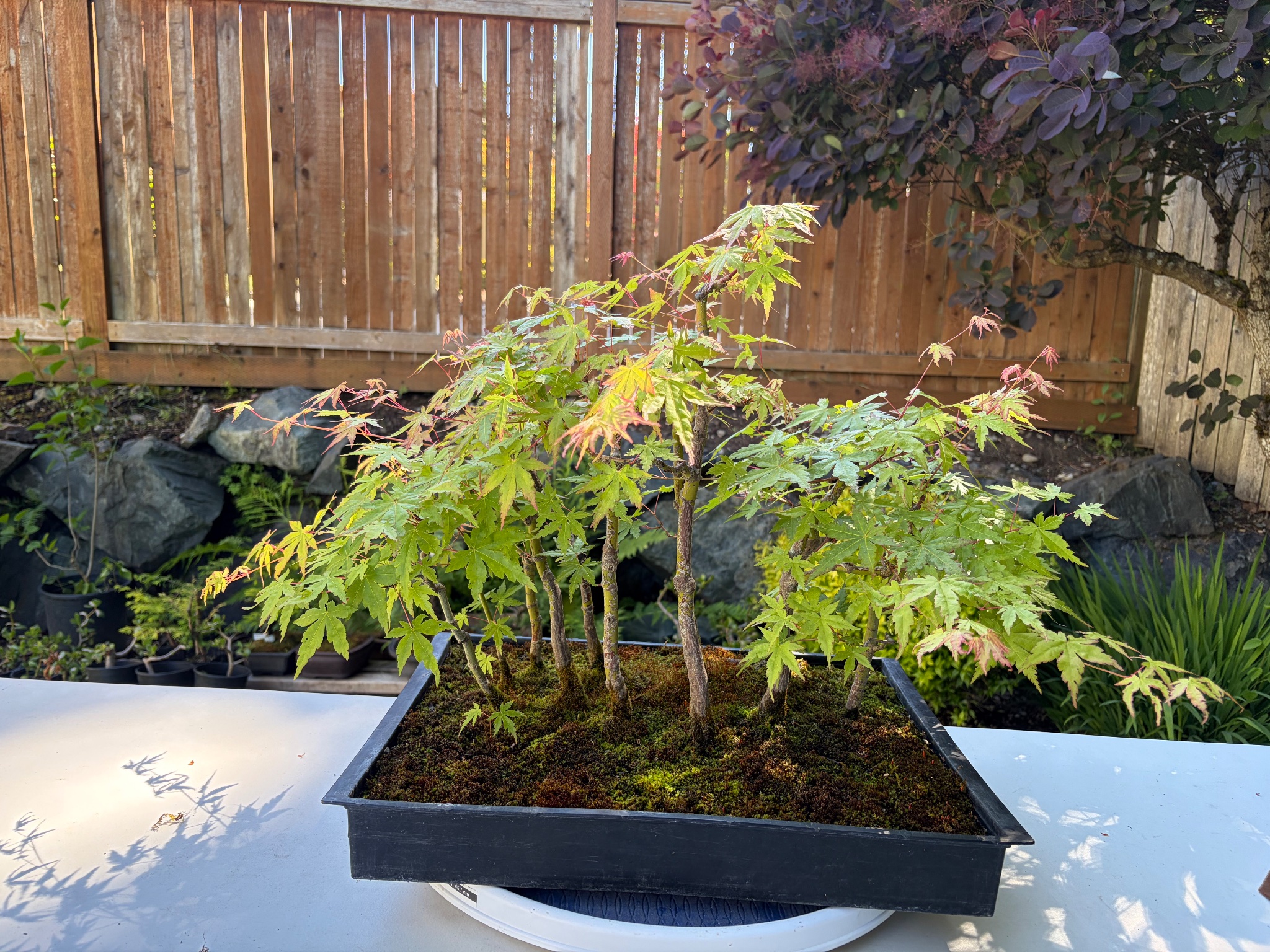
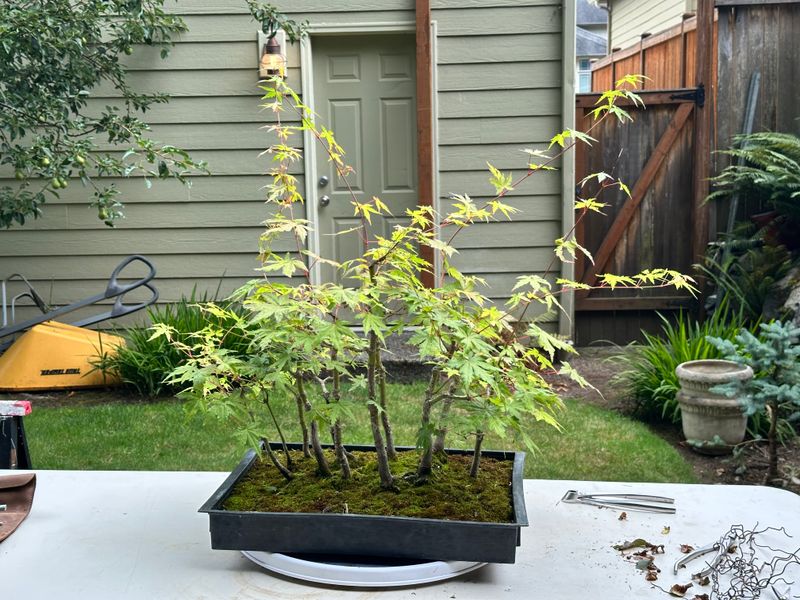
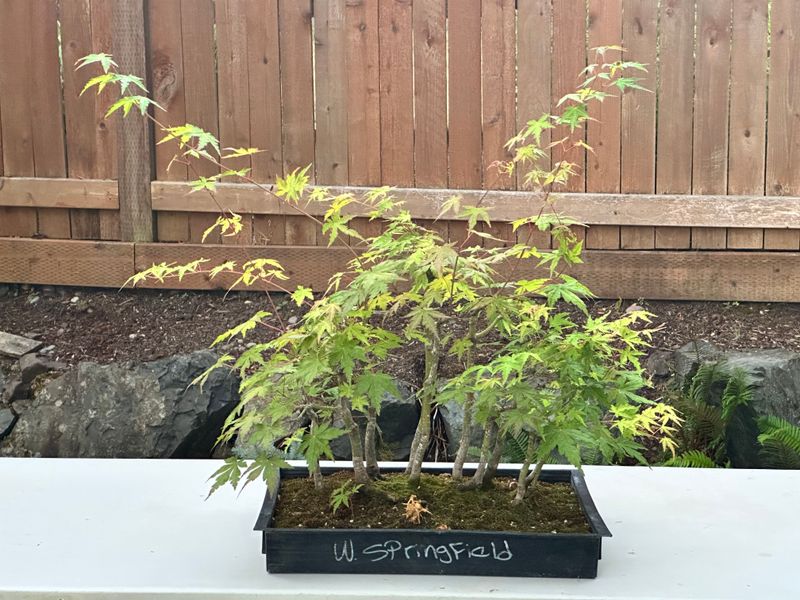
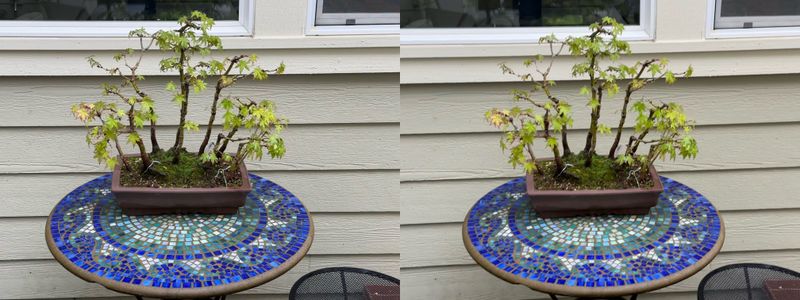
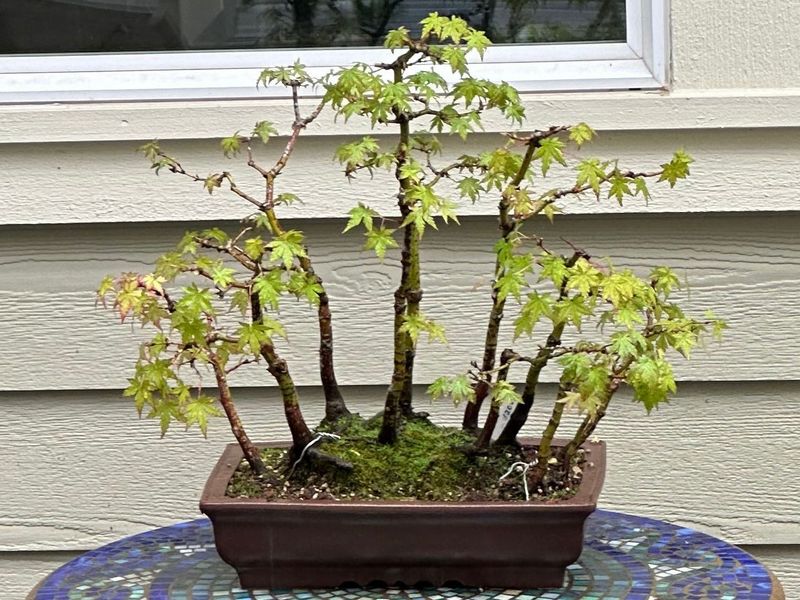
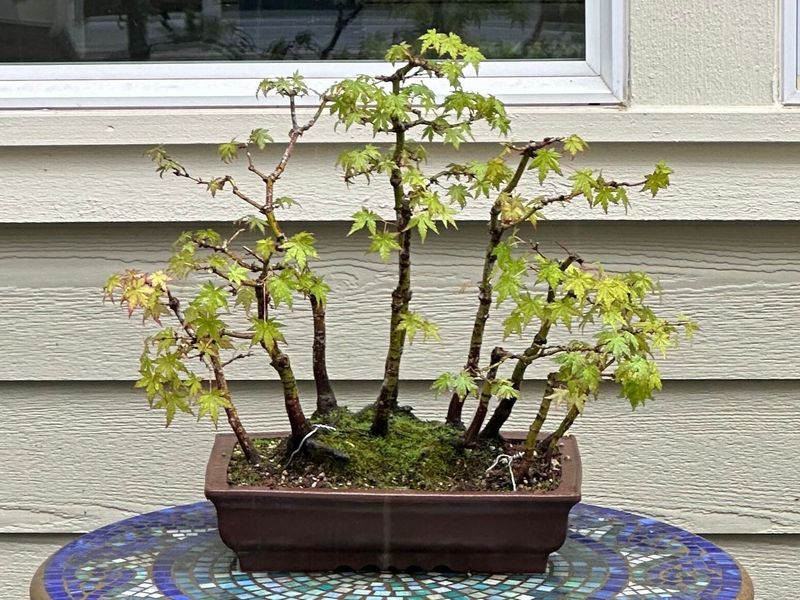
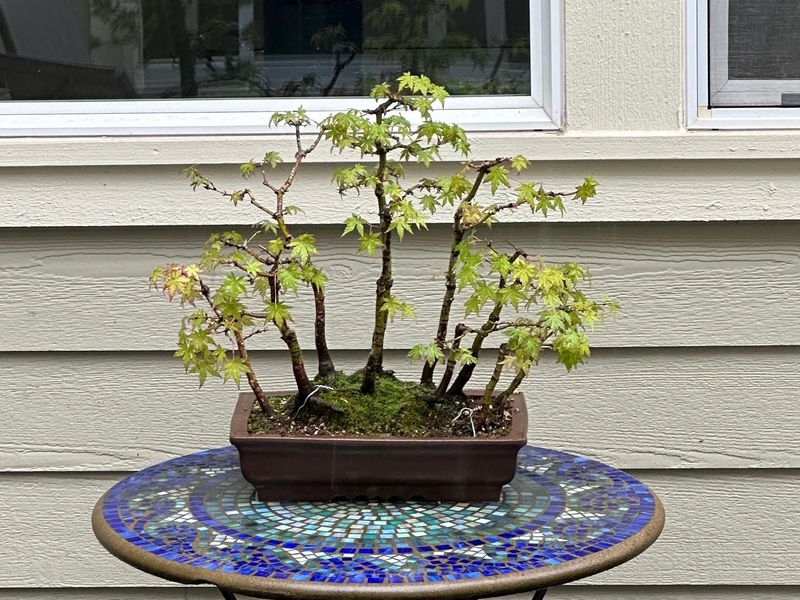
This was purchased at the estate sale of Janet Payne in Gresham, OR, upon losing her husband and bonsai enthusiast. It was facilitated by Lee Cheatle from the Portland Bonsai Association. I volunteered in the sale and was able to also pick up this beautiful forest. To be on time I drove down the night before and camped 30 minutes away in Paradise Point State Park, near Woodland, WA. It is an honor to become the next caretaker for this tree.

Current care

Mid Summer
Watering
Monitor daily; ensure no drought stress.
Fertilization
Taper nitrogen; hold feed during hottest weeks.
Pruning
Pinch back soft spring growth; wait until fall for structure.
Pests Disease
Check for powdery mildew in humid weather.
Summer Protection
Ensure root ball doesn’t overheat—shade or pot insulation.
View full seasonal calendar →

Recent activity

8
  • 2026-06-12Fertilize
    BenchFertilized with liquid fertilizer.
  • 2026-06-12Prune
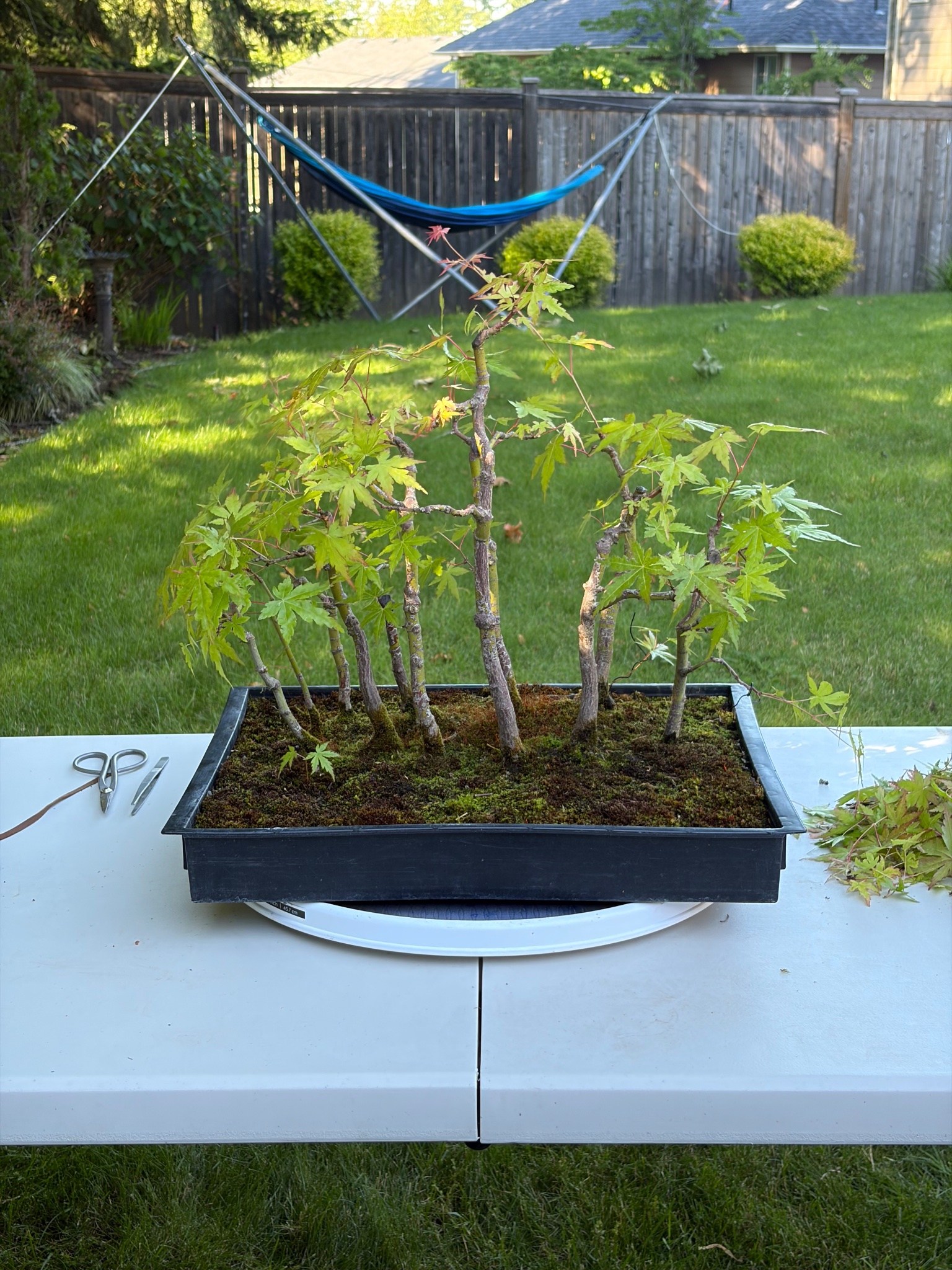
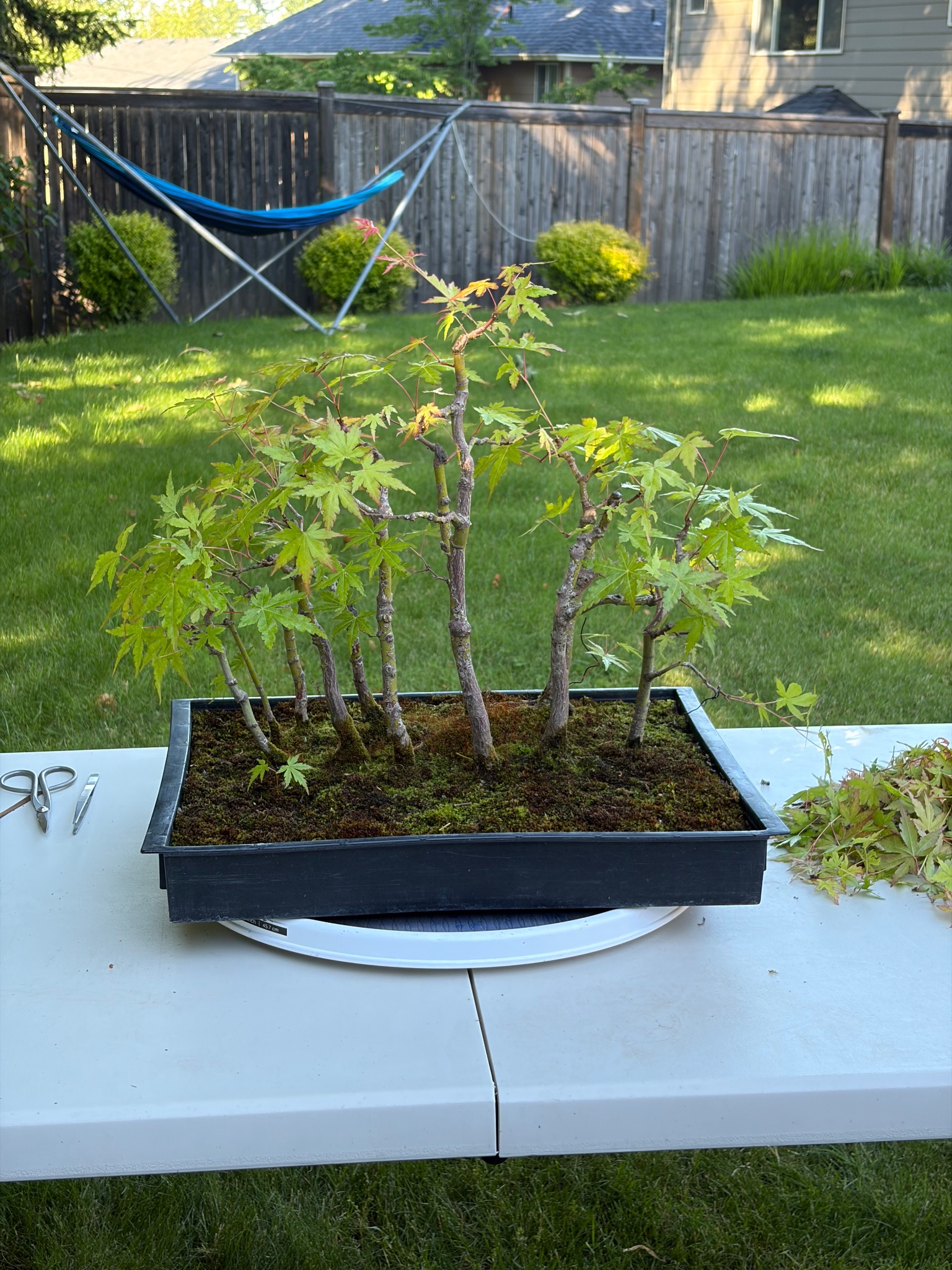
    Back YardPruned shoots to control internode length, pulled Irish moss and weeds.
  • 2026-04-04Prune
    Back YardPinched new branching to control internode length
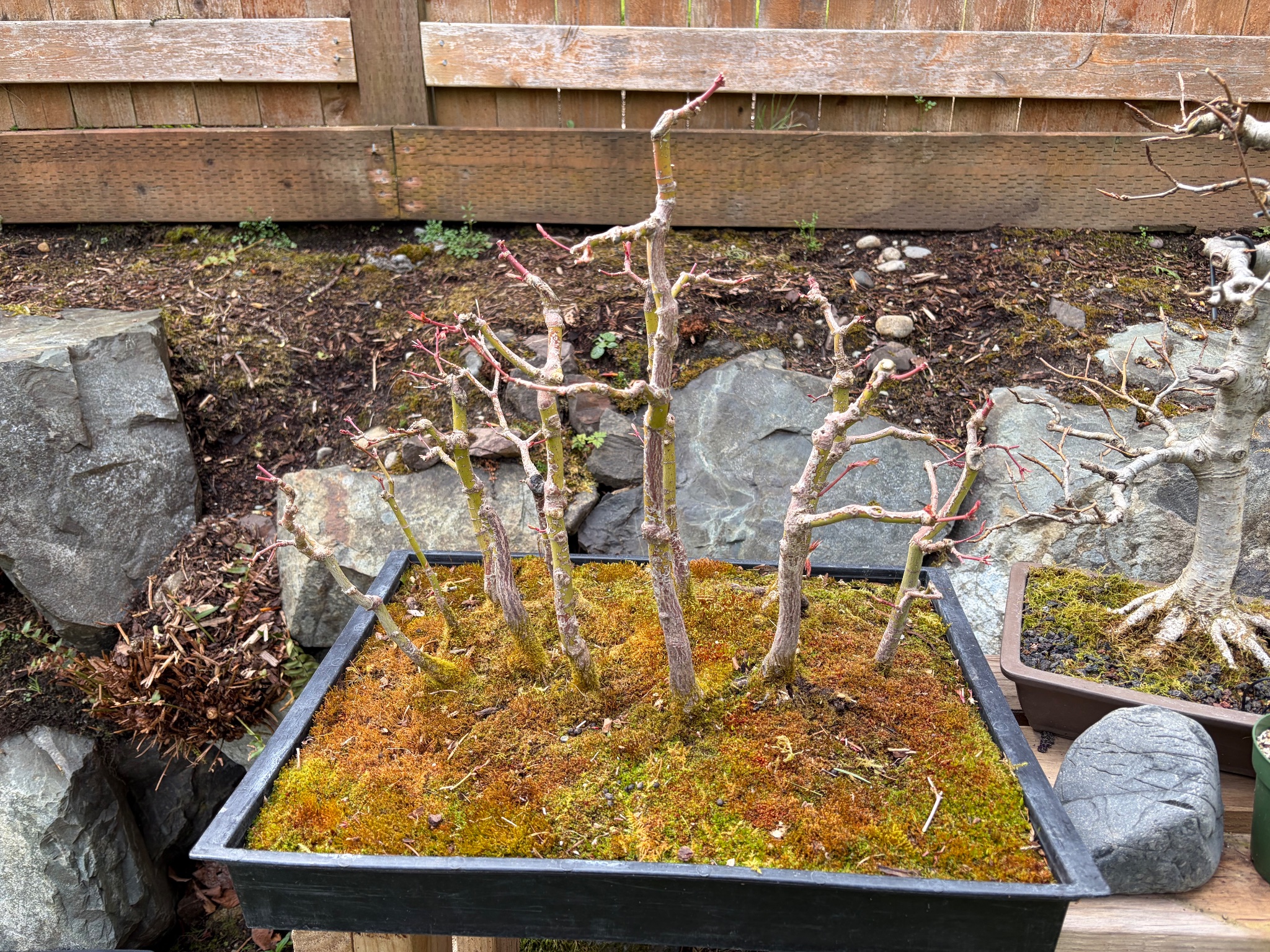
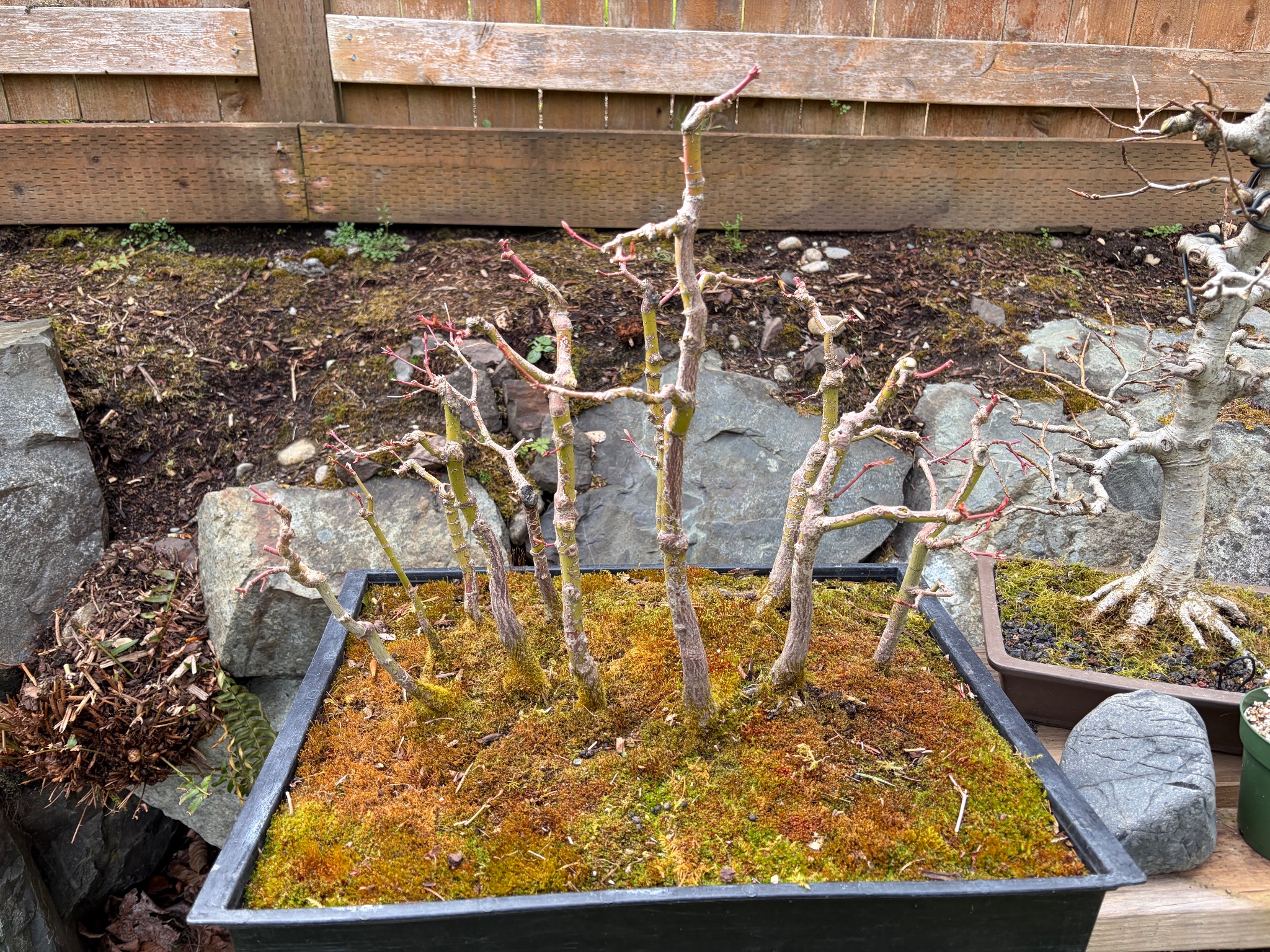
  • 2026-03-28Observation
    BenchPushing spring buds
  • 2025-11-01Observation
    Study GroupFall happened.
  • 2025-10-24Observation
    BenchAutumn!
  • 2025-10-23Observation
    BenchBench Photo
  • 2025-09-11Observation
    Study GroupBench Photo
View full timeline →

About this tree

Read full story →

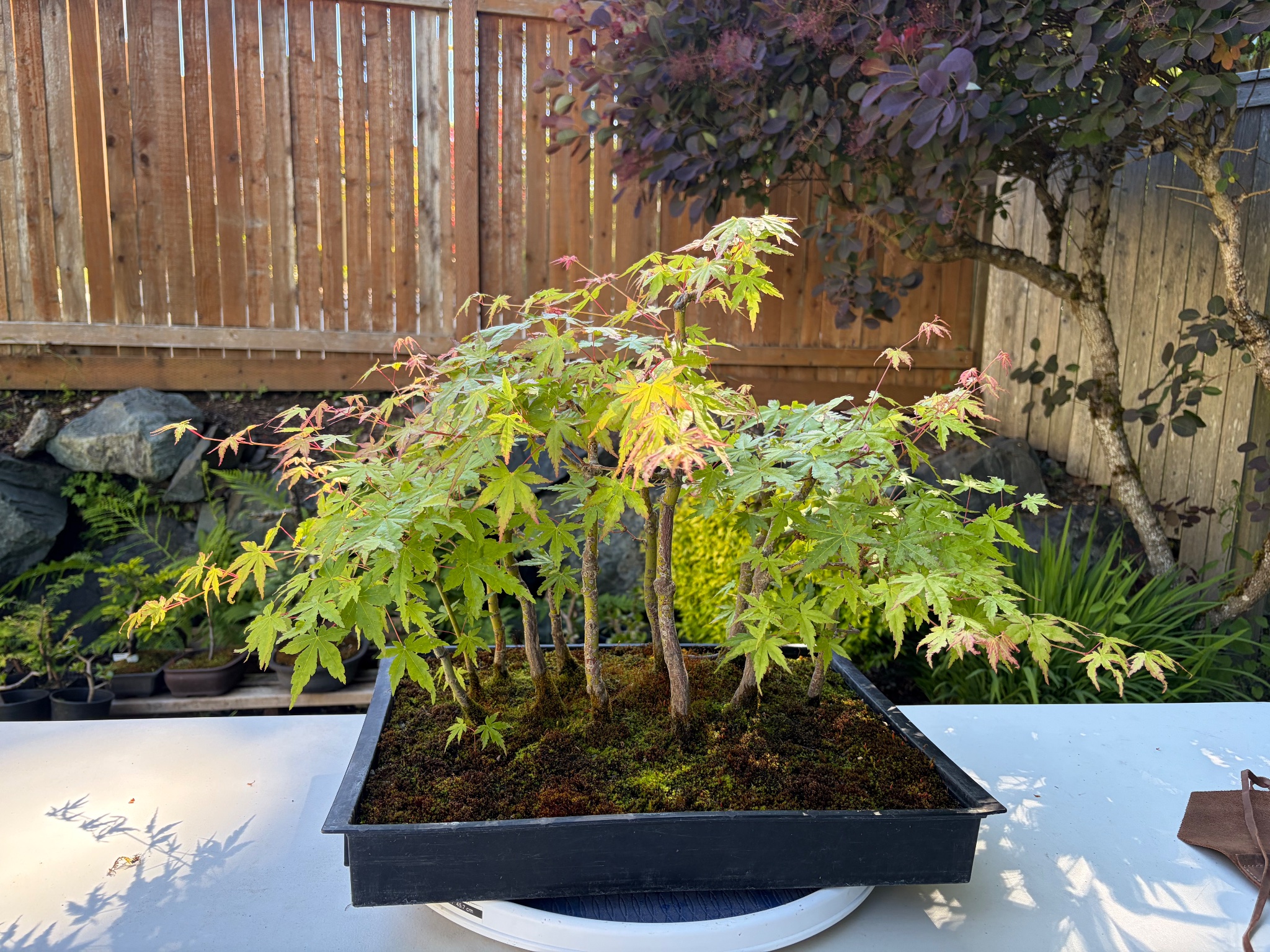
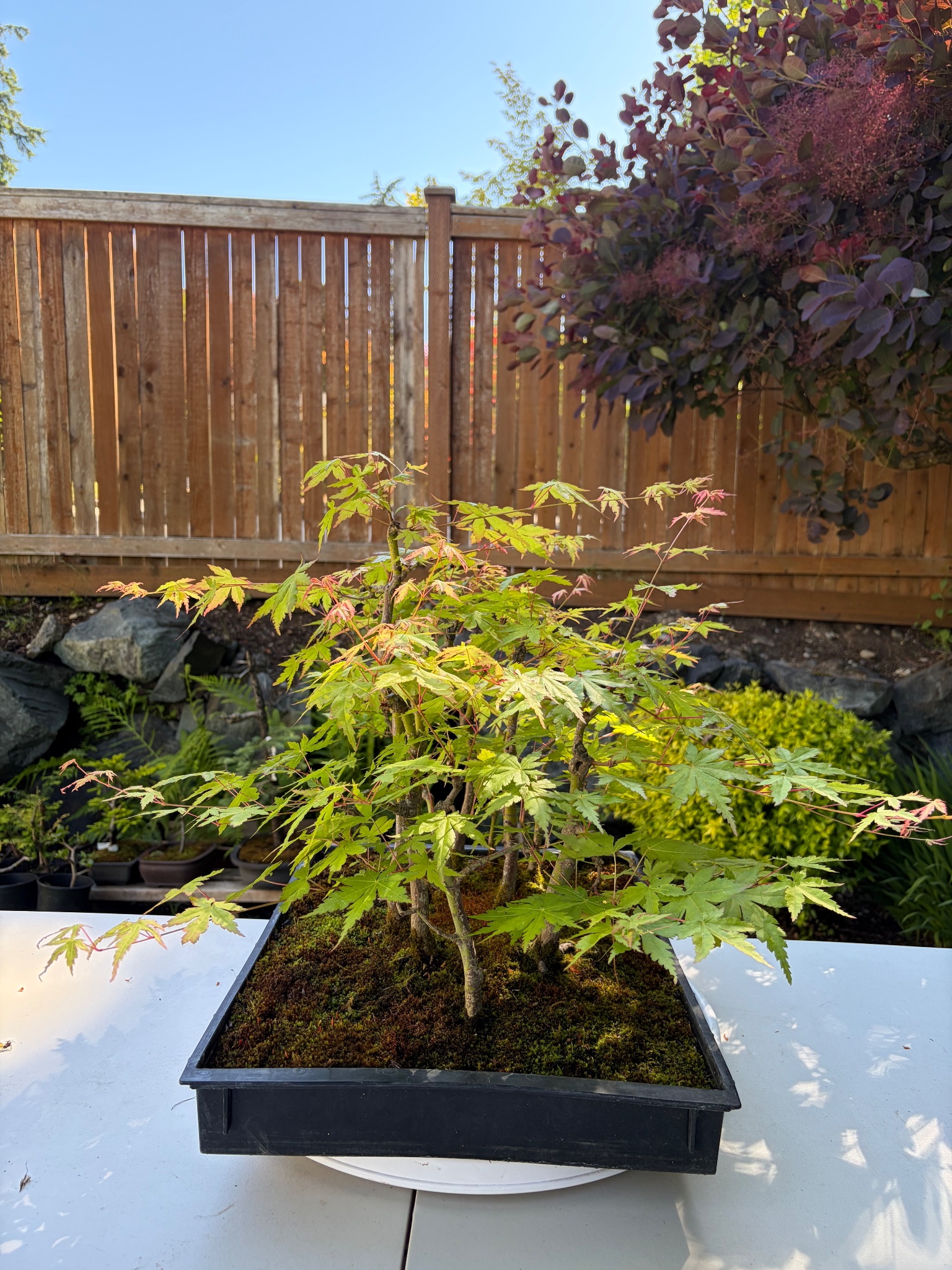
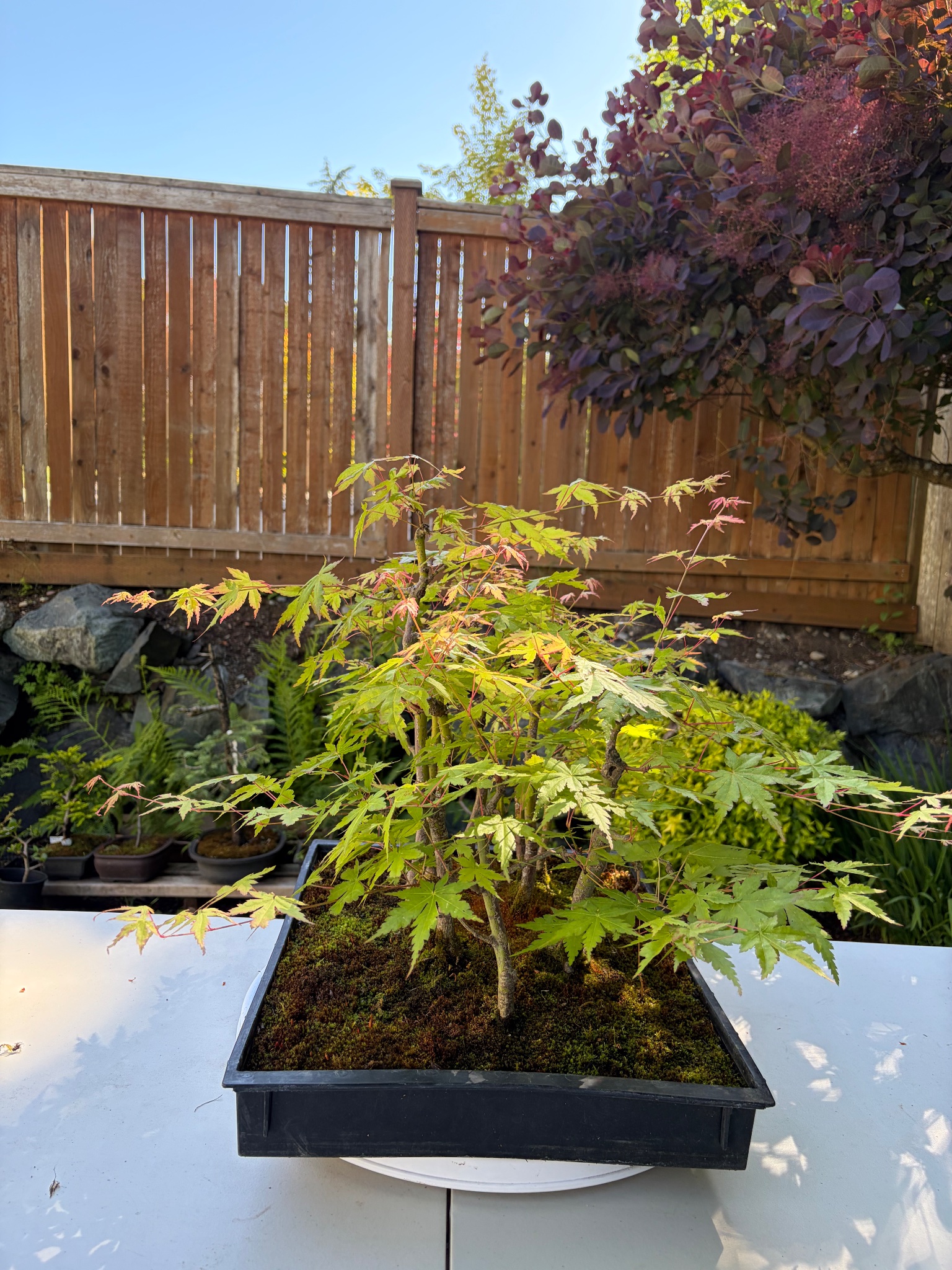
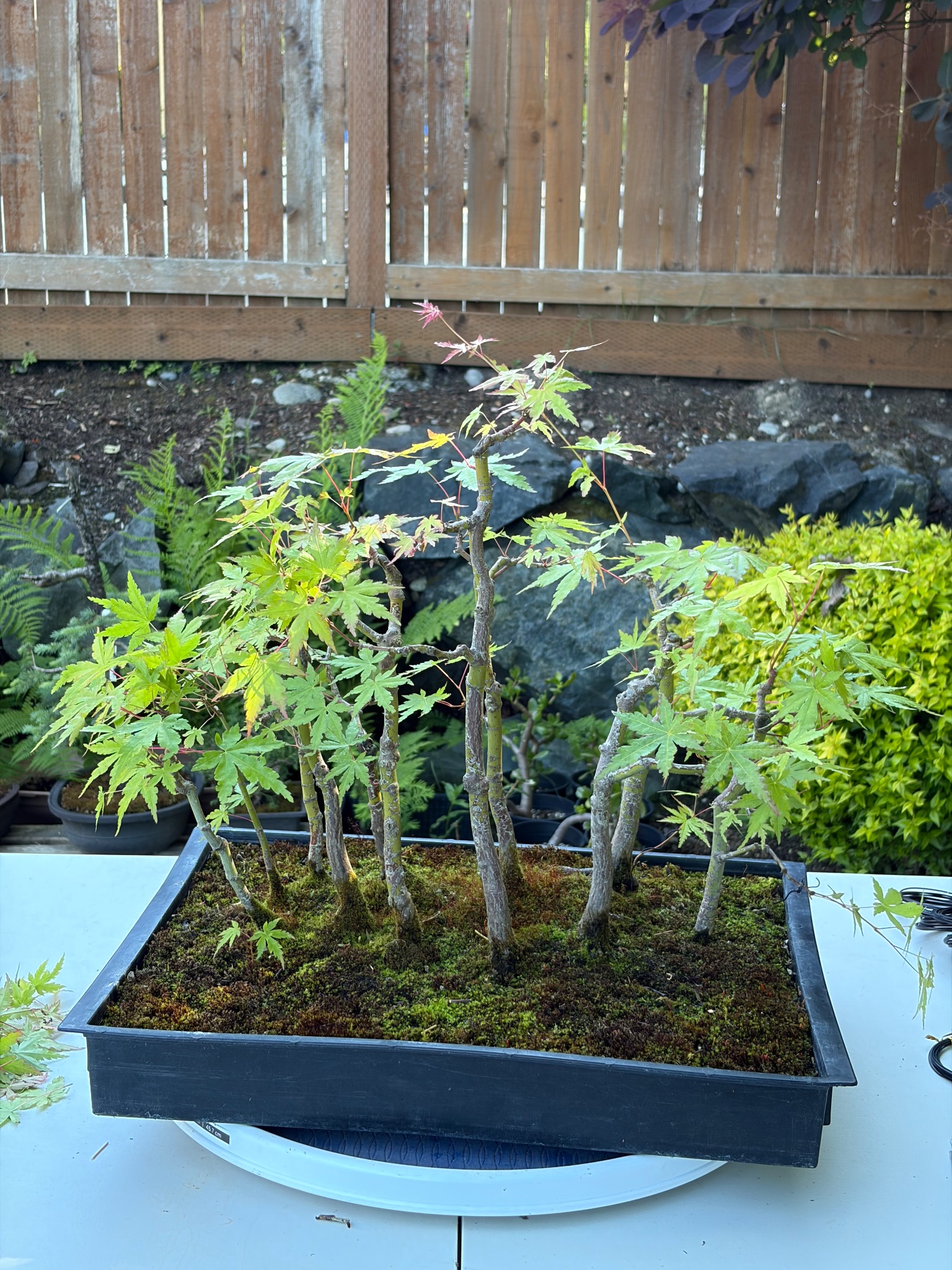
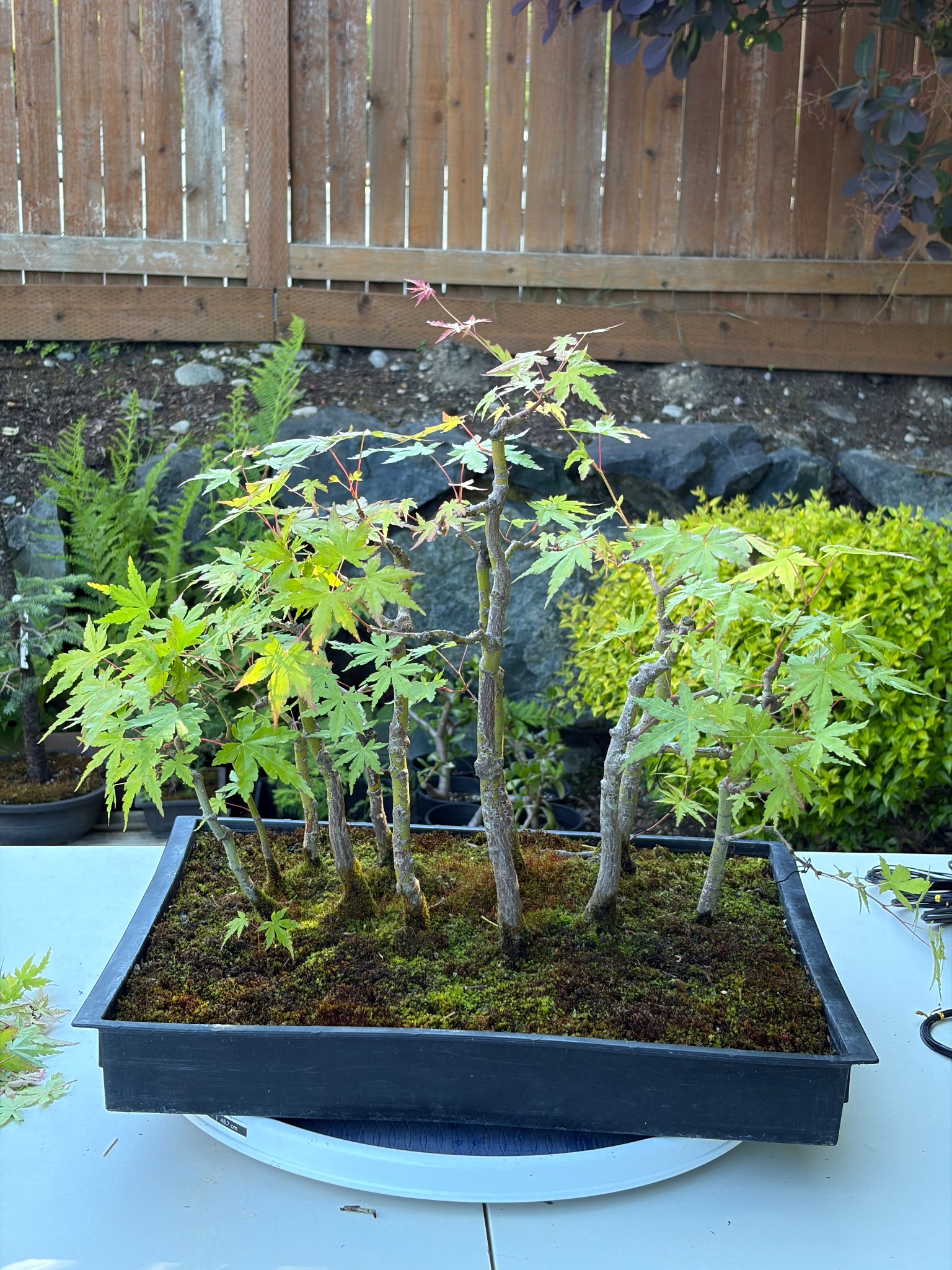
This forest planting isn’t just a composition, it’s a remembrance. Collected from the estate of bonsai practitioner Janet Payne and stewarded by the Portland Bonsai Association, this maple grove holds more than its roots in soil. It holds a story. A transition. A quiet continuity of care.

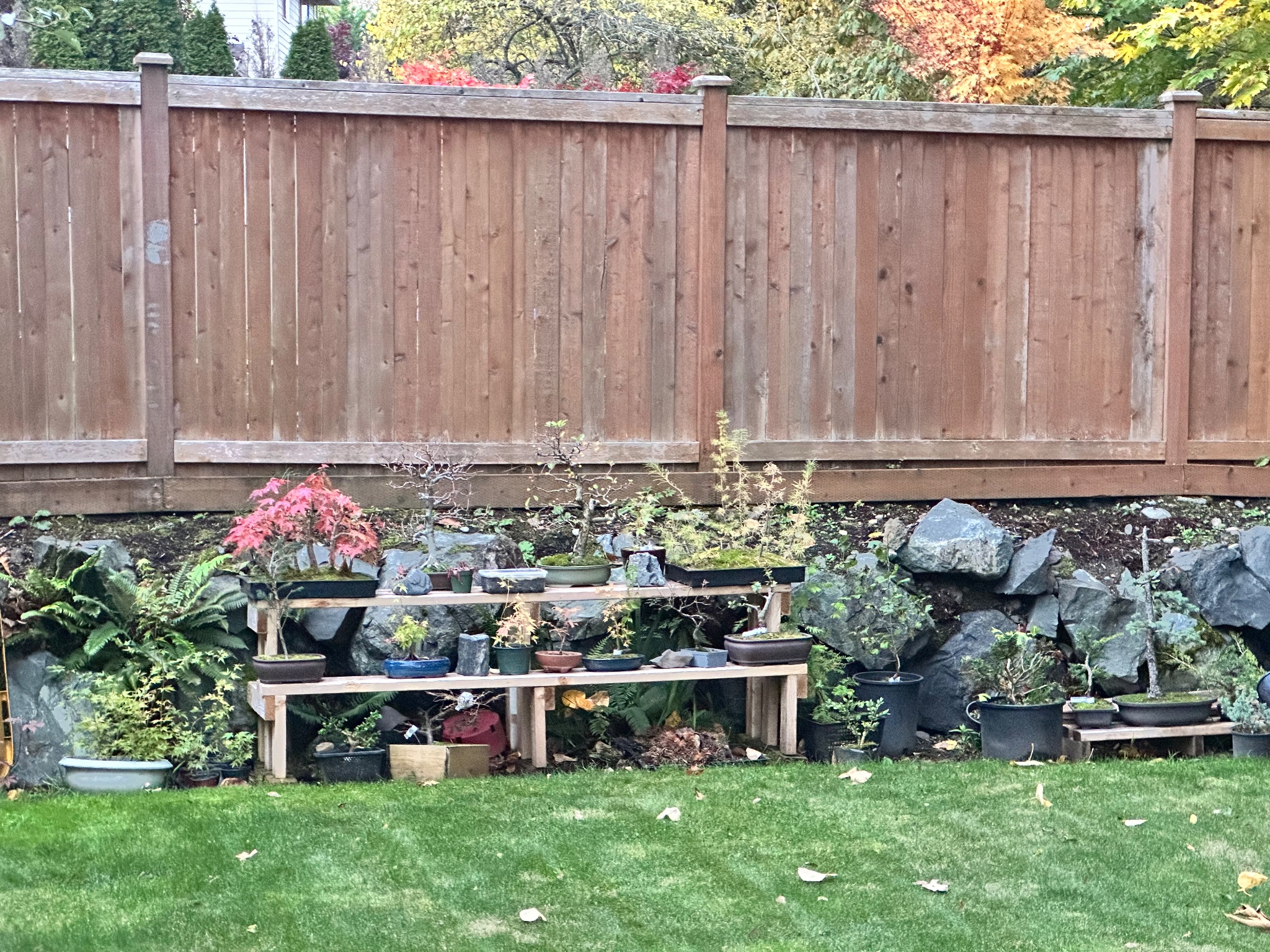
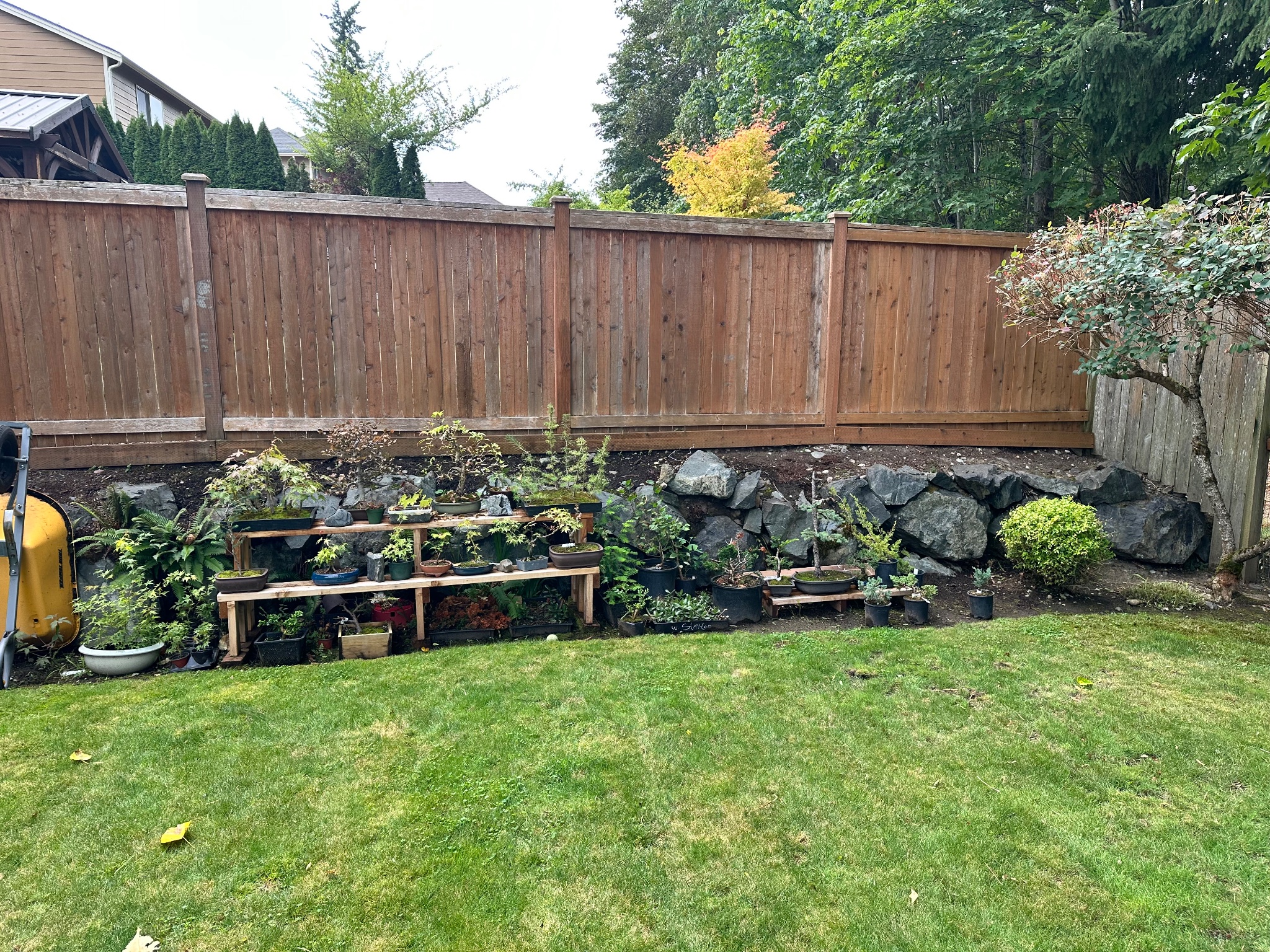
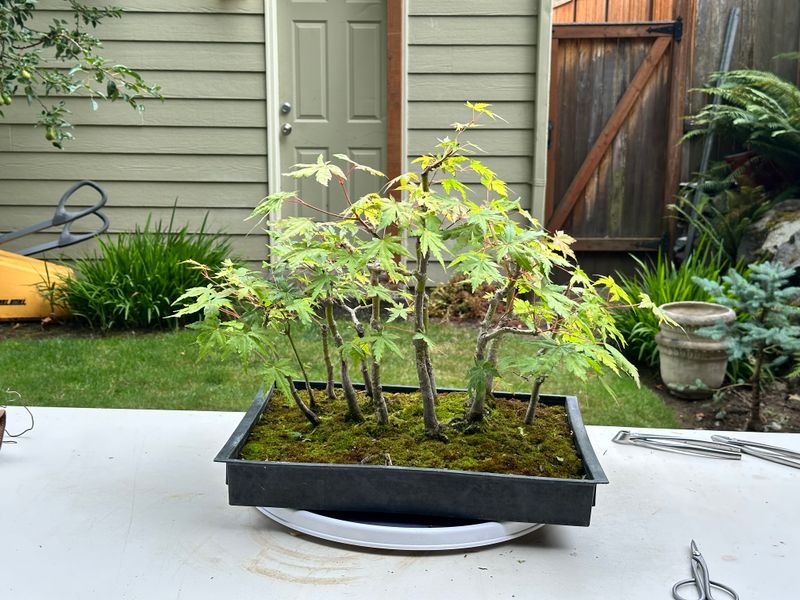
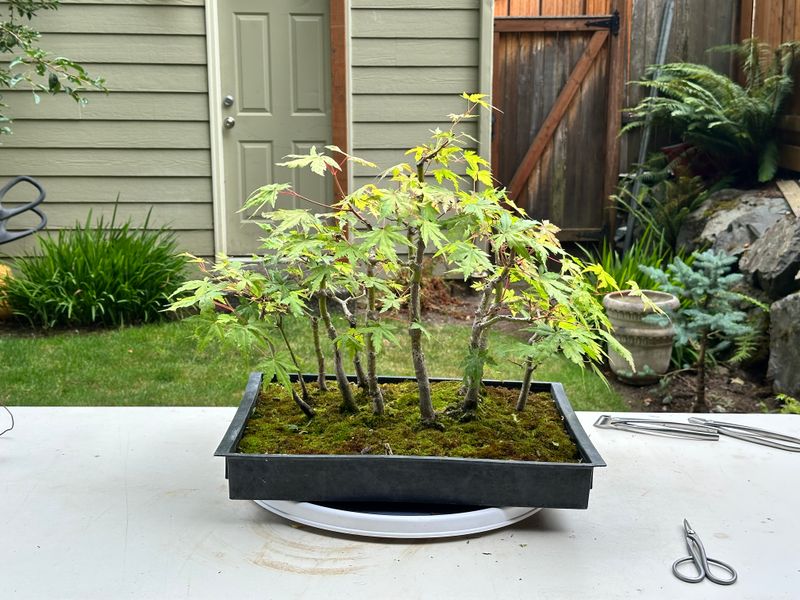
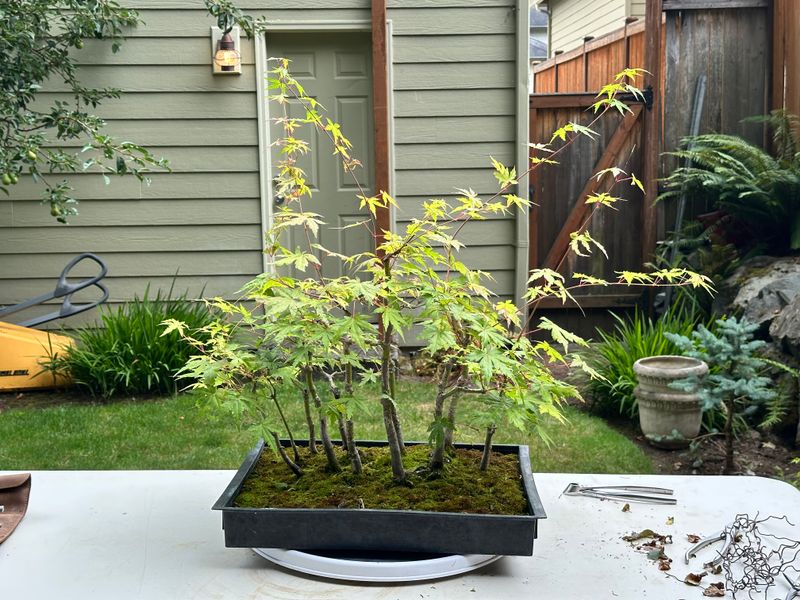
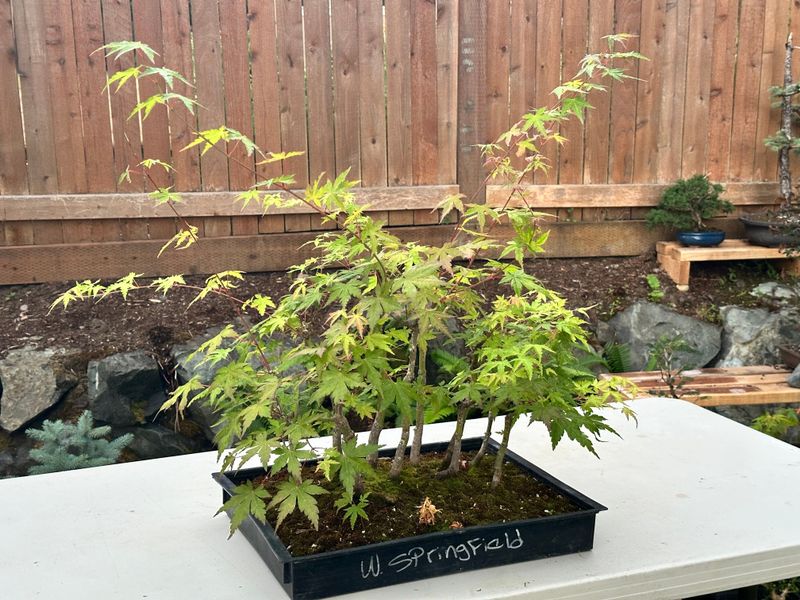
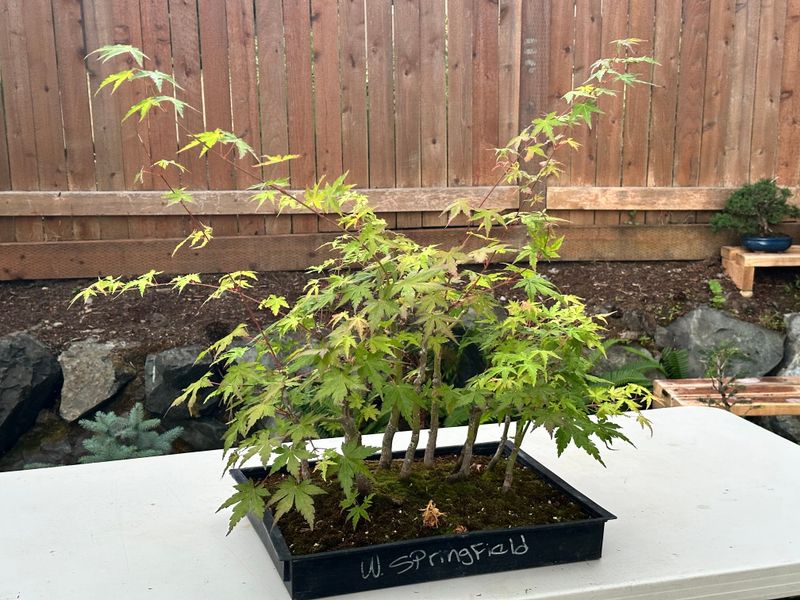
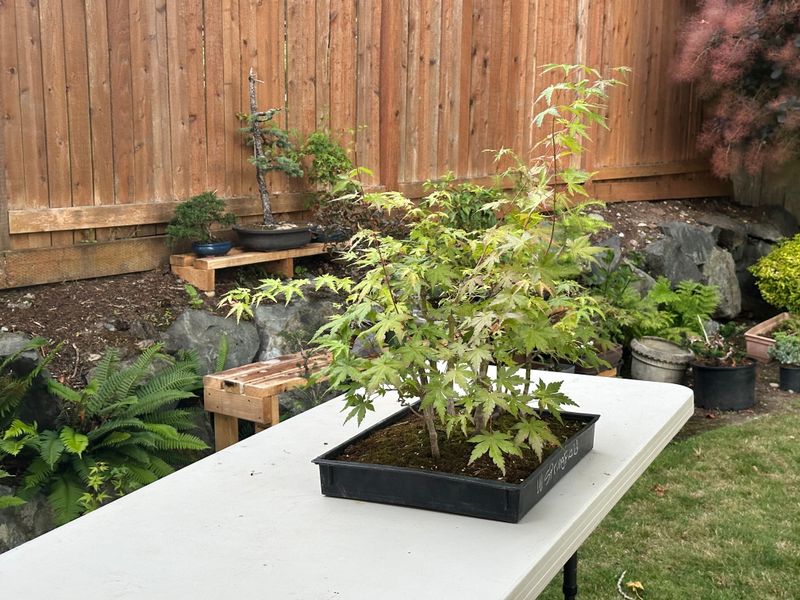
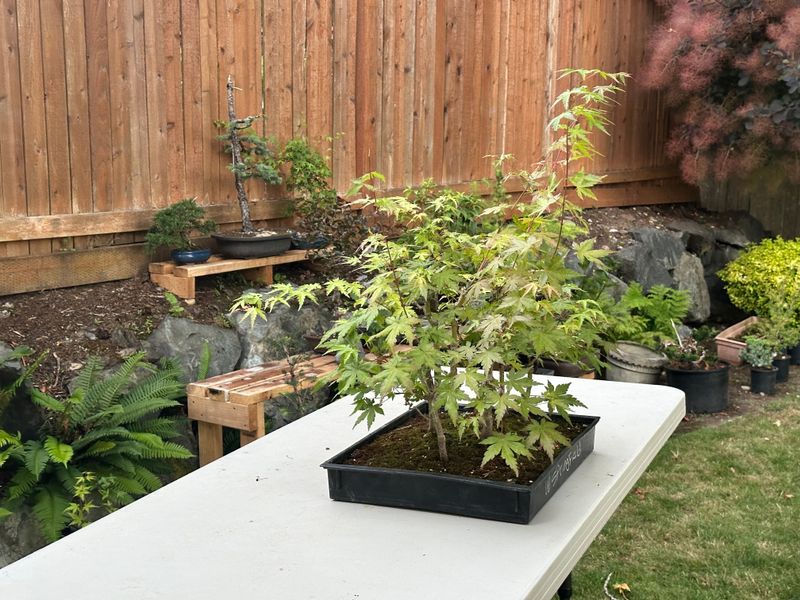
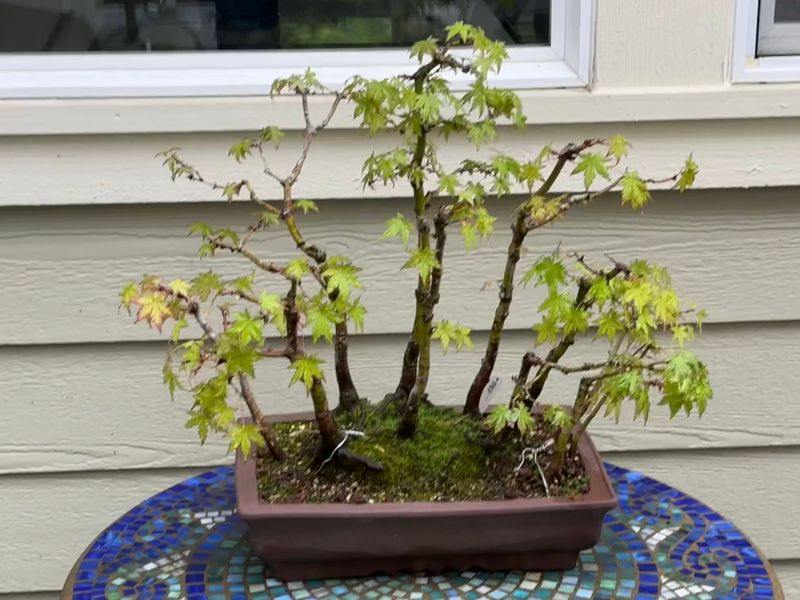
Estimated to have begun its journey in 1994, this ‘Katsura’ cultivar forest shows the beginnings of mature cohesion: trunks of varying height and girth echoing the feel of a natural glade. The structure is informal and human-scale—neither grand nor miniature, but inviting. The foliage is light, airy, and responsive to seasonal shifts, particularly luminous in spring and early fall.

New caretaking has already brought visible recovery: healing over old cuts, stronger canopy shape, and subtle adjustments to balance and flow. There’s still work ahead, but that’s part of its voice now—a living forest in transition, passed from one hand to the next with care.

This maple asks for time. And rewards presence.

10-Year Vision for {{title}}

This forest is entering its prime - not yet ancient, but no longer young. It holds the kind of age that invites presence, where the trees know each other. A forest like this - it doesn’t need to be styled quickly.

So here’s how I plan to shape the next decade - not in steps, but in seasons of intention.

Years 1–2: Strength and Soft Refinement

  • Let the forest grow out more freely during spring and summer—prioritize root strength, branch extension, and photosynthetic energy.
  • Gently define the apex leaders and begin to refine secondary structure - wire if needed, but prefer clip & grow or guy wires to avoid scars.
  • Begin to thin canopy in late summer to encourage light into the interior—especially around younger, weaker trunks.
  • Let moss and ground cover soften the soil line naturally. A forest begins at its feet.
  • Plan for forest expansion - propagate stronger clippings to plant on the sides and rear of the tree to give the forest more depth, dimension and varied age with older and younger trees. Need the same genetic stock to keep seasonal coloring consistent.

Years 3–5: Cohesion and Depth

  • Start working on cohesive silhouette and rhythm - not symmetry, but flow.
  • Encourage trunk differentiation: allow some to thicken, others to stay light. A real forest isn’t uniform. Strategic fertilization here.
  • Reduce or remove any trunks that never found their role. Silence is part of music.
  • Incorporate new younger trunks on the periphery where needed.
  • Build ramification and form canopy pads with clip-and-grow, while always allowing a bit of natural looseness—forest light should dance, not sit still.

Years 6–8: Refinement and Quiet Aging

  • Let deadwood develop naturally on low or shaded branches - will not force it.
  • Begin annual photo journaling to track progression - not just how it looks, but how it feels.
  • Introduce fine seasonal pruning and intentional leaf reduction to improve ramification, only if the forest is strong.
  • Find a high quality pot that supports the forest - providing a coherent and harmonious foundation. A handmade oval or soft-edged rectangle might elevate its character.
  • Develop the ground plane with moss, texture, or small stones—give it the feeling of place.

Years 9–10: Preservation and Presentation

  • Evaluate readiness for informal show or gallery - not to display perfection, but to share presence.
  • Timeline
  • Photos
  • Story

Timeline

15 events

2026
  • 2026-06-12 21:33Fertilize
    Bench

    Fertilized with liquid fertilizer.

  • 2026-06-12 14:01Prune
    Back Yard

    Pruned shoots to control internode length, pulled Irish moss and weeds.

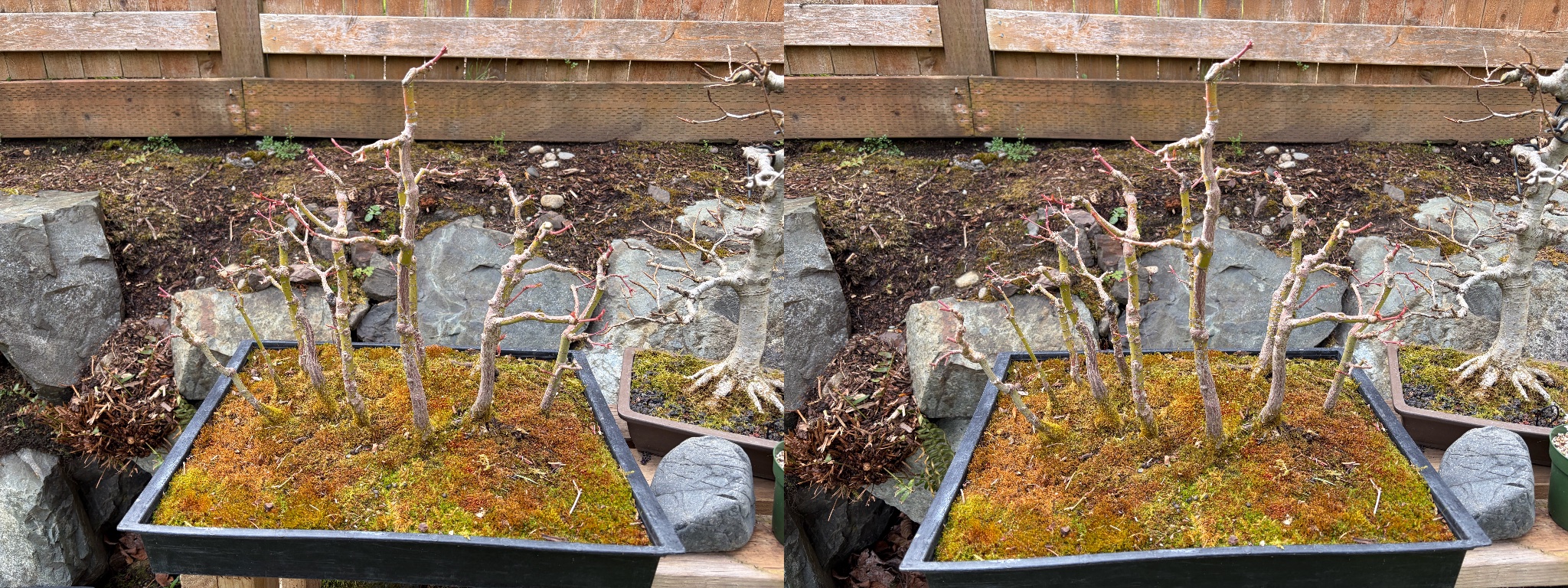
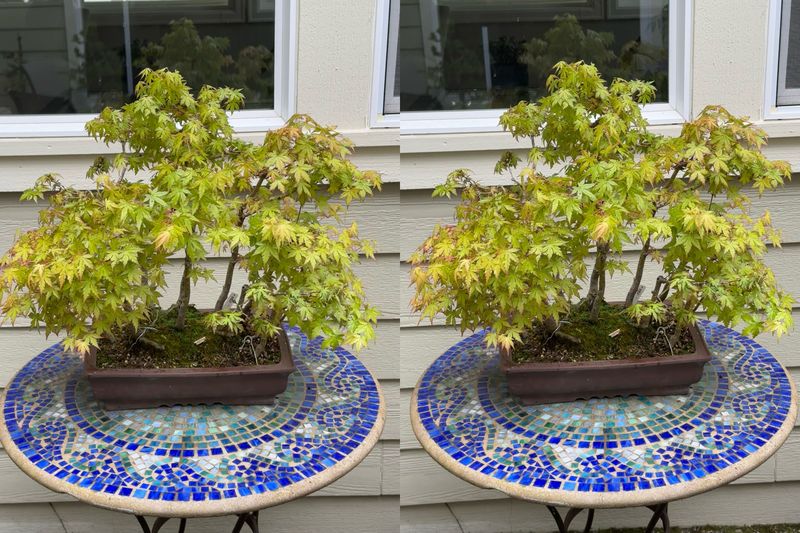
    • Japanese Maple 5 — Prune — stereoscopic 3D
    • Japanese Maple 5 — Prune — stereoscopic 3D
    • Japanese Maple 5 — Prune — stereoscopic 3D
    • Japanese Maple 5 — Prune — stereoscopic 3D
  • 2026-04-04 19:20PrunePinching
    Back Yard

    Pinched new branching to control internode length

  • 2026-03-28 15:30Observation
    Bench

    Pushing spring buds

    • Japanese Maple 5 — Observation — stereoscopic 3D
    • Japanese Maple 5 — Observation — 2026-03-28
2025
  • 2025-11-01 13:52Observation
    Study Group

    Fall happened.

    • Japanese Maple 5 — Observation — stereoscopic 3D
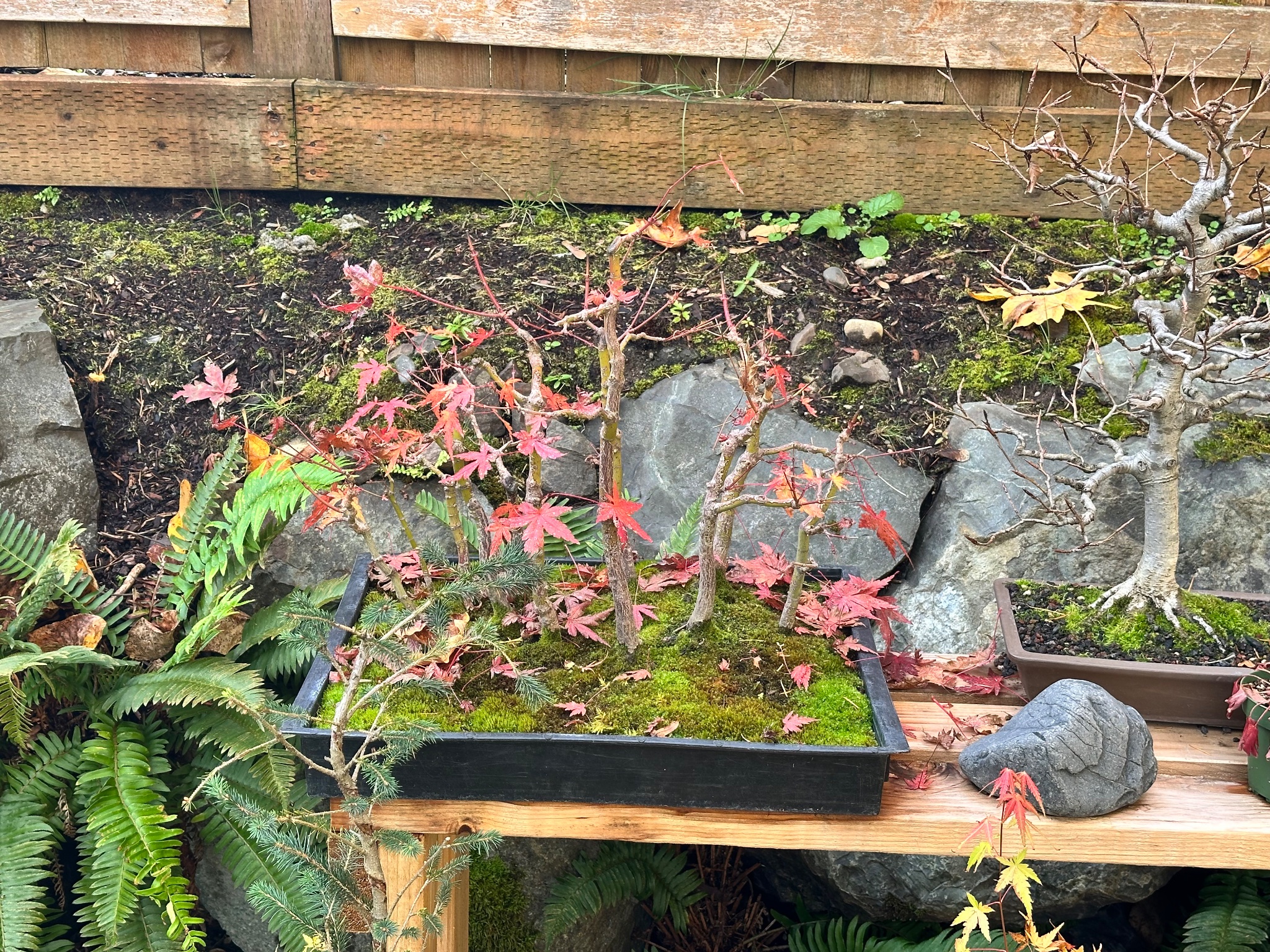
  • 2025-10-24 07:53Observation
    Bench

    Autumn!

    • Japanese Maple 5 — Observation — 2025-10-24
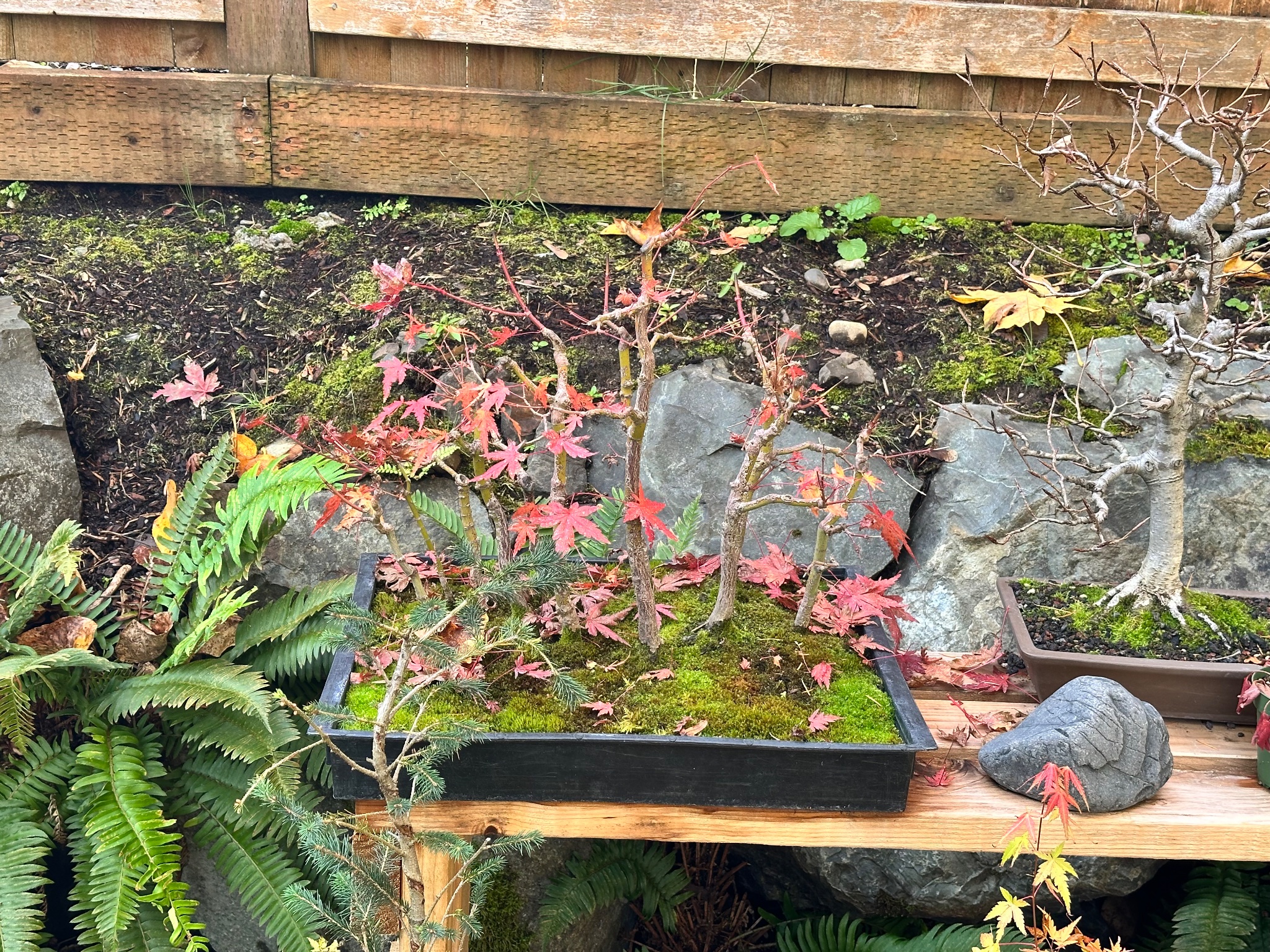
  • 2025-10-23 07:45Observation
    Bench

    Bench Photo

    • Japanese Maple 5 — Observation — 2025-10-23
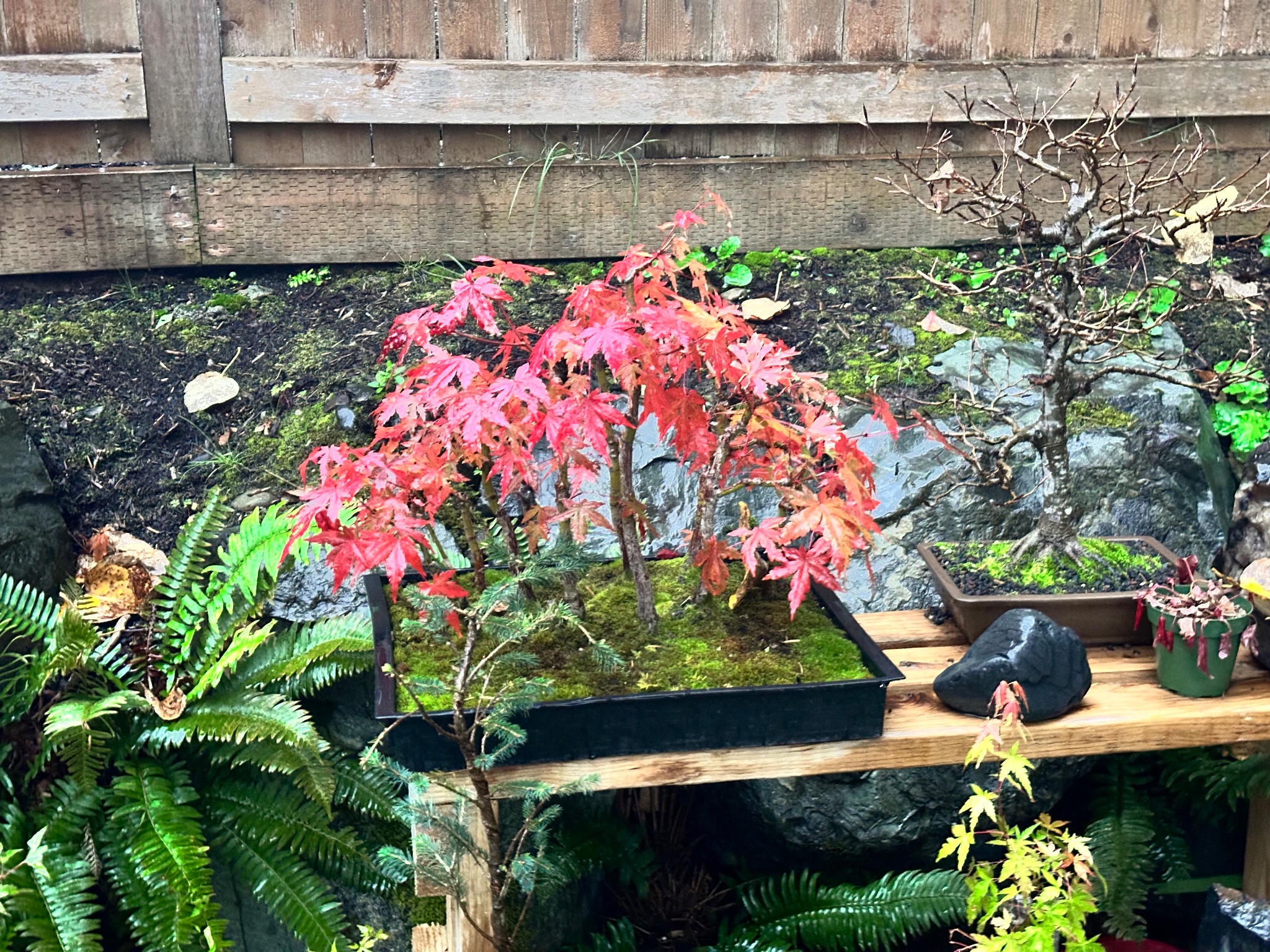
  • 2025-09-11 13:53Observation
    Study Group

    Bench Photo

    • Japanese Maple 5 — Observation — 2025-09-11
  • 2025-07-19 06:09Prune
    Bench

    Cleaned up some of the leggy growth

    • Japanese Maple 5 — Prune — stereoscopic 3D
    • Japanese Maple 5 — Prune — stereoscopic 3D
  • 2025-07-13 07:03Observation
    • Japanese Maple 5 — Observation — stereoscopic 3D
    • Japanese Maple 5 — Observation — stereoscopic 3D
    • Japanese Maple 5 — Observation — stereoscopic 3D
  • 2025-05-31 19:00OtherRelocated
    Bench

    Moved from hot courtyard to backyard

  • 2025-03-15 17:00Repot
    Study Group

    Moved to Anderson flat to promote growth as I rebuild branching on this old forest.

2024
  • 2024-05-22 06:49Observation
    • Japanese Maple 5 — Observation — 2024-05-22
    • Japanese Maple 5 — Observation — 2024-05-22
  • 2024-05-21 02:20Observation
    • Japanese Maple 5 — Observation — stereoscopic 3D
    • Japanese Maple 5 — Observation — 2024-05-21
  • 2024-05-18 15:05Observation
    • Japanese Maple 5 — Observation — 2024-05-18
    • Japanese Maple 5 — Observation — 2024-05-18

Photos

June 2026

  • Japanese Maple 5 — Prune — 2026-06-13 — stereoscopic 3D
    ◉ 3D
  • Japanese Maple 5 — Prune — 2026-06-13 — stereoscopic 3D
    ◉ 3D
  • Japanese Maple 5 — Prune — 2026-06-13 — stereoscopic 3D
    ◉ 3D
  • Japanese Maple 5 — Prune — 2026-06-13 — stereoscopic 3D
    ◉ 3D

March 2026

  • Japanese Maple 5 — Observation — 2026-03-29 — stereoscopic 3D
    ◉ 3D
  • Japanese Maple 5 — Observation — 2026-03-29

November 2025

  • Japanese Maple 5 — Observation — 2025-11-02 — stereoscopic 3D
    ◉ 3D

October 2025

  • Japanese Maple 5 — Observation — 2025-10-24
  • Japanese Maple 5 — Observation — 2025-10-23

September 2025

  • Japanese Maple 5 — Observation — 2025-09-11

July 2025

  • Japanese Maple 5 — Prune — 2025-07-19 — stereoscopic 3D
    ◉ 3D
  • Japanese Maple 5 — Prune — 2025-07-19 — stereoscopic 3D
    ◉ 3D
  • Japanese Maple 5 — Observation — 2025-07-14 — stereoscopic 3D
    ◉ 3D
  • Japanese Maple 5 — Observation — 2025-07-14 — stereoscopic 3D
    ◉ 3D
  • Japanese Maple 5 — Observation — 2025-07-14 — stereoscopic 3D
    ◉ 3D
  • Japanese Maple 5 — cover photoCover

May 2024

  • Japanese Maple 5 — Observation — 2024-05-22
  • Japanese Maple 5 — Observation — 2024-05-22
  • Japanese Maple 5 — Observation — 2024-05-21 — stereoscopic 3D
    ◉ 3D
  • Japanese Maple 5 — Observation — 2024-05-21
  • Japanese Maple 5 — Observation — 2024-05-18
  • Japanese Maple 5 — Observation — 2024-05-18

Story

This forest planting isn’t just a composition, it’s a remembrance. Collected from the estate of bonsai practitioner Janet Payne and stewarded by the Portland Bonsai Association, this maple grove holds more than its roots in soil. It holds a story. A transition. A quiet continuity of care.

Estimated to have begun its journey in 1994, this ‘Katsura’ cultivar forest shows the beginnings of mature cohesion: trunks of varying height and girth echoing the feel of a natural glade. The structure is informal and human-scale—neither grand nor miniature, but inviting. The foliage is light, airy, and responsive to seasonal shifts, particularly luminous in spring and early fall.

New caretaking has already brought visible recovery: healing over old cuts, stronger canopy shape, and subtle adjustments to balance and flow. There’s still work ahead, but that’s part of its voice now—a living forest in transition, passed from one hand to the next with care.

This maple asks for time. And rewards presence.

10-Year Vision for {{title}}

This forest is entering its prime - not yet ancient, but no longer young. It holds the kind of age that invites presence, where the trees know each other. A forest like this - it doesn’t need to be styled quickly.

So here’s how I plan to shape the next decade - not in steps, but in seasons of intention.

Years 1–2: Strength and Soft Refinement

  • Let the forest grow out more freely during spring and summer—prioritize root strength, branch extension, and photosynthetic energy.
  • Gently define the apex leaders and begin to refine secondary structure - wire if needed, but prefer clip & grow or guy wires to avoid scars.
  • Begin to thin canopy in late summer to encourage light into the interior—especially around younger, weaker trunks.
  • Let moss and ground cover soften the soil line naturally. A forest begins at its feet.
  • Plan for forest expansion - propagate stronger clippings to plant on the sides and rear of the tree to give the forest more depth, dimension and varied age with older and younger trees. Need the same genetic stock to keep seasonal coloring consistent.

Years 3–5: Cohesion and Depth

  • Start working on cohesive silhouette and rhythm - not symmetry, but flow.
  • Encourage trunk differentiation: allow some to thicken, others to stay light. A real forest isn’t uniform. Strategic fertilization here.
  • Reduce or remove any trunks that never found their role. Silence is part of music.
  • Incorporate new younger trunks on the periphery where needed.
  • Build ramification and form canopy pads with clip-and-grow, while always allowing a bit of natural looseness—forest light should dance, not sit still.

Years 6–8: Refinement and Quiet Aging

  • Let deadwood develop naturally on low or shaded branches - will not force it.
  • Begin annual photo journaling to track progression - not just how it looks, but how it feels.
  • Introduce fine seasonal pruning and intentional leaf reduction to improve ramification, only if the forest is strong.
  • Find a high quality pot that supports the forest - providing a coherent and harmonious foundation. A handmade oval or soft-edged rectangle might elevate its character.
  • Develop the ground plane with moss, texture, or small stones—give it the feeling of place.

Years 9–10: Preservation and Presentation

  • Evaluate readiness for informal show or gallery - not to display perfection, but to share presence.

Current care

Mid Summer
Watering
Monitor daily; ensure no drought stress.
Fertilization
Taper nitrogen; hold feed during hottest weeks.
Pruning
Pinch back soft spring growth; wait until fall for structure.
Pests Disease
Check for powdery mildew in humid weather.
Summer Protection
Ensure root ball doesn’t overheat—shade or pot insulation.
View full seasonal calendar →

Recent activity

8
  • 2026-06-12Fertilize
    BenchFertilized with liquid fertilizer.
  • 2026-06-12Prune
    Back YardPruned shoots to control internode length, pulled Irish moss and weeds.
  • 2026-04-04Prune
    Back YardPinched new branching to control internode length
  • 2026-03-28Observation
    BenchPushing spring buds
  • 2025-11-01Observation
    Study GroupFall happened.
  • 2025-10-24Observation
    BenchAutumn!
  • 2025-10-23Observation
    BenchBench Photo
  • 2025-09-11Observation
    Study GroupBench Photo
View full timeline →

Paths onward

BackThe Japanese Maple 'Sharp's Pygmy' bench5 siblings share this bench.ReferenceJapanese Maple 'Sharp's Pygmy', the speciesCare profile, seasonal calendar, placement and watering notes.TodayThe AlmanacWhat the garden asks of you now.
Mossy Spot · PNW · Zone 8bgrow slowly
Mossy Spot❧The Garden❧Japanese Maple 'Sharp's Pygmy'❧Japanese Maple 5
73° Mainly clear · Mid Summer
Sign in