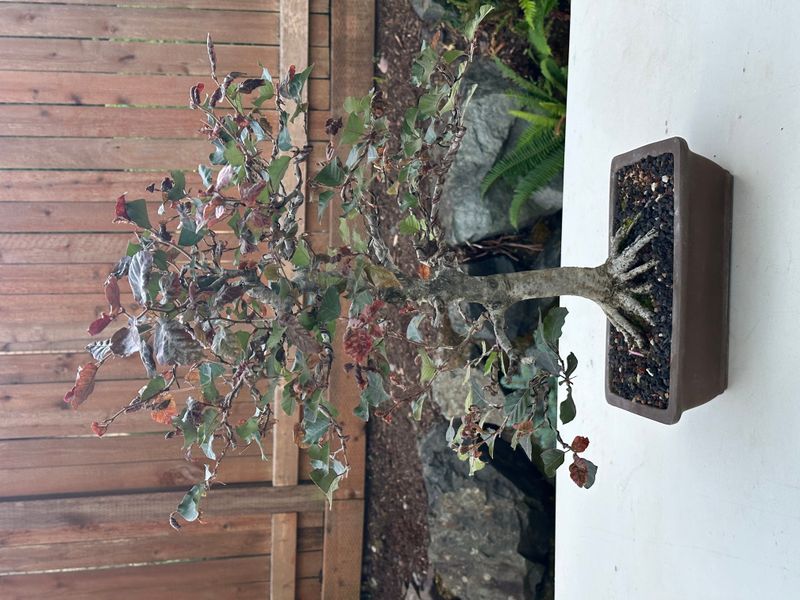
Fagus sylvatica
Copper Beech
Deciduous broadleaf with smooth bark, fine twigs, and beautiful leaf texture; slow to ramify but powerful structure.
Now: Mid Spring
- watering
- Consistent; avoid waterlogging.
- fertilization
- Balanced organic fertilizer every 10–14 days.
- pruning
- Refine branch structure if not done earlier.
- wiring
- Monitor wired branches for swelling.
- bud shoot management
- Pinch soft tips to control elongation.
- pests disease
- Monitor for mildew and aphids.
- wound management
- Seal any new pruning wounds.
- development
- Encourage branch ramification.
Care Guide
Placement
Full sun to partial shade
Provide light afternoon shade in hot summers to protect foliage.
Watering
Moderate
Even moisture preferred; do not allow to dry out completely.
Fertilization
Balanced
Feed lightly to avoid excessive elongation; stop mid-summer.
Pruning
Structural in early spring, maintenance mid-season
Pinch new shoots to encourage back budding.
Wiring
Late spring to early summer
Wire while young; older branches set slowly and can scar.
Repotting
Every 2-3 years
Repot just before bud break; beech dislikes root disturbance.
Propagation
Cuttings or seed
Seedlings take years to mature; layering works for older wood.
Winter: Hardy; protect roots in container from deep freeze.
Summer: Mist foliage in dry conditions; avoid full sun exposure in extreme heat.
Zone 8b: Protect roots if temps < 20 F
Seasonal Calendar
Late Dormancy02-15 — 03-10
- watering
- Minimal; monitor soil to prevent complete drying.
- bud shoot management
- Watch for bud swell to anticipate spring tasks.
- pests disease
- Inspect bark and dormant buds for overwintering pests.
- winter protection
- Ensure wind protection, mulch pot if outdoors.
- development
- Tree is resting; planning and review period.
- display
- Possible for dormancy-focused exhibits.
Early Spring03-11 — 04-15
- watering
- Increase slightly as buds swell.
- fertilization
- Begin weak feeding after bud break.
- repotting
- Primary window before leaf break.
- pruning
- Structural pruning ideal now.
- wiring
- Apply primary wiring before leaf out.
- bud shoot management
- Manage vigorous shoots early.
- pests disease
- Monitor for aphids and early fungal threats.
- winter protection
- Phase out protection gradually.
- wound management
- Seal pruning cuts early to prevent drying.
- propagation
- Grafting or root cuttings possible.
- development
- Foundation-setting season.
Mid Spring04-16 — 05-10Now
- watering
- Consistent; avoid waterlogging.
- fertilization
- Balanced organic fertilizer every 10–14 days.
- pruning
- Refine branch structure if not done earlier.
- wiring
- Monitor wired branches for swelling.
- bud shoot management
- Pinch soft tips to control elongation.
- pests disease
- Monitor for mildew and aphids.
- wound management
- Seal any new pruning wounds.
- development
- Encourage branch ramification.
Late Spring05-11 — 05-31
- watering
- Daily if temperatures rise.
- fertilization
- Continue organic feeding.
- pruning
- Avoid heavy pruning now.
- wiring
- Refine minor corrections.
- bud shoot management
- Leaf size management begins.
- pests disease
- Watch for powdery mildew.
Early Summer06-01 — 06-30
- watering
- Deep watering as needed in heat.
- fertilization
- Continue at 50% strength.
- pruning
- Maintenance pinching only.
- defoliation
- Partial defoliation possible to reduce leaf size.
- bud shoot management
- Trim elongated shoots.
- pests disease
- Increased risk of fungal issues; improve airflow.
- summer protection
- Move to partial shade to avoid leaf scorch.
- propagation
- Softwood cuttings possible.
- development
- Focus on internode spacing.
Mid Summer07-01 — 08-10
- watering
- High frequency; check twice daily in heat.
- fertilization
- Pause or reduce depending on vigor.
- defoliation
- Not recommended.
- pests disease
- High fungal pressure—monitor closely.
- summer protection
- Critical—sun scorch is a major risk.
Late Summer08-11 — 08-31
- watering
- Slightly reduce as heat subsides.
- fertilization
- Resume light feeding if growth allows.
- pruning
- Light cleanup possible.
- pests disease
- Begin hardening off by reducing nitrogen.
- development
- Shift toward preparing tree for dormancy.
Early Fall09-01 — 09-30
- watering
- Less frequent but thorough.
- fertilization
- Low nitrogen fertilizer only.
- pruning
- Cleanup dead material, avoid major cuts.
- pests disease
- Watch for scale and mite populations.
- propagation
- Collect seeds.
Mid Fall10-01 — 10-31
- watering
- Infrequent, soil drying tolerated.
- wiring
- Set basic wire if needed for structure.
- deadwood carving
- Safely carve while dormant structure is visible.
- display
- Fall color display ideal.
Late Fall11-01 — 11-15
- watering
- Minimal; do not allow soil to dry completely.
- winter protection
- Begin sheltering from early frosts.
Early Winter11-16 — 12-31
- watering
- Only as needed to avoid full drying.
- pests disease
- Monitor for overwintering scale or eggs.
- winter protection
- Mulch root zone, shelter from freeze-thaw.
Mid Winter01-01 — 01-31
- watering
- Sparse; just enough to prevent desiccation.
- winter protection
- Ensure insulation for roots if outdoors.
- development
- Resting phase for future planning.
Late Winter02-01 — 02-14
- watering
- Begin increasing slightly if buds swell.
- repotting
- Prepare tools and soil; repotting imminent.
- pests disease
- Final pest check before spring.
- winter protection
- Remove protection gradually as weather permits.