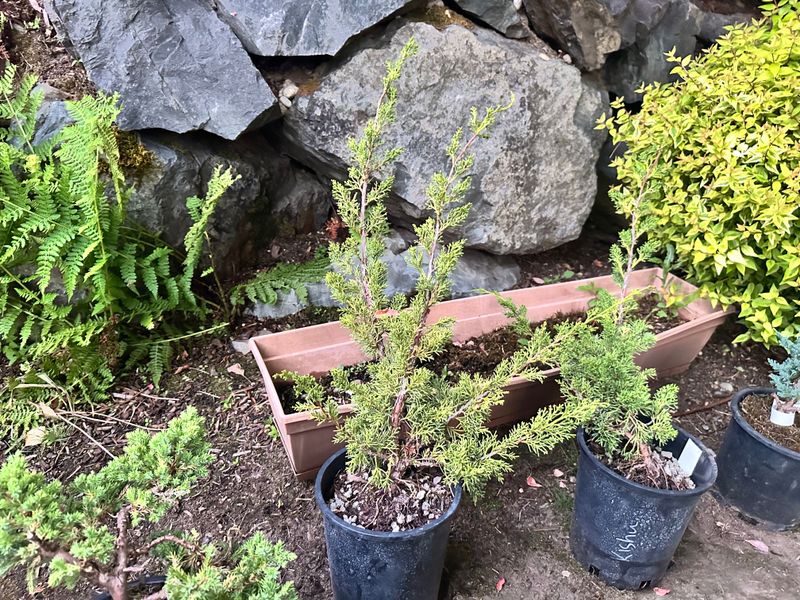
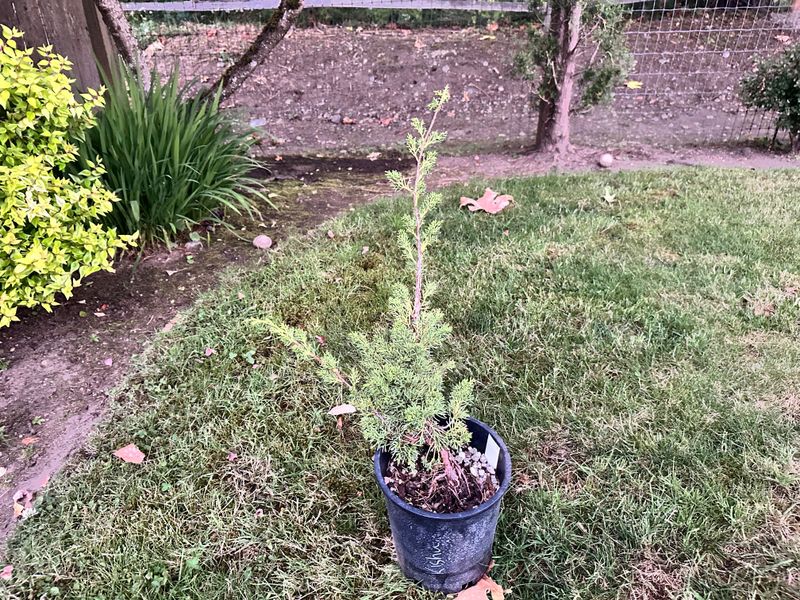
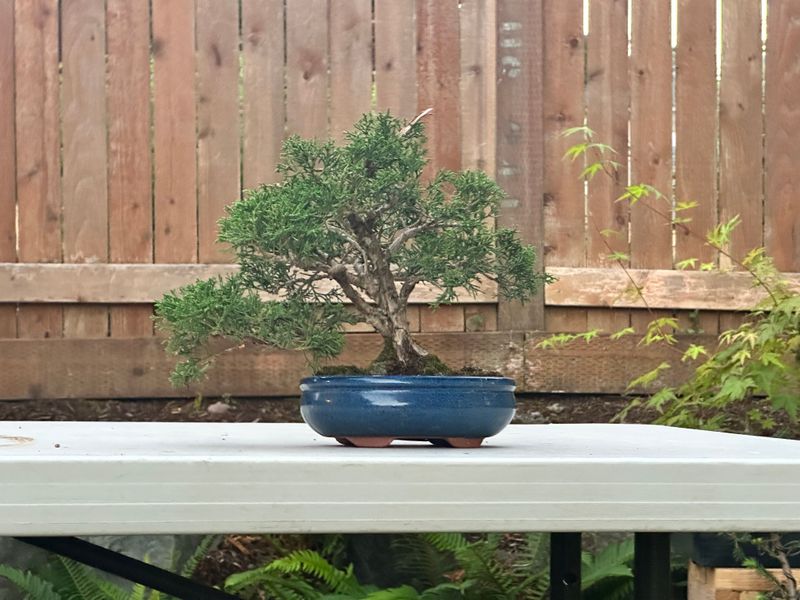
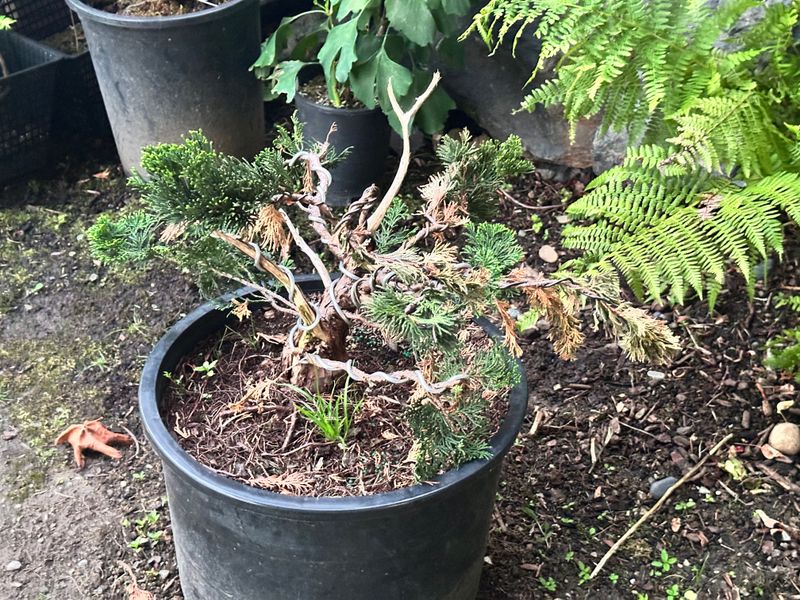
Juniperus chinesis 'Kishu Shimpaku'
Kishu Chinese Juniper
Classic bonsai subject with dense, fine foliage; ideal for jins, sharis, and deadwood techniques.
Now: Mid Spring
- watering
- Moderate; increase with rising temperatures.
- fertilization
- Balanced fertilizer every two weeks.
- repotting
- Finish up any late transplants quickly.
- pruning
- Clean out unwanted shoots; minor refinement cuts.
- wiring
- Monitor for swelling and reapply as needed.
- bud shoot management
- Pinch strong runners to encourage interior growth.
- pests disease
- Inspect foliage closely; begin pest prevention regimen.
- winter protection
- Remove cold frames, expose gradually.
- wound management
- Heals quickly now; light dressing optional.
- deadwood carving
- Continue jin/shari while wood is still dry.
- propagation
- Best time for cuttings in humid conditions.
- development
- Strong structural work or branch setting.
Care Guide
Placement
Full sun
Requires full sun for tight foliage and back budding.
Watering
Low to moderate
Prefers to dry slightly between waterings.
Fertilization
Balanced
Feed every 2 weeks during growing season.
Pruning
Structural in early spring, maintenance mid-season
Do not cut into bare wood - junipers don’t backbud.
Wiring
Spring or Autumn
Flexible when young; check for wire bite frequently.
Repotting
Every 3-5 years
Minimal root disturbance - junipers dislike heavy pruning.
Propagation
Cuttings or seed
Semi-hardwood cuttings root well with hormone.
Winter: Protect roots from freeze-thaw cycles in small pots.
Summer: Resilient; monitor for spider mites in hot weather.
Zone 8b: Watch for spider mites (Jul-Aug); Prevent rot in wet Nov-Jan
Seasonal Calendar
Late Dormancy02-15 — 03-10
- watering
- Minimal watering needed; ensure soil remains just barely moist.
- pruning
- Avoid pruning now; tree is fully dormant.
- wiring
- Structural wiring can be done cautiously before sap flow begins.
- pests disease
- Inspect for overwintering pests like spider mites and scale.
- winter protection
- Protect from freeze-thaw cycles; shelter from wind and excess rain.
- development
- Planning and observation only.
- display
- Indoor display possible but brief to avoid stress.
Early Spring03-11 — 04-15
- watering
- Increase watering as buds swell; avoid waterlogging.
- fertilization
- Begin light feeding with low-nitrogen fertilizer.
- repotting
- Best window for root pruning and repotting.
- pruning
- Remove any winter dieback, shape with caution.
- wiring
- Begin structural wiring if tree responds well to repotting.
- pests disease
- Check for spider mites; they reappear early.
- winter protection
- Wind protection still necessary.
- wound management
- Seal large wounds post-prune.
- deadwood carving
- Suitable time for carving older jins/shari.
- propagation
- Root semi-hardwood cuttings if desired.
- development
- Transition to growth phase.
Mid Spring04-16 — 05-10Now
- watering
- Moderate; increase with rising temperatures.
- fertilization
- Balanced fertilizer every two weeks.
- repotting
- Finish up any late transplants quickly.
- pruning
- Clean out unwanted shoots; minor refinement cuts.
- wiring
- Monitor for swelling and reapply as needed.
- bud shoot management
- Pinch strong runners to encourage interior growth.
- pests disease
- Inspect foliage closely; begin pest prevention regimen.
- winter protection
- Remove cold frames, expose gradually.
- wound management
- Heals quickly now; light dressing optional.
- deadwood carving
- Continue jin/shari while wood is still dry.
- propagation
- Best time for cuttings in humid conditions.
- development
- Strong structural work or branch setting.
Late Spring05-11 — 05-31
- watering
- Monitor soil closely, especially on warm days; do not allow to dry out fully.
- fertilization
- Continue balanced feeding every two weeks.
- pruning
- Light pruning of strong growth to preserve silhouette.
- wiring
- Adjust existing wires; avoid cutting into swelling branches.
- bud shoot management
- Thin out congested shoots selectively.
- pests disease
- High vigilance for scale, spider mites; apply neem or insecticidal soap as needed.
- wound management
- Seal wounds from any major work promptly.
- deadwood carving
- Good time for detail refinement if weather stable.
- propagation
- Softwood cuttings still viable.
- development
- Fine-tune primary structure, focus on branch ramification.
Early Summer06-01 — 06-30
- watering
- Daily watering may be needed; avoid water stress.
- fertilization
- Shift to high-nitrogen fertilizer if in development phase.
- pruning
- Avoid heavy pruning; pinch to manage growth.
- wiring
- Check wire tension weekly as growth surges.
- bud shoot management
- Pinch to maintain interior growth light exposure.
- pests disease
- Watch for spider mites, especially during dry spells.
- summer protection
- Provide shade during extreme heat to reduce stress.
- wound management
- Do not carve in heat; heal time is slower.
- development
- Let grow if in development; refine otherwise.
Mid Summer07-01 — 08-10
- watering
- High-frequency watering; early morning preferred.
- fertilization
- Continue nitrogen-based feeding if pushing growth.
- pruning
- Avoid heavy cuts; tip pruning only.
- wiring
- Inspect for wire bite, remove or adjust if needed.
- bud shoot management
- Manage sun exposure for internal buds.
- pests disease
- Aphids, mites, fungal spots common—treat proactively.
- summer protection
- Essential; shade cloth or dappled sun recommended.
- propagation
- Try semi-hardwood cuttings with rooting hormone.
- development
- Allow vigor to store energy for fall.
Late Summer08-11 — 08-31
- watering
- Stay consistent; don't allow drying out between cycles.
- fertilization
- Last round of nitrogen fertilizer mid-month.
- pruning
- Light cleanup only.
- wiring
- Begin planning for fall rewiring if needed.
- pests disease
- Late season fungal issues; ensure good air circulation.
- summer protection
- Reduce full sun exposure during peak afternoon heat.
- development
- Focus shifts to transitioning to fall.
Early Fall09-01 — 09-30
- watering
- Reduce frequency as temperatures drop.
- fertilization
- Switch to low-nitrogen, high-potassium fertilizer.
- pruning
- Clean up structure, remove weak interior shoots.
- wiring
- Plan rewiring; optimal as sap flow slows.
- pests disease
- Look for rust or scale; apply systemic treatments if needed.
- winter protection
- Begin evaluating sheltering needs.
- deadwood carving
- Excellent time for jin/shari; low sap movement.
- development
- Finalize structure heading into dormancy.
Mid Fall10-01 — 10-31
- watering
- Further reduce; water only when necessary.
- fertilization
- Cease feeding by mid-month.
- pruning
- Structural cleanup only; no hard cuts.
- wiring
- Begin fall wiring now.
- pests disease
- Preventative fungicide applications if needed.
- winter protection
- Begin setup of cold frames or move to sheltered locations.
- wound management
- Avoid major work now.
- deadwood carving
- Final window for carving before winter sets in.
- development
- Wind down; no new interventions.
Late Fall11-01 — 11-15
- watering
- Minimal; let surface dry between waterings.
- wiring
- Continue fall wiring.
- pests disease
- Dormant oils can be applied to control overwintering insects.
- winter protection
- Prepare full winter protection.
- wound management
- Avoid open wounds this late.
- development
- Tree transitions to dormancy.
Early Winter11-16 — 12-31
- watering
- Water infrequently; only on warm days.
- wiring
- Monitor wired branches for bite.
- pests disease
- Occasional checks for scale or spider mites.
- winter protection
- Full protection in place; ventilate to prevent mold.
- wound management
- Avoid all cuts.
- deadwood carving
- Not recommended.
- development
- Dormant observation and planning.
- display
- Indoors only in cold spells; limit exposure.
Mid Winter01-01 — 01-31
- watering
- Minimal; water only when soil is nearly dry.
- wiring
- Check wire integrity.
- pests disease
- Monitor under protection for pest activity.
- winter protection
- Maintain shelter, especially in freezing conditions.
- development
- Continue monitoring; no active development.
Late Winter02-01 — 02-14
- watering
- Slightly increase frequency on warmer days.
- repotting
- Prepare tools and medium; repotting window soon.
- pruning
- Plan spring work but do not cut yet.
- wiring
- Begin planning spring wire work.
- bud shoot management
- Begin tracking early growth points.
- pests disease
- Begin dormant oil spray if not already done.
- winter protection
- Keep shelter in place; remove during mild spells.
- deadwood carving
- Begin planning any spring features.
- development
- Finalize approach for upcoming growth season.