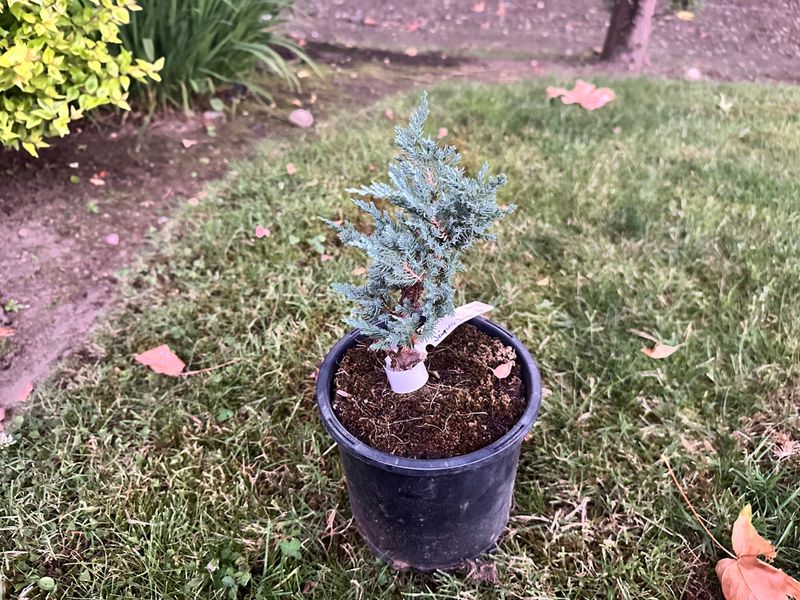
Juniperus horizontalis
Blue Chip Juniper
Prostrate conifer used in cascades and mats; tolerant of pruning and shaping.
EvergreenConifer
Now: Mid Spring
- watering
- Increase frequency as foliage becomes more active.
- fertilization
- Feed every two weeks with low-nitrogen bonsai fertilizer.
- repotting
- Complete any remaining transplants before root stress sets in.
- pruning
- Begin light tip pruning for refinement.
- wiring
- Continue wiring secondary branches; monitor for bite.
- bud shoot management
- Pinch overly vigorous terminal shoots.
- pests disease
- Watch for aphids, rust, and juniper scale.
- wound management
- Seal fresh cuts to prevent dieback.
- deadwood carving
- Use lime sulfur after carving to bleach and preserve.
- propagation
- Still viable to strike cuttings with rooting hormone.
- development
- Emphasize pad spacing and branch refinement.
- display
- Display-ready specimens may be shown now.
Care Guide
Placement
Full sun
Thrives in open exposure; avoid dense shade.
Watering
Moderate
Avoid overwatering; use well-draining mix.
Fertilization
Balanced
Use mild fertilizer to avoid excessive shoot growth.
Pruning
Structural in early spring, maintenance mid-season
Maintain silhouette by pinching tips.
Wiring
Spring or Autumn
Branches set slowly - longer wiring period needed.
Repotting
Every 3-5 years
Use coarse soil to maintain drainage.
Propagation
Cuttings or seed
Cuttings take well in summer with bottom heat.
Winter: Hardy; shelter from drying winds.
Summer: Provide airflow to avoid fungal issues.
Zone 8b: Watch for spider mites (Jul-Aug); Prevent rot in wet Nov-Jan
Seasonal Calendar
Late Dormancy02-15 — 03-10
- watering
- Water sparingly, only when soil is nearly dry to the touch.
- repotting
- Prepare tools and soil mix for upcoming repotting season.
- pruning
- Avoid major pruning; dormant foliage doesn’t recover well.
- wiring
- Check for wire bite on previously wired branches.
- pests disease
- Monitor for scale insects or spider mites overwintering in bark.
- winter protection
- Keep out of strong wind/freeze exposure; protect roots from ice.
- wound management
- Avoid making cuts in cold conditions.
- deadwood carving
- Can be done now if temperatures allow safe handling.
- propagation
- Not suitable.
- development
- Observe branch line and growth for early planning.
- display
- Avoid; tree is visually dormant.
Early Spring03-11 — 04-15
- watering
- Resume regular watering as buds show signs of life.
- fertilization
- Begin light fertilization with balanced or low-nitrogen mix.
- repotting
- Best time for root pruning and repotting before active growth.
- pruning
- Trim back weak or undesired shoots before sap rise.
- wiring
- Ideal window for primary wiring—branches still flexible.
- bud shoot management
- Remove excessively strong apical tips to balance vigor.
- pests disease
- Preventive spray for fungal spores or dormant pests.
- winter protection
- Remove protection gradually.
- wound management
- Apply cut paste to any significant pruning wounds.
- deadwood carving
- Safe to carve dry wood before sap rise.
- propagation
- Take hardwood cuttings and root in a mist environment.
- development
- Plan silhouette refinement.
- display
- Optional for spring shows if growth has begun.
Mid Spring04-16 — 05-10Now
- watering
- Increase frequency as foliage becomes more active.
- fertilization
- Feed every two weeks with low-nitrogen bonsai fertilizer.
- repotting
- Complete any remaining transplants before root stress sets in.
- pruning
- Begin light tip pruning for refinement.
- wiring
- Continue wiring secondary branches; monitor for bite.
- bud shoot management
- Pinch overly vigorous terminal shoots.
- pests disease
- Watch for aphids, rust, and juniper scale.
- wound management
- Seal fresh cuts to prevent dieback.
- deadwood carving
- Use lime sulfur after carving to bleach and preserve.
- propagation
- Still viable to strike cuttings with rooting hormone.
- development
- Emphasize pad spacing and branch refinement.
- display
- Display-ready specimens may be shown now.
Late Spring05-11 — 05-31
- watering
- Maintain consistent moisture; avoid full drying.
- fertilization
- Continue balanced feeding; watch for salt buildup.
- repotting
- Not recommended now.
- pruning
- Light cleanup and shoot control only.
- wiring
- Remove wire from early spring if marks begin to form.
- bud shoot management
- Begin thinning dense pads to improve airflow.
- pests disease
- Increase vigilance for spider mites.
- summer protection
- Prepare for heat and sun stress—monitor daily.
- wound management
- Only light touch-ups; major cuts should wait.
- deadwood carving
- Delay until less heat stress.
- propagation
- Hormone-aided semi-hardwood cuttings possible.
- development
- Focus on structure and pad layering.
- display
- Good time for informal shows or photos.
Early Summer06-01 — 06-30
- watering
- Monitor soil daily; water thoroughly in mornings.
- fertilization
- Switch to lower nitrogen or phosphorus-heavy formula.
- repotting
- Avoid.
- pruning
- Minor pinch pruning or removal of coarse growth.
- wiring
- Monitor existing wire; no new wiring unless critical.
- defoliation
- Not appropriate for conifers.
- bud shoot management
- Selective pinching of runners.
- pests disease
- Mites and rust become more active—treat preventively.
- summer protection
- Provide partial shade during heat waves.
- wound management
- Monitor for resin bleeding from exposed cuts.
- deadwood carving
- Only with shade and moisture control.
- propagation
- Softwood cuttings can be tried in high humidity.
- development
- Observation and refinement only.
- display
- Avoid full sun display—heat stress risk.
Mid Summer07-01 — 08-10
- watering
- Watch closely—shallow pots dry fast in heat.
- fertilization
- Pause if growth stalls in heat.
- repotting
- Avoid.
- pruning
- Very light touch-ups only.
- wiring
- Monitor existing wire for bite, especially on fast growers.
- bud shoot management
- Remove overextended shoots or reversions.
- pests disease
- High risk for spider mites—hose foliage gently to deter.
- summer protection
- Increase humidity around pot and use mulch or moss cover.
- wound management
- Don’t prune heavily in high heat.
- deadwood carving
- Only in shaded, cooled conditions.
- propagation
- Difficult but possible with mist bench.
- development
- Hold; avoid major shaping in heat.
- display
- Indoor or shaded exhibition only.
Late Summer08-11 — 08-31
- watering
- Begin reducing watering slightly if temps drop.
- fertilization
- Resume light feeding if growth recommences.
- pruning
- Begin gentle thinning for shape correction.
- wiring
- Final chance for summer adjustments before hardening.
- bud shoot management
- Balance shoot vigor.
- pests disease
- Treat any lingering pests; watch for spider mites resurgence.
- summer protection
- Reduce if nighttime temps fall.
- wound management
- Safe to prune again if temps stabilize.
- deadwood carving
- Resume if needed.
- propagation
- Take semi-hardwood cuttings.
- development
- Resume minor styling and cleanup.
- display
- Safe for public view if conditions allow.
Early Fall09-01 — 09-30
- watering
- Water less frequently as evapotranspiration slows.
- fertilization
- Final feedings with potassium-rich fertilizer to harden growth.
- repotting
- Not advised.
- pruning
- Begin fall thinning and silhouette corrections.
- wiring
- Ideal time for wiring lignified branches—growth has slowed.
- bud shoot management
- Pinch strong terminals; direct energy to weaker zones.
- pests disease
- Clean up fallen debris to reduce disease.
- winter protection
- Begin prepping overwintering space.
- summer protection
- Remove shade screens.
- wound management
- Clean and seal any late-season pruning.
- deadwood carving
- Excellent time—sap is dropping, wood is drier.
- propagation
- Collect seed or strike late cuttings if applicable.
- development
- Begin setting structure for next season.
- display
- Good time to show mature trees with strong late-season silhouette.
Mid Fall10-01 — 10-31
- watering
- Water sparingly; allow surface to dry between waterings.
- fertilization
- Finish all feeding by mid-month.
- repotting
- No.
- pruning
- Finish structural and silhouette work.
- wiring
- Continue wiring; ideal window for structural bends.
- bud shoot management
- Monitor for dormant bud positioning.
- pests disease
- Clean and treat soil to prevent overwintering pests.
- winter protection
- Begin mulch or cold frame setup for root protection.
- wound management
- Seal larger pruning wounds as growth ceases.
- deadwood carving
- Lime sulfur dry wood for winter.
- propagation
- End of viable cutting season.
- development
- Final visual refinements before rest.
- display
- Beautiful blue or green foliage makes fall display attractive.
Late Fall11-01 — 11-15
- watering
- Light watering only, especially on cool overcast days.
- pruning
- Avoid unless necessary.
- wiring
- Final chance to apply wire before cold sets in.
- pests disease
- Last chance to apply dormant spray.
- winter protection
- Move to protected position if in exposed location.
- wound management
- Avoid major wounding.
- deadwood carving
- Not ideal.
- development
- Dormancy preparation.
- display
- Consider moving indoors before frost if displaying.
Early Winter11-16 — 12-31
- watering
- Minimal—check weekly and water only when dry.
- pruning
- Avoid.
- wiring
- Monitor for wire bite but avoid fresh applications.
- pests disease
- Watch for fungal issues from excess moisture.
- winter protection
- Maintain insulation from wind and freezing roots.
- wound management
- Avoid open wounds in freezing temps.
- deadwood carving
- Avoid.
- development
- Rest period.
- display
- Evergreen foliage still attractive indoors.
Mid Winter01-01 — 01-31
- watering
- Check every 10–14 days; water sparingly.
- pruning
- No pruning during deep dormancy.
- wiring
- Watch for bite if wire was applied in fall.
- pests disease
- Low pest pressure, but monitor for soil fungus or rot.
- winter protection
- Maintain dry feet and protect from snow.
- deadwood carving
- Good for study or planning, not execution.
- development
- Plan changes for spring; avoid action.
- display
- Still suitable for winter display if kept from freezing indoors.
Late Winter02-01 — 02-14
- watering
- Resume slow increase in watering frequency.
- fertilization
- Prepare supplies for spring.
- repotting
- Prep pots, tools, and mix.
- pruning
- Observe structure and decide on spring pruning.
- wiring
- Begin loosening wire on swelling branches.
- pests disease
- Begin pre-season inspection.
- winter protection
- Gradually reduce protection as temps rise.
- deadwood carving
- Resume light carving as daytime temps increase.
- propagation
- Gather materials for spring propagation.
- development
- Review and refine development goals.
- display
- Optional if conditions are controlled.