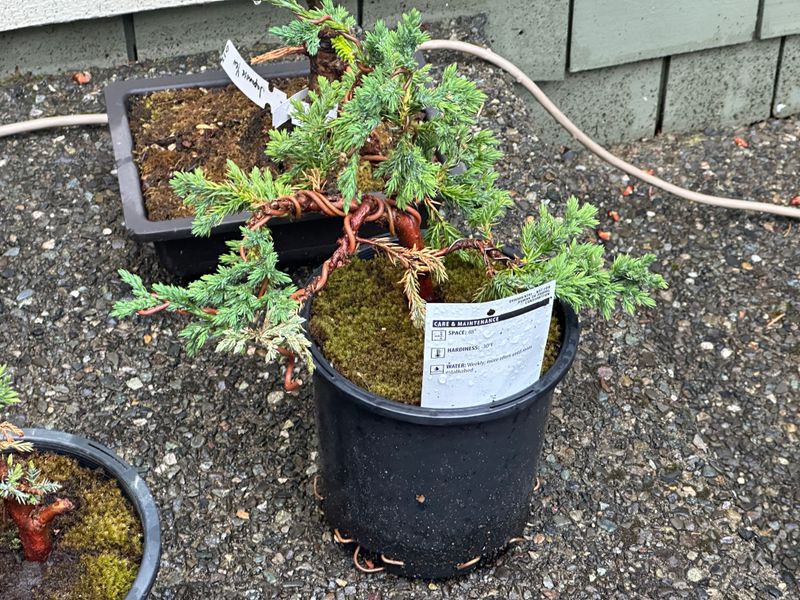
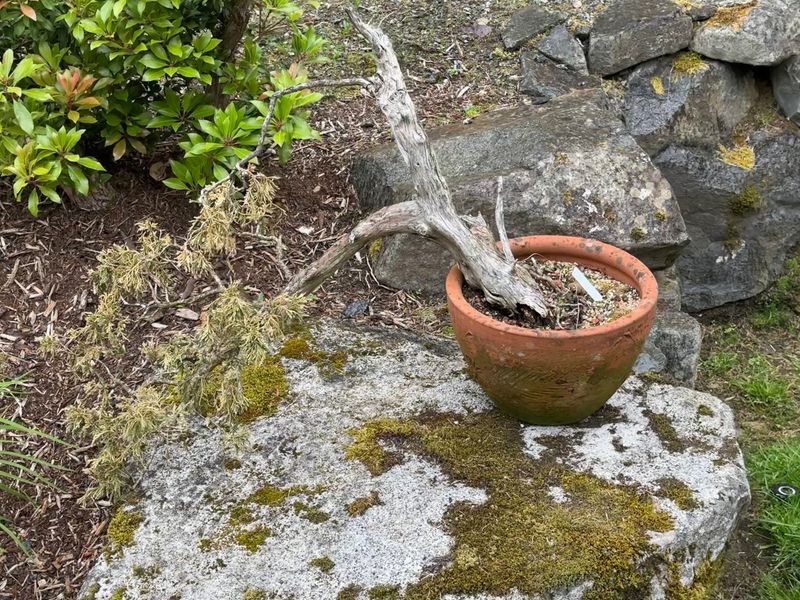
Juniperus procumbens
Procumbens Juniper Nana
Sprawling growth habit; suited for semi-cascade or ground-hugging styles.
EvergreenConifer
Now: Mid Spring
- watering
- Regular watering needed; increase frequency as foliage growth expands.
- fertilization
- Balanced fertilizer applied biweekly.
- repotting
- Only late work on very vigorous trees. Risky for weak material.
- pruning
- Avoid heavy pruning now—let new growth develop.
- wiring
- Wire new shoots gently while flexible.
- bud shoot management
- Pinch overly strong shoots to balance vigor.
- pests disease
- Increase monitoring—warmth and humidity encourage pest emergence.
- wound management
- Healing accelerates; don’t leave wounds unsealed.
- propagation
- Softwood cuttings possible toward end of this phase.
- development
- Growth surges—allow elongation for future design.
- display
- Can be displayed but avoid direct afternoon sun.
Care Guide
Placement
Full sun
Sun exposure essential to avoid legginess.
Watering
Moderate
Slight drought tolerance; do not overwater.
Fertilization
Balanced
Apply monthly; reduce dosage during heat.
Pruning
Structural in early spring, maintenance mid-season
Avoid shearing; use selective tip pruning.
Wiring
Spring or Autumn
Wire when semi-lignified; avoid breaking brittle tips.
Repotting
Every 3-5 years
Handle roots carefully; avoid over-pruning.
Propagation
Cuttings or seed
Easy to propagate from cuttings or ground-layering.
Winter: No special winter care required beyond root protection.
Summer: Water deeply; avoid letting dry completely.
Zone 8b: Watch for spider mites (Jul-Aug); Prevent rot in wet Nov-Jan
Seasonal Calendar
Late Dormancy02-15 — 03-10
- watering
- Minimal, water only when soil is fully dry. Avoid saturation.
- repotting
- Ideal window opens toward end of this phase, just before new root activity.
- pruning
- Remove any obviously dead growth from previous season.
- wiring
- Wiring possible on lignified branches; sap is dormant.
- pests disease
- Monitor for overwintering pests like spider mites or scale.
- winter protection
- Ensure tree is protected from deep frost; mulch or cold frame for insulation.
- wound management
- Old wounds can be cleaned and sealed; good time due to low pathogen activity.
- deadwood carving
- Excellent time for carving due to sap dormancy.
- development
- No active development, but a planning period for upcoming season.
Early Spring03-11 — 04-15
- watering
- Begin increasing as temperatures rise; don’t allow roots to dry completely.
- fertilization
- Begin light fertilization toward the end of this phase (low nitrogen).
- repotting
- Primary repotting window for healthy trees before root growth accelerates.
- pruning
- Structural pruning can begin before strong new growth.
- wiring
- Wiring continues; check for swelling from earlier wiring.
- pests disease
- Watch for aphids or fungal spores as moisture and temperatures increase.
- winter protection
- Start reducing any winter protection layers.
- wound management
- Seal large cuts to prevent early fungal infections.
- deadwood carving
- Fine for dry woodwork; use lime sulfur for jin/shari.
- propagation
- Take hardwood cuttings early in this window.
- development
- Begins slowly; focus on structural refinement.
Mid Spring04-16 — 05-10Now
- watering
- Regular watering needed; increase frequency as foliage growth expands.
- fertilization
- Balanced fertilizer applied biweekly.
- repotting
- Only late work on very vigorous trees. Risky for weak material.
- pruning
- Avoid heavy pruning now—let new growth develop.
- wiring
- Wire new shoots gently while flexible.
- bud shoot management
- Pinch overly strong shoots to balance vigor.
- pests disease
- Increase monitoring—warmth and humidity encourage pest emergence.
- wound management
- Healing accelerates; don’t leave wounds unsealed.
- propagation
- Softwood cuttings possible toward end of this phase.
- development
- Growth surges—allow elongation for future design.
- display
- Can be displayed but avoid direct afternoon sun.
Late Spring05-11 — 05-31
- watering
- Water thoroughly; roots now active. Allow slight drying between waterings.
- fertilization
- Continue balanced fertilization.
- pruning
- Pinch or prune back runners to maintain silhouette.
- wiring
- Wire only soft growth; avoid older branches now hardening.
- bud shoot management
- Pinch and directional trim where needed.
- pests disease
- Spider mites become more active—check undersides of foliage.
- summer protection
- Prepare shade cloth for hot summer exposure.
- deadwood carving
- Best done early in the morning; wood is dry but not brittle.
- propagation
- Softwood cuttings possible.
- development
- Focus on shoot selection and internode spacing.
- display
- Good display season—vibrant color and compact form.
Early Summer06-01 — 06-30
- watering
- Increase frequency. Watch for hydrophobic soil behavior.
- fertilization
- Shift to higher phosphorus if aiming for root strength.
- pruning
- Only light tip pruning. Avoid stress during heat.
- wiring
- Remove or adjust old wires to prevent scarring.
- bud shoot management
- Monitor extension growth—trim if needed.
- pests disease
- High vigilance—junipers are prone to spider mites and scale now.
- summer protection
- Avoid afternoon sun; apply shade cloth in heat spikes.
- wound management
- Avoid large cuts now—too hot for safe healing.
- propagation
- Semi-hardwood cuttings possible under mist.
- development
- Vigorous period—allow some shoots to extend for future taper.
Mid Summer07-01 — 08-10
- watering
- High frequency; don’t let pot dry out. Morning watering preferred.
- fertilization
- Suspend or use weak feed to avoid burning roots.
- pruning
- Minimal—only remove excess shoots or suckers.
- wiring
- Avoid unless necessary; high sap pressure increases breakage risk.
- bud shoot management
- Trim long runners only if health allows.
- pests disease
- Peak pest season—use systemic treatment only if needed.
- summer protection
- Critical—shade, wind protection, and airflow required.
- wound management
- Delay major work.
- deadwood carving
- Avoid unless shaded and humid—heat stresses wood and tools.
- development
- Do not force growth; manage health.
- display
- Not recommended—heat stress risk.
Late Summer08-11 — 08-31
- watering
- Maintain high vigilance; root rot possible with overwatering.
- fertilization
- Resume feeding with balanced or low-nitrogen formula.
- pruning
- Selective thinning may be done to restore airflow.
- wiring
- Check and remove wires that may be biting in.
- pests disease
- Second spike in spider mites or fungal outbreaks possible.
- summer protection
- Continue shade until nighttime temps cool.
Early Fall09-01 — 09-30
- watering
- Ease back slightly as temps drop. Maintain even moisture.
- fertilization
- Low nitrogen to promote woody growth and hardening off.
- pruning
- Selective thinning of interior foliage.
- wiring
- Begin wiring once summer heat breaks.
- pests disease
- Fungal issues in rain; ensure drainage and airflow.
- winter protection
- Begin planning sheltering strategies.
- summer protection
- Can be removed gradually.
- deadwood carving
- Resumes as temps drop and humidity rises.
- development
- Slow but useful for setting future growth.
- display
- Best avoided during acclimation period.
Mid Fall10-01 — 10-31
- watering
- Reduce frequency, especially with rain.
- fertilization
- Final feeding of the year early in this phase.
- pruning
- Deadwood and cleaning only—avoid pushing growth.
- wiring
- Ideal time to wire lignified branches.
- pests disease
- Inspect before winter dormancy—treat any pests.
- winter protection
- Set up wintering structures or mulch bed.
- wound management
- Cooler temps are good for wound sealing.
- deadwood carving
- Good period for stable work.
Late Fall11-01 — 11-15
- watering
- Minimal; keep just moist.
- wiring
- Wire continues on older wood.
- pests disease
- Dormant pests should be cleaned off now.
- winter protection
- Prepare for freezing temps.
Early Winter11-16 — 12-31
- watering
- Water sparingly—root metabolism is minimal.
- wiring
- Remove wires if bark is swelling.
- pests disease
- Dormant season—monitor for scale, clean foliage.
- winter protection
- Store in sheltered cold frame or out of freezing wind.
Mid Winter01-01 — 01-31
- watering
- Infrequent watering, but don’t allow rootball to desiccate.
- pests disease
- Monitor structure for overwintering insects.
- winter protection
- Maintain protection through freeze cycles.
Late Winter02-01 — 02-14
- watering
- Check more frequently as temps begin to rise.
- repotting
- Begin prepping soil mixes and containers.
- winter protection
- Ready to begin removal near end of phase.
- development
- Plan spring work—trees begin slow reactivation.