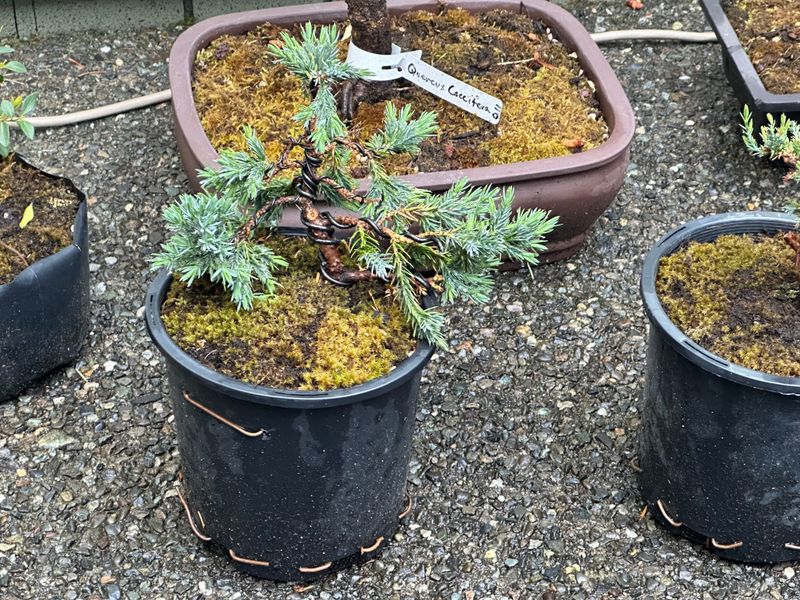
Juniperus squamata
Blue Star Juniper
Striking silvery-blue foliage; vigorous with compact form; ideal for rugged deadwood styles.
EvergreenConifer
Now: Mid Spring
- watering
- Monitor soil moisture closely as active growth begins; avoid overwatering.
- fertilization
- Feed every 2–3 weeks with low-nitrogen fertilizer to prevent leggy growth.
- repotting
- Avoid unless urgent; new roots are fragile during this phase.
- pruning
- Selective thinning of dense areas to increase light and airflow.
- wiring
- Wiring okay but check weekly for cutting in. Use guy-wires when possible.
- bud shoot management
- Pinch elongating shoots early to develop compact foliage pads.
- pests disease
- Monitor for aphids and juniper blight. Ensure good airflow.
- wound management
- Avoid major cuts during peak growth. Minor trims are fine.
- deadwood carving
- Last window before summer stress period.
- development
- Shape secondary branching, establish foliage pad tiers.
Care Guide
Placement
Full sun
Full sun keeps foliage dense and color vibrant.
Watering
Low to moderate
Well-drained soil essential to avoid root rot.
Fertilization
Balanced
Avoid late-season feeding to prevent soft growth.
Pruning
Structural in early spring, maintenance mid-season
Remove strong shoots to preserve balance.
Wiring
Spring or Autumn
Wire loosely; check frequently to avoid cutting in.
Repotting
Every 3-5 years
Best repotted before new growth starts.
Propagation
Cuttings or seed
Cuttings root in spring or early summer under mist.
Winter: Winter hardy; foliage may bronze slightly.
Summer: Good heat tolerance but prefers some humidity.
Zone 8b: Watch for spider mites (Jul-Aug); Prevent rot in wet Nov-Jan
Seasonal Calendar
Late Dormancy02-15 — 03-10
- watering
- Minimal watering; only to prevent total dryness if temperatures rise above freezing.
- wiring
- Major structural wiring possible while branches are still dormant and less brittle.
- pests disease
- Inspect for overwintering pests like spider mites and scale; clean dead debris.
- winter protection
- Ensure root protection from deep freezes; keep sheltered but ventilated.
- wound management
- Seal major cuts if any pruning or carving is done.
- deadwood carving
- Jin and shari creation/refinement can be done on dry days if not frozen.
- development
- Begin planning structure and silhouette adjustments for spring growth.
Early Spring03-11 — 04-15
- watering
- Increase slightly with rising temperatures and swelling buds.
- fertilization
- Begin balanced feeding as growth resumes.
- repotting
- Best window for repotting if needed. Root pruning should be conservative for junipers.
- pruning
- Light structural pruning is safe; avoid removing too much foliage.
- wiring
- Continue structural wiring before bark hardens. Monitor for wire bite.
- bud shoot management
- Pinch strong tips to redistribute vigor and encourage density.
- pests disease
- Watch for fungal issues in wet conditions; apply preventative treatments if needed.
- winter protection
- Remove covers gradually, especially if late frosts are unlikely.
- wound management
- Use cut paste for moderate wounds to prevent desiccation or infection.
- deadwood carving
- Excellent season to define jins and hollows before sap pressure increases.
- propagation
- Semi-hardwood cuttings can be started under protection.
- development
- Refine primary branch structure and prepare for styling season.
Mid Spring04-16 — 05-10Now
- watering
- Monitor soil moisture closely as active growth begins; avoid overwatering.
- fertilization
- Feed every 2–3 weeks with low-nitrogen fertilizer to prevent leggy growth.
- repotting
- Avoid unless urgent; new roots are fragile during this phase.
- pruning
- Selective thinning of dense areas to increase light and airflow.
- wiring
- Wiring okay but check weekly for cutting in. Use guy-wires when possible.
- bud shoot management
- Pinch elongating shoots early to develop compact foliage pads.
- pests disease
- Monitor for aphids and juniper blight. Ensure good airflow.
- wound management
- Avoid major cuts during peak growth. Minor trims are fine.
- deadwood carving
- Last window before summer stress period.
- development
- Shape secondary branching, establish foliage pad tiers.
Late Spring05-11 — 05-31
- watering
- Increase frequency but maintain cycles of moist/dry. Avoid stagnant water.
- fertilization
- Continue low-nitrogen feed. Organic options support slower, dense growth.
- pruning
- Pinch actively growing tips to maintain form and branch balance.
- wiring
- Monitor existing wire for tightness. Avoid new heavy bends now.
- bud shoot management
- Continue shoot pinching. Remove excessively vigorous shoots.
- pests disease
- Increased pest pressure—inspect inner canopy weekly.
- summer protection
- Consider partial shade or light cloth if exposed to intense sun.
- wound management
- Delay large cuts; sap flow is high.
- deadwood carving
- Avoid during vigorous sap flow unless bark is dry.
- propagation
- Cuttings possible but less ideal than spring or fall.
- development
- Refine apex, improve pad layering and ramification.
- display
- Tree can be displayed but not if undergoing major training.
Early Summer06-01 — 06-30
- watering
- Daily checks. Water deeply when soil is halfway dry.
- fertilization
- Light feeding continues. Avoid high nitrogen.
- pruning
- Only light tip pinching. Avoid structural work.
- wiring
- Avoid heavy wiring now. Monitor for biting wire marks.
- bud shoot management
- Minimal intervention. Let tips elongate slightly before pinching.
- pests disease
- Monitor for scale, aphids, and mites. Neem or horticultural oils if needed.
- summer protection
- Provide partial shade during heat waves. Avoid midday sun.
- development
- Refinement phase. Manage vigor and density.
- display
- OK for display if healthy and not in recovery.
Mid Summer07-01 — 08-10
- watering
- Increase frequency in heat. Early morning watering preferred.
- fertilization
- Stop fertilizing in peak heat to avoid stressing roots.
- pruning
- No structural pruning. Only minimal cleanup of browning tips.
- wiring
- Remove wire that’s biting. Avoid new applications.
- bud shoot management
- Minimal activity; foliage may be static in heat.
- pests disease
- High risk for mites and fungal leaf blight. Treat proactively.
- summer protection
- Shade cloth or dappled sun is ideal in extreme temps.
- propagation
- Take semi-hardwood cuttings if necessary, root with auxins.
- development
- Monitor tree health. Maintain energy balance across branches.
- display
- Avoid showing trees in distress during heat.
Late Summer08-11 — 08-31
- watering
- Adjust to cooler nights. Don’t reduce too quickly—monitor closely.
- fertilization
- Resume low-nitrogen feeding late in this window if new growth starts.
- pruning
- Clean dead tips or unwanted growth. Avoid stress cuts.
- wiring
- Can begin wiring again cautiously if new growth hardens.
- bud shoot management
- Pinch late flushes to keep pads tidy.
- pests disease
- Treat fungal outbreaks early. Watch for needle browning.
- summer protection
- Ease off shading gradually.
- development
- Begin fall refinement strategy—balance apex and lower pads.
Early Fall09-01 — 09-30
- watering
- Reduce frequency slightly with cooler temperatures, but avoid dry soil.
- fertilization
- Feed with low-nitrogen fertilizer to strengthen for winter.
- pruning
- Clean out dead or diseased interior foliage.
- wiring
- Good time to wire conifers—new growth has hardened.
- pests disease
- Inspect for scale and spider mites. Treat proactively.
- winter protection
- Start assessing winter shelter needs.
- wound management
- Treat any open cuts from cleaning or wiring.
- deadwood carving
- Safe window to resume jin/shari work.
- propagation
- Late cuttings possible but lower success. Air layering may begin.
- development
- Reinforce branch positions with wiring or guy-wires.
- display
- Tree can be displayed outdoors in stable fall weather.
Mid Fall10-01 — 10-31
- watering
- Water only when topsoil dries out—avoid saturation.
- fertilization
- Final feeding early in this window—slow-release is ideal.
- pruning
- Remove weak or unproductive shoots. Shape for silhouette.
- wiring
- Ideal time to wire or adjust existing wiring without growth pressure.
- pests disease
- Spray with dormant oil or neem to clean lingering pests.
- winter protection
- Set up winter location, especially for container insulation.
- deadwood carving
- Finish dry wood work before rains begin in earnest.
- development
- Secure all structural features before winter.
- display
- OK for display, especially outdoors in fall color.
Late Fall11-01 — 11-15
- watering
- Minimal watering—check every few days for dryness.
- pruning
- Do not prune heavily. Clean debris from foliage pads.
- wiring
- Watch existing wires as bark thickens before dormancy.
- pests disease
- Clear any fallen needles. Prevent fungal colonization.
- winter protection
- Set up mulching, insulation, and elevation for drainage.
- development
- Hold changes—tree preparing for dormancy.
Early Winter11-16 — 12-31
- watering
- Very minimal; water only during dry, unfrozen spells.
- pests disease
- Pest activity is low but monitor stored trees weekly.
- winter protection
- Maintain protected location—avoid freeze-thaw cycles.
Mid Winter01-01 — 01-31
- watering
- Water only on mild days when soil is fully dry.
- pests disease
- Inspect for rodent or fungal issues if overwintered outdoors.
- winter protection
- Ensure root protection—containers can be buried or wrapped.
Late Winter02-01 — 02-14
- watering
- Resume occasional watering if warming begins.
- repotting
- Prepare supplies for early repotting. Not yet active.
- pruning
- Light cleanup possible; no structural changes.
- wiring
- Start planning early spring wiring.
- winter protection
- Adjust ventilation in cold frames or shelters if using.
- deadwood carving
- Possible in good weather.
- development
- Begin setting schedule for early spring interventions.