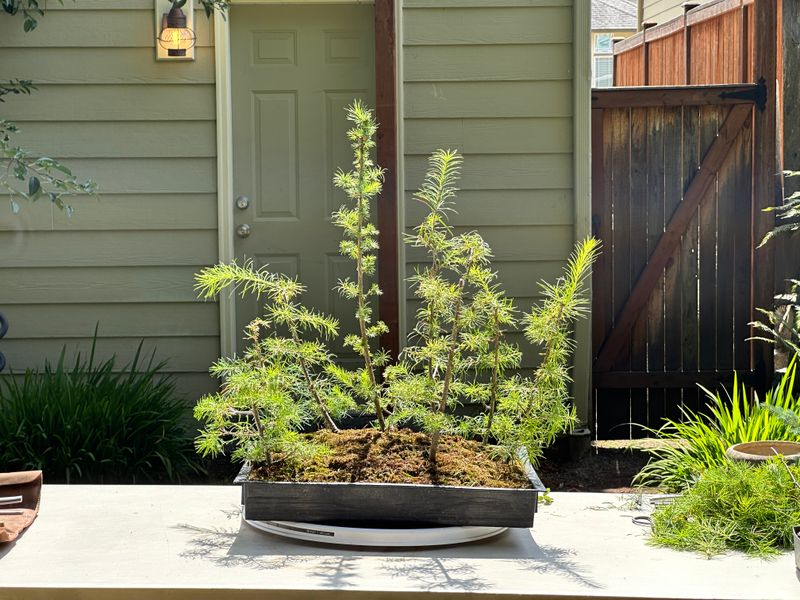
Larix kaempferi
Japanese Larch
Deciduous conifer with strong seasonal character; flexible when young; ideal for literati styles.
Now: Mid Spring
- watering
- Water regularly as leafing out accelerates.
- fertilization
- Increase feeding; use balanced fertilizer.
- repotting
- Finish any urgent repots early in this phase.
- pruning
- Light pinching to guide shape.
- wiring
- Wire tertiary branches; monitor existing wire for bite.
- bud shoot management
- Remove weak shoots from crowded areas.
- pests disease
- Monitor for fungal infections on new shoots.
- wound management
- Check healing, apply cut paste if necessary.
- deadwood carving
- Avoid during active growth.
- propagation
- Begin softwood cuttings.
- development
- Focus on balancing growth and silhouette.
- display
- Possible if tree is strong and stable.
Care Guide
Placement
Full sun
Provide full sun to encourage short internodes.
Watering
Moderate to high
Water deeply; don't allow to fully dry.
Fertilization
Balanced
Feed every 2 weeks in spring; reduce after midsummer.
Pruning
Structural in spring, maintenance in summer
Pinch candles for refinement; hard prune in early spring.
Wiring
Spring or Autumn
Very flexible when young; bark scars easily.
Repotting
Every 2-4 years
Repot in early spring before bud swell; root prune moderately.
Propagation
Cuttings or seed
Layering and softwood cuttings in spring work well.
Winter: Fully hardy but protect fine roots from ice damage.
Summer: Needs regular watering in heat; mulch helps retain moisture.
Zone 8b: Very rot-prone in winter; ensure drainage
Seasonal Calendar
Late Dormancy02-15 — 03-10
- watering
- Minimal, only to prevent desiccation.
- repotting
- Prepare tools and soil mix if repotting is needed.
- pruning
- Plan for structural pruning soon.
- wiring
- Inspect old wiring for potential bite.
- bud shoot management
- Monitor buds for early signs of swelling.
- pests disease
- Check for overwintering pests in bark and soil.
- winter protection
- Maintain shelter from deep freeze; roots are vulnerable.
- wound management
- Treat any old wounds if healing was poor.
- deadwood carving
- Safe to carve deadwood on dormant wood.
- propagation
- Prepare materials for spring cuttings.
- development
- Review development goals and timelines.
- display
- Avoid displaying during dormancy.
Early Spring03-11 — 04-15
- watering
- Increase as buds swell; avoid waterlogging.
- fertilization
- Begin light feeding with low-nitrogen fertilizer.
- repotting
- Prime window for repotting before new growth emerges.
- pruning
- Do heavy pruning now before sap flow increases.
- wiring
- Wire primary and secondary branches before buds open fully.
- bud shoot management
- Pinch strong apical buds to balance energy.
- pests disease
- Aphids and spider mites may begin appearing.
- winter protection
- Remove gradually as temps stabilize.
- wound management
- Seal cuts from major pruning.
- deadwood carving
- Continue as needed before sap starts running.
- propagation
- Graft or root softwood cuttings.
- development
- Encourage branch refinement; set branch angles now.
- display
- Avoid until growth emerges and tree is stable.
Mid Spring04-16 — 05-10Now
- watering
- Water regularly as leafing out accelerates.
- fertilization
- Increase feeding; use balanced fertilizer.
- repotting
- Finish any urgent repots early in this phase.
- pruning
- Light pinching to guide shape.
- wiring
- Wire tertiary branches; monitor existing wire for bite.
- bud shoot management
- Remove weak shoots from crowded areas.
- pests disease
- Monitor for fungal infections on new shoots.
- wound management
- Check healing, apply cut paste if necessary.
- deadwood carving
- Avoid during active growth.
- propagation
- Begin softwood cuttings.
- development
- Focus on balancing growth and silhouette.
- display
- Possible if tree is strong and stable.
Late Spring05-11 — 05-31
- watering
- Frequent but adjust to avoid root rot.
- fertilization
- Feed every 2 weeks.
- pruning
- Pinch back strong leaders to maintain profile.
- wiring
- Remove or adjust old wire.
- defoliation
- Not appropriate for larch.
- bud shoot management
- Continue shoot thinning to promote fine ramification.
- pests disease
- Mildew may appear in humid conditions.
- summer protection
- Prepare shade netting for heatwaves.
- wound management
- Monitor healing.
- propagation
- Continue softwood cuttings.
- development
- Encourage fine branch structure.
- display
- Now ideal if tree is full and balanced.
Early Summer06-01 — 06-30
- watering
- Monitor for drying; increase with heat.
- fertilization
- Use balanced fertilizer monthly.
- repotting
- Avoid repotting now.
- pruning
- Light trim to maintain silhouette.
- wiring
- Avoid new wire work in high heat.
- bud shoot management
- Allow buds to elongate naturally.
- pests disease
- Aphids, spider mites, rust—check often.
- summer protection
- Provide partial shade during heatwaves.
- wound management
- Watch for signs of stress in healing areas.
- deadwood carving
- Resume with care.
- propagation
- Attempt semi-hardwood cuttings.
- development
- Encourage movement in branches with guy wires.
- display
- Avoid peak heat displays.
Mid Summer07-01 — 08-10
- watering
- Daily or as needed; larch hates drying out.
- fertilization
- Light feeding with low nitrogen.
- pruning
- Only tip pruning if needed.
- wiring
- Avoid—branches are brittle under heat stress.
- bud shoot management
- Allow buds to rest.
- pests disease
- High risk of spider mites and mildew.
- summer protection
- Shade netting advisable.
- wound management
- Do not create wounds in extreme heat.
- deadwood carving
- Delay until cooler months.
- propagation
- Attempt layering.
- development
- Maintain silhouette only.
- display
- Limit exposure; avoid hot venues.
Late Summer08-11 — 08-31
- watering
- Adjust with rain cycles; avoid overwatering.
- fertilization
- Resume regular balanced feeding.
- pruning
- Clean up weak shoots.
- wiring
- Still not advised.
- bud shoot management
- Remove excess shoots if crowding begins.
- pests disease
- Continue pest vigilance.
- winter protection
- Begin thinking ahead.
- summer protection
- Maintain partial shading.
- wound management
- Monitor and manage heat stress indicators.
- development
- Strengthen branches through sun exposure.
- display
- Keep brief and shaded.
Early Fall09-01 — 09-30
- watering
- Reduce gradually; avoid soggy soil.
- fertilization
- Last heavy feeding of the year.
- pruning
- Prune dead or damaged growth.
- wiring
- Light wiring of hardened branches.
- bud shoot management
- Allow buds to harden for winter.
- pests disease
- Needle cast and fungal diseases possible.
- winter protection
- Prepare storage setup for winter.
- summer protection
- Remove shade cloths.
- wound management
- Begin sealing off wounds for winter.
- deadwood carving
- Resume light work.
- propagation
- Collect seeds for stratification.
- development
- Pause active refinement.
- display
- Brilliant yellow display period.
Mid Fall10-01 — 10-31
- watering
- Minimal, check weekly.
- fertilization
- Stop all feeding.
- pruning
- Remove residual weak shoots.
- wiring
- Can wire lignified wood.
- defoliation
- Not needed—larch will drop naturally.
- bud shoot management
- Observe bud health.
- pests disease
- Final pest check before winter.
- winter protection
- Set up cold frame or mulch protection.
- wound management
- Ensure all cuts sealed.
- deadwood carving
- Good time for carving before freeze.
- propagation
- Stratify seeds if collected.
- development
- Halt refinement.
- display
- Final autumn show.
Late Fall11-01 — 11-15
- watering
- Minimal.
- pruning
- None.
- wiring
- Final chance for dormant wiring.
- bud shoot management
- Monitor and document health.
- winter protection
- Move to shelter before freeze.
- deadwood carving
- OK with care.
- development
- Rest phase.
- display
- Not recommended.
Early Winter11-16 — 12-31
- watering
- Very infrequent; avoid frozen soil.
- wiring
- Avoid.
- bud shoot management
- Monitor for mold or rot.
- pests disease
- Mice may nibble bark—protect base.
- winter protection
- Full cold protection in place.
- wound management
- Avoid disturbing resting tree.
- deadwood carving
- Possible but dry wood is brittle.
- development
- Dormant.
- display
- No.
Mid Winter01-01 — 01-31
- watering
- Slightly if indoors; dry soil outdoors is fine.
- winter protection
- Maintain full dormancy shelter.
- deadwood carving
- Possible in dry indoor setting.
- development
- Resting period.
- display
- No.
Late Winter02-01 — 02-14
- watering
- Resume slightly more frequent watering.
- repotting
- Start prep.
- pruning
- Plan for structural changes.
- wiring
- Plan new wiring positions.
- bud shoot management
- Watch for swelling.
- pests disease
- Begin spring pest inspections.
- winter protection
- Adjust slowly as season ends.
- wound management
- Check older wounds.
- deadwood carving
- Resume light detail work.
- propagation
- Prepare cuttings material.
- development
- Strategize growth goals.