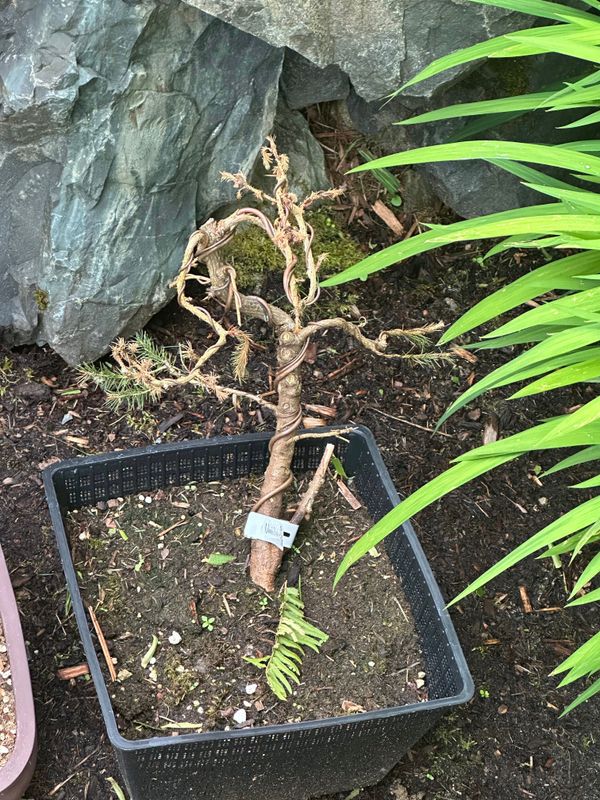
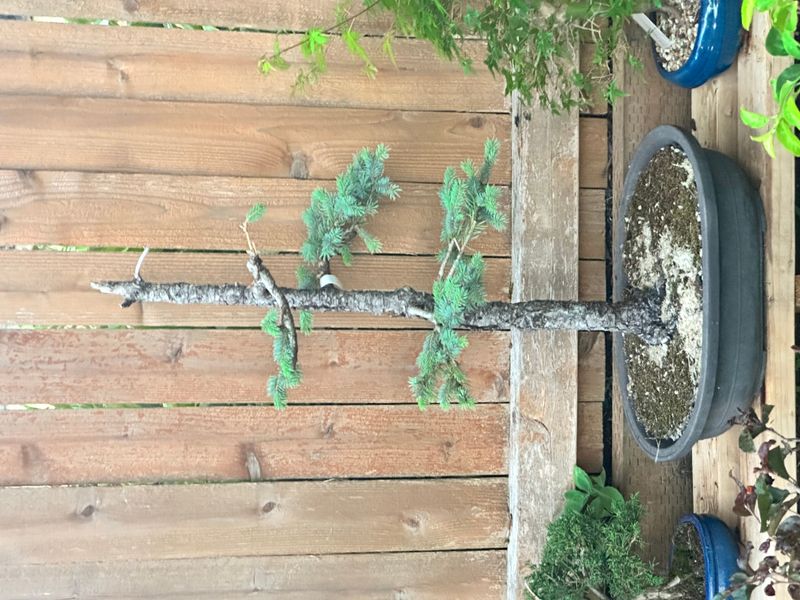
Picea pungens
Colorado Blue Spruce
Bold foliage color and strong apical dominance; ideal for rugged styles but prone to coarse growth.
Now: Mid Spring
- watering
- Monitor closely; warm days can cause rapid drying. Water when topsoil begins to dry.
- fertilization
- Continue balanced fertilizer; consider alternating organic and inorganic sources.
- pruning
- Avoid cutting new shoots unless guiding growth direction.
- wiring
- Wire only if necessary; new shoots are tender and easily damaged.
- bud shoot management
- Pinch overly vigorous shoots to balance energy across tree.
- pests disease
- Monitor aphids and needle cast fungi; treat early.
- development
- Focus on energy balancing and branch selection.
Care Guide
Placement
Full sun
Full sun enhances blue coloration.
Watering
Moderate
Allow slight drying between watering; avoid waterlogging.
Fertilization
Balanced
Avoid high nitrogen; encourages coarse growth.
Pruning
Structural in spring, maintenance in summer
Thin regularly to allow light into interior.
Wiring
Spring or Autumn
Wood is stiff; wire with care and in stages.
Repotting
Every 2-4 years
Repot every 3 years to refresh soil and manage vigor.
Propagation
Cuttings or seed
Best propagated from seed or grafted onto vigorous rootstock.
Winter: Protect from drying winds; foliage may discolor.
Summer: Tolerates heat but not drought; mulch in summer.
Zone 8b: Watch for spider mites (Jul-Aug); Prevent rot in wet Nov-Jan
Seasonal Calendar
Late Dormancy02-15 — 03-10
- watering
- Check soil weekly; water only if fully dry. Roots are semi-active as temperatures rise.
- repotting
- Ideal window for repotting older or established trees. Use well-draining conifer mix.
- pruning
- Structural pruning can be done before active growth begins.
- wiring
- Wiring is possible while branches are still dormant and pliable.
- pests disease
- Monitor for overwintering pests like adelgids or mites.
- winter protection
- Remove heavy covers but protect from late frosts.
- deadwood carving
- Perform carving before sap starts flowing for clean results.
- development
- Plan design changes and potting strategies.
Early Spring03-11 — 04-15
- watering
- Increase watering frequency as buds swell, but avoid soggy roots.
- fertilization
- Begin light fertilization with balanced or low-nitrogen fertilizer.
- repotting
- Last window for repotting before bud break.
- pruning
- Avoid major pruning as new buds are pushing; tip pinching only.
- wiring
- Continue wiring if needed, but watch for bud swelling.
- bud shoot management
- Observe for bud direction and strength to guide future development.
- pests disease
- Begin preventative spraying for fungal issues (e.g., copper or neem).
- development
- Transition to refinement or backbud encouragement based on tree age.
Mid Spring04-16 — 05-10Now
- watering
- Monitor closely; warm days can cause rapid drying. Water when topsoil begins to dry.
- fertilization
- Continue balanced fertilizer; consider alternating organic and inorganic sources.
- pruning
- Avoid cutting new shoots unless guiding growth direction.
- wiring
- Wire only if necessary; new shoots are tender and easily damaged.
- bud shoot management
- Pinch overly vigorous shoots to balance energy across tree.
- pests disease
- Monitor aphids and needle cast fungi; treat early.
- development
- Focus on energy balancing and branch selection.
Late Spring05-11 — 05-31
- watering
- Move to near-daily checks. Adjust based on wind and sun exposure.
- fertilization
- High potassium feed to support lignification of new shoots.
- pruning
- Light shoot thinning and branch selection. Avoid heavy cuts.
- wiring
- Not ideal unless branch direction demands it.
- bud shoot management
- Refine growth direction by pinching strong terminal shoots.
- pests disease
- Watch for spider mites in warming weather.
- development
- Refinement of growth pattern begins here.
Early Summer06-01 — 06-30
- watering
- Daily or twice-daily in heat. Protect soil surface with moss or mulch.
- fertilization
- Shift to low-nitrogen, high-potassium feed every 2-3 weeks.
- pruning
- Avoid major pruning; only minor cleaning of inner growth.
- pests disease
- Inspect weekly; treat with insecticidal soap or horticultural oils if needed.
- summer protection
- Provide afternoon shade to prevent needle burn.
- deadwood carving
- Safe time for carving; dry conditions help preserve features.
- development
- Continue energy balancing and silhouette refinement.
Mid Summer07-01 — 08-10
- watering
- Maintain frequent watering. Avoid wet feet by ensuring proper drainage.
- fertilization
- Resume light feeding if growth has slowed naturally.
- pests disease
- High risk period for spider mites; spray with water regularly to deter.
- summer protection
- Maintain shade and wind protection.
- wound management
- Seal fresh cuts to prevent sap loss and desiccation.
- deadwood carving
- Continue as needed but avoid carving during extreme heat.
Late Summer08-11 — 08-31
- watering
- Consistent watering schedule. Begin tapering as temperatures cool slightly.
- fertilization
- Apply one last dose of low-nitrogen fertilizer before fall dormancy.
- pests disease
- Continue monitoring and reduce spraying unless outbreaks occur.
- development
- Transition to energy storage phase. No heavy work.
Early Fall09-01 — 09-30
- watering
- Reduce frequency slightly; avoid letting the rootball dry out.
- fertilization
- Cease fertilizing by mid-month to allow wood to harden.
- pruning
- Only minor cleanup. Avoid stimulating new growth.
- pests disease
- Watch for late-season scale and fungal issues.
- winter protection
- Begin prepping overwintering location.
Mid Fall10-01 — 10-31
- watering
- Water less frequently; keep soil just moist.
- winter protection
- Move to sheltered cold frame or prepare mulch beds.
- development
- Observation and note-taking; no active styling.
Late Fall11-01 — 11-15
- watering
- Minimal watering; only during dry spells.
- pests disease
- Final check for pests before dormancy sets fully.
- winter protection
- Ensure full protection from freezing rain and wind.
Early Winter11-16 — 12-31
- watering
- Water sparingly. Monitor container moisture every 2–3 weeks.
- pests disease
- Check for root-gnawing pests in mulch or soil.
- winter protection
- Tree should be in winter storage — unheated garage, cold frame, or protected bench.
- display
- Not recommended; tree is fully dormant and vulnerable.
Mid Winter01-01 — 01-31
- watering
- Rarely needed. Only water if rootball is fully dry.
- winter protection
- Maintain insulation and avoid temperature swings.
- development
- Reflect on seasonal performance and plan major changes for spring.
Late Winter02-01 — 02-14
- watering
- Increase monitoring. Late-winter sun can desiccate soil.
- repotting
- Begin gathering materials and prepping soil mixes.
- winter protection
- Prepare to transition out of protection by mid-February.
- wound management
- Inspect old cuts and re-seal if drying out.