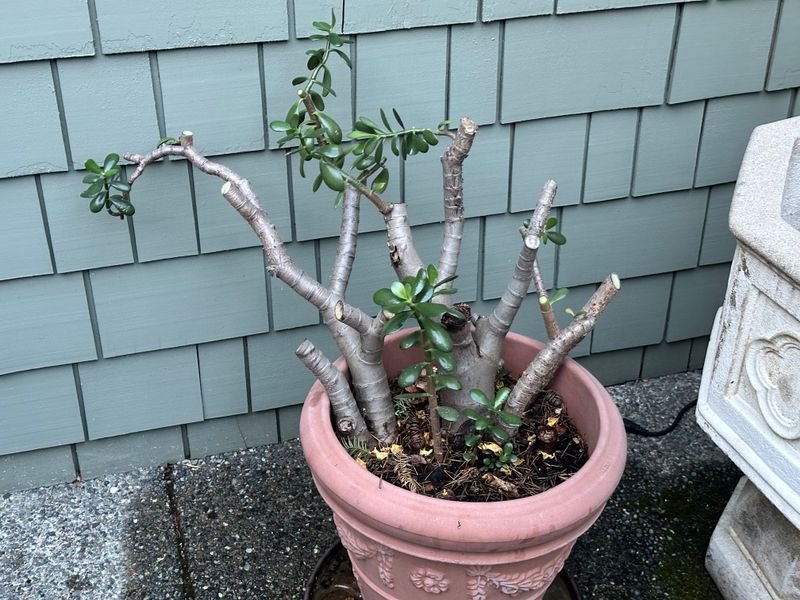
Portulacaria afra
Dwarf Jade
A succulent species ideal for beginners, with compact foliage, forgiving structure, and vigorous growth under warm conditions.
Now: Mid Spring
- watering
- Regular watering begins, allow soil to nearly dry between waterings. Resume moderate watering only when active growth starts; avoid cold, damp soil.
- fertilization
- Start light fertilization with balanced low-nitrogen formula. Begin feeding lightly if indoor warmth and light are consistent.
- pruning
- Trim back new growth for shape and ramification.
- development
- Good time to shape new leaders or refine structure.
Care Guide
Placement
Full sun to partial shade
Thrives in bright light; protect from intense midday sun in hot, dry climates.
Watering
Low
Allow soil to dry between waterings; overwatering is a common issue.
Fertilization
Low-nitrogen
Feed lightly with balanced or low-nitrogen fertilizer; reduce during dormancy.
Pruning
Any time during active growth
Backbuds freely; prune regularly to maintain shape and compact internodes.
Wiring
Spring to early summer
Use caution—branches snap easily; clip-and-grow is often preferred.
Repotting
Every 2–4 years
Repot in warm weather; avoid watering for a few days after repotting to prevent root rot.
Propagation
Cuttings
Extremely easy from cuttings; allow to callous before planting.
Winter: Keep above 40°F (5°C); susceptible to frost damage—bring indoors if needed.
Summer: Very drought-tolerant; reduce watering during heatwaves to prevent leggy growth.
Zone 8b: Overwinter indoors or in a greenhouse; avoid frost and cold wet soil
Seasonal Calendar
Late Dormancy02-15 — 03-10
- watering
- Minimal watering if indoors and actively growing. Allow soil to dry out completely.
- pests disease
- Check for mealybugs and spider mites in indoor environments.
- winter protection
- Protect from frost. Indoors or heated greenhouse if below 50°F.
Early Spring03-11 — 04-15
- watering
- Begin increasing water if new growth is observed. Still allow some drying between watering.
- repotting
- Repot if needed before active growth resumes. Only repot if greenhouse or heat mats can maintain >55°F root zone.
- pruning
- Begin structural pruning as light improves, but ensure overnight lows remain above 45°F.
- propagation
- Take cuttings for propagation; root easily in sandy mix. Start cuttings only if indoor light and bottom heat are sufficient.
Mid Spring04-16 — 05-10Now
- watering
- Regular watering begins, allow soil to nearly dry between waterings. Resume moderate watering only when active growth starts; avoid cold, damp soil.
- fertilization
- Start light fertilization with balanced low-nitrogen formula. Begin feeding lightly if indoor warmth and light are consistent.
- pruning
- Trim back new growth for shape and ramification.
- development
- Good time to shape new leaders or refine structure.
Late Spring05-11 — 05-31
- watering
- Maintain moderate watering schedule. Avoid excess moisture.
- fertilization
- Continue fertilization every 2–3 weeks.
- wiring
- Wire tender stems now if needed, but check often—grows fast. Wire cautiously. Use guy wires or spacers to avoid brittle stem snapping.
- propagation
- Cuttings still root quickly.
Early Summer06-01 — 06-30
- watering
- Regular watering begins. Let soil fully dry between sessions. Avoid watering during cool cloudy periods.
- fertilization
- Feed bi-weekly to monthly with diluted organic or cactus fertilizer during active growth.
- pruning
- Trim back long shoots; pinch to encourage branching.
- wiring
- Check for wire bite, rewire as needed.
- summer protection
- Provide partial shade during hottest afternoons.
- development
- Optimize branch placement and interior growth.
Mid Summer07-01 — 08-10
- watering
- Slightly reduce watering if temperatures exceed 90°F.
- fertilization
- Use diluted fertilizer monthly during peak heat.
- pruning
- Only light trimming; avoid major work.
- pests disease
- Monitor for pests in humid conditions.
- summer protection
- Provide shade during prolonged heatwaves (>90°F), but otherwise full sun is ideal. Watch for heat stress, use shade cloth if needed.
- development
- Encourage free growth to build trunk and branch girth. Full sun beneficial.
Late Summer08-11 — 08-31
- watering
- Maintain regular watering while preparing for slower growth.
- fertilization
- Final summer fertilization if needed.
- pruning
- Tidy shape, avoid heavy pruning.
- propagation
- Still possible and cuttings still viable, but rooting slows by month’s end.
Early Fall09-01 — 09-30
- watering
- Gradually reduce frequency as light and temps drop. Avoid watering if temps fall below 55°F.
- fertilization
- Cease feeding by end of month.
- pruning
- Minimal—focus on cleanup only. Complete final shaping by mid-September to avoid disrupting energy hardening.
- development
- Pause major training work.
Mid Fall10-01 — 10-31
- watering
- Water only when dry to depth. Avoid wet feet.
- winter protection
- Start transition indoors or to protected space. Move indoors before first frost. Target 45–55°F with bright light and ventilation.
Late Fall11-01 — 11-15
- watering
- Allow soil to stay dry longer between waterings.
- pests disease
- Check before overwintering indoors.
- winter protection
- Keep in bright, frost-free location.
Early Winter11-16 — 12-31
- watering
- Sporadic—only when completely dry. Once every 3–4 weeks. Soil must be fully dry before rewatering.
- pests disease
- Inspect regularly for spider mites or scale due to dry indoor air.
- winter protection
- Avoid cold drafts and low light. Keep cool and dry. Avoid placing near heaters or in humid rooms.
Mid Winter01-01 — 01-31
- watering
- Minimal, no fertilization needed.
- winter protection
- Keep above 50°F, max light indoors.
Late Winter02-01 — 02-14
- watering
- Begin gradual increase if buds swell or light improves.
- winter protection
- Prepare to transition outdoors once frost risk ends.
- propagation
- Begin new cuttings only if you can provide heat and grow lights. Otherwise wait for spring.