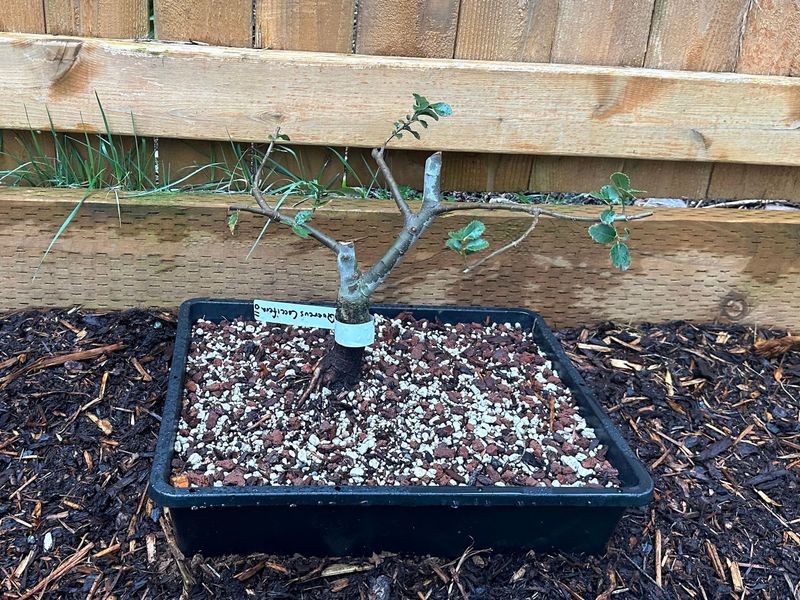
Quercus coccifera
Kermes Oak
Evergreen oak with small leaves and rugged bark; strong apical dominance.
EvergreenBroadleaf
Now: Mid Spring
- watering
- Water regularly as new foliage develops. Avoid extremes in soil moisture.
- fertilization
- Apply balanced organic fertilizer. Watch for signs of excess nitrogen (overly lush growth).
- repotting
- Do not repot unless absolutely necessary. Root disturbance now may stress tree.
- pruning
- Perform directional pruning on new shoots to set branch structure.
- wiring
- Ideal time to wire new growth before lignification. Monitor closely for wire bite.
- bud shoot management
- Pinch overly vigorous shoots. Allow weaker buds to strengthen.
- pests disease
- Monitor for caterpillars and aphids. Use neem oil or insecticidal soap if needed.
- wound management
- Continue sealing larger wounds if pruning is done.
- deadwood carving
- Avoid major carving now due to active sap flow.
- propagation
- Softwood cuttings may begin late in this phase under proper humidity control.
- development
- Focus on branch placement and ramification goals.
- display
- Tree may begin to look attractive but avoid stress from movement.
Care Guide
Placement
Full sun
Sunlight essential to reduce internode length.
Watering
Moderate
Let soil surface dry slightly between watering.
Fertilization
Balanced
Light feeding in early spring and midsummer.
Pruning
Structural in early spring, maintenance after flowering
Responsive to hard pruning; control apical growth.
Wiring
Spring or Autumn
Wire early; bark scars easily and heals slowly.
Repotting
Every 2-3 years
Repot in spring; use well-drained soil with some grit.
Propagation
Cuttings or seed
Can be grown from acorns or air layered.
Winter: Very cold hardy; protect container roots in deep freeze.
Summer: Tolerant once established; reduce water in extreme heat.
Zone 8b: Protect roots if temps < 20 F
Seasonal Calendar
Late Dormancy02-15 — 03-10
- watering
- Water sparingly, just enough to prevent the root ball from fully drying out. Avoid waterlogging.
- fertilization
- Do not fertilize. Tree is not metabolically active.
- repotting
- Prepare for repotting if needed; finalize substrate and pot choices.
- pruning
- Minor structural pruning can be done now if needed to reduce large branches before repotting.
- wiring
- Avoid wiring during cold spells. Only if structure requires correction before bud swell.
- pests disease
- Inspect for overwintering pests like scale or spider mites; clean bark if needed.
- winter protection
- Shelter from late frosts. Protect roots from freeze-thaw cycles using mulch or a cold frame.
- wound management
- Seal large pruning wounds to prevent desiccation.
- deadwood carving
- Best time for carving; wood is dry and will hold detail well.
- propagation
- Stratify acorns if attempting seed propagation.
- development
- Focus on structural assessment and planning.
- display
- Not advised; tree is dormant and lacks aesthetic presence.
Early Spring03-11 — 04-15
- watering
- Increase watering as temperatures rise and buds swell.
- fertilization
- Apply mild organic fertilizer once bud break begins.
- repotting
- Ideal window for repotting before leaves emerge fully. Prioritize trees in development.
- pruning
- Root pruning should be accompanied by canopy reduction to balance vigor.
- wiring
- Wiring can resume after repotting. Watch for wire bite as growth accelerates.
- bud shoot management
- Pinch strong terminal buds to balance growth energy.
- pests disease
- Start preventive copper-based sprays for fungal issues. Watch for aphids.
- winter protection
- Remove winter protection incrementally as lows stabilize above freezing.
- wound management
- Apply cut paste to large cuts made during repotting or structural pruning.
- deadwood carving
- Continue carving if not done; complete before sap flow increases.
- propagation
- Begin hardwood cuttings early in this window under mist if attempting.
- development
- Key period for structural shifts. Use repotting to refine nebari and root spread.
Mid Spring04-16 — 05-10Now
- watering
- Water regularly as new foliage develops. Avoid extremes in soil moisture.
- fertilization
- Apply balanced organic fertilizer. Watch for signs of excess nitrogen (overly lush growth).
- repotting
- Do not repot unless absolutely necessary. Root disturbance now may stress tree.
- pruning
- Perform directional pruning on new shoots to set branch structure.
- wiring
- Ideal time to wire new growth before lignification. Monitor closely for wire bite.
- bud shoot management
- Pinch overly vigorous shoots. Allow weaker buds to strengthen.
- pests disease
- Monitor for caterpillars and aphids. Use neem oil or insecticidal soap if needed.
- wound management
- Continue sealing larger wounds if pruning is done.
- deadwood carving
- Avoid major carving now due to active sap flow.
- propagation
- Softwood cuttings may begin late in this phase under proper humidity control.
- development
- Focus on branch placement and ramification goals.
- display
- Tree may begin to look attractive but avoid stress from movement.
Late Spring05-11 — 05-31
- watering
- Maintain consistent watering. Adjust for warm, dry spells.
- fertilization
- Reduce nitrogen slightly to harden growth before summer.
- pruning
- Tip prune new shoots to encourage back budding and tighter growth.
- wiring
- Continue wiring if not yet done. Remove any wires that may cut into soft tissue.
- bud shoot management
- Selective shoot pinching to manage shape.
- pests disease
- Leaf miners and powdery mildew may appear—treat preventatively.
- summer protection
- Start preparing shade cloth if long hot periods are expected.
- wound management
- Let small wounds air heal unless exposed to pests.
- propagation
- Softwood cuttings viable in controlled conditions.
- development
- Refine silhouette and continue structure.
Early Summer06-01 — 06-30
- watering
- Water deeply in early morning. Avoid wetting leaves in afternoon sun.
- fertilization
- Low-nitrogen or potassium-heavy fertilizer to promote lignification.
- pruning
- Avoid heavy pruning. Tip prune only. Let tree regain energy.
- wiring
- Do not wire unless necessary. Heat increases cambium sensitivity.
- defoliation
- Partial defoliation may be done to balance vigor, not full.
- bud shoot management
- Monitor for strong apical dominance; reduce as needed.
- pests disease
- Spider mites may become active—maintain humidity and inspect underside of leaves.
- summer protection
- Use 30-40% shade cloth to prevent leaf burn.
- wound management
- Keep wounds clean and protected from insects.
- deadwood carving
- Not recommended in heat due to sap and insect pressure.
- propagation
- Air layering may begin now and continue into mid-summer.
- development
- Consolidate spring growth. Avoid stress.
- display
- Avoid displaying trees under direct sun or in extreme heat.
Mid Summer07-01 — 08-10
- watering
- Monitor daily. Use chopstick method to gauge soil. Provide humidity trays if needed.
- fertilization
- Withhold fertilizer during heat waves to avoid root burn.
- pruning
- Minimal pruning; allow energy storage. Maintain form if needed.
- wiring
- Remove wires that have started to bite. Do not apply new wiring.
- bud shoot management
- Let tree rest. Avoid forcing new growth.
- pests disease
- Watch for fungal leaf spot from overhead watering. Increase airflow.
- summer protection
- Maintain shade. Watch for sun scorch on older leaves.
- wound management
- Only minor cleaning of callus areas.
- propagation
- Continue air layering if started earlier.
- development
- Rest phase. Maintain health.
Late Summer08-11 — 08-31
- watering
- Adjust as temperatures begin to moderate. Avoid letting soil dry out completely.
- fertilization
- Resume low-dose feeding if growth resumes slightly.
- pruning
- Selective thinning of interior shoots to let light in.
- bud shoot management
- Minor thinning to redirect energy for autumn growth.
- pests disease
- Check for scale and mites. Treat early before overwintering.
- summer protection
- Shade may be reduced gradually.
- development
- Begin preparing for fall structural refinement.
Early Fall09-01 — 09-30
- watering
- Reduce frequency slightly as temps drop. Maintain even moisture.
- fertilization
- Apply final round of low-nitrogen fertilizer to promote hardening.
- pruning
- Structural pruning can begin again as sap flow slows.
- wiring
- Wire lignified summer growth. Tree enters setting phase.
- pests disease
- Clean up leaf debris and monitor for fungal pathogens.
- summer protection
- Remove shade cloths entirely.
- wound management
- Seal cuts to avoid fungal ingress.
- deadwood carving
- Can resume carving with care.
- propagation
- Take semi-hardwood cuttings if temperatures allow.
- development
- Reassess silhouette for refinement.
- display
- Display may resume briefly with autumn color if present.
Mid Fall10-01 — 10-31
- watering
- Water less frequently but do not allow roots to dry out.
- pruning
- Finish any major structural changes before hard frost.
- wiring
- Monitor wire placement; remove tight wires.
- pests disease
- Remove fallen leaves to prevent overwintering pests.
- winter protection
- Begin planning protection setup.
- wound management
- Keep cuts dry. Fungal prevention sprays may be applied.
- deadwood carving
- Last chance before winter.
- development
- Tree enters dormancy; minimize intervention.
- display
- Possible short-term display indoors only.
Late Fall11-01 — 11-15
- watering
- Only water when soil is dry to the touch. Reduce frequency significantly.
- pests disease
- Final check for pests. Clean trunk and surface soil.
- winter protection
- Move to cold frame or unheated shelter. Avoid freezing roots.
Early Winter11-16 — 12-31
- watering
- Minimal watering. Check every 10-14 days indoors or sheltered.
- pests disease
- Occasional check under bark and on soil surface.
- winter protection
- Ensure roots don’t freeze. Insulate pot or place on foam board.
- deadwood carving
- Optional for dry woodwork, ideal for fine detail.
- development
- Observation phase. Plan next year’s development strategy.
Mid Winter01-01 — 01-31
- watering
- Very infrequent. Monitor soil and ensure no mold from excess humidity.
- winter protection
- Maintain root insulation and wind protection.
- deadwood carving
- Excellent time for dry carving—minimal sap flow.
- propagation
- Begin collecting and stratifying acorns if available.
Late Winter02-01 — 02-14
- watering
- Slightly increase as day length improves.
- repotting
- Prepare tools and substrate. Repotting starts next phase.
- pruning
- Evaluate structure. Mark branches for removal next phase.
- pests disease
- Spray dormant oil if pests noted earlier.
- winter protection
- Keep covered if temps drop below freezing.
- development
- Begin transitioning tree from dormancy with environmental cues.