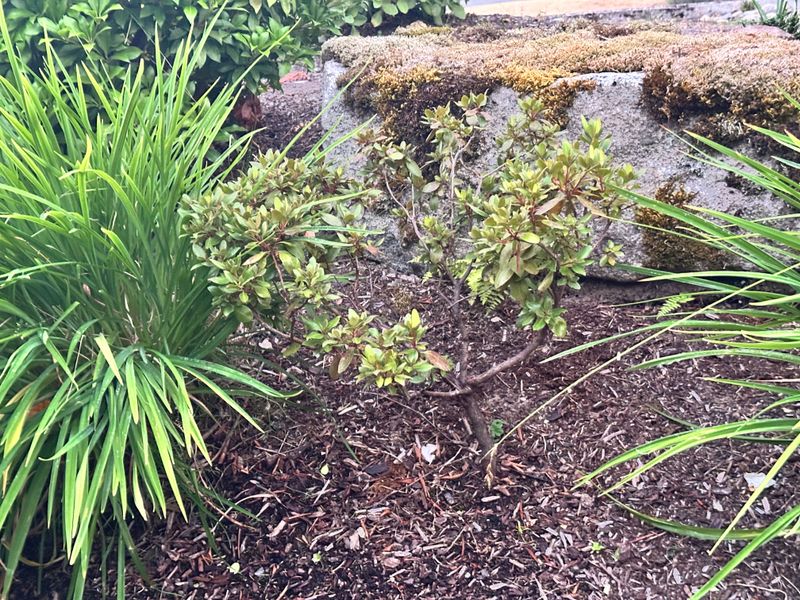
Rhododendron indicum
Satsuki Azalea
Classic flowering bonsai; evergreen with small leaves and vivid blooms; sensitive roots.
EvergreenBroadleaf
Now: Mid Spring
- watering
- Maintain consistent moisture. Avoid overhead watering on buds.
- fertilization
- Continue every 2 weeks with mild, acid-forming fertilizer.
- repotting
- Still possible early in the phase, but stress increases with leaf-out.
- wiring
- Wiring can be done cautiously if needed for refinement.
- bud shoot management
- Allow flower buds to open naturally. Do not pinch.
- pests disease
- Watch for fungal issues during wet spells. Use preventative fungicide if needed.
- propagation
- Take softwood cuttings late in this phase.
- display
- Peak flowering. Showcase tree if buds are well formed and open.
Care Guide
Placement
Partial shade
Avoid midday sun in summer - leaf burn risk.
Watering
High
Must be kept moist - use well-drained, acidic soil.
Fertilization
Balanced
Use azalea-specific fertilizer; avoid lime.
Pruning
Structural in early spring, maintenance after flowering
Trim after flowering; pinch new shoots regularly.
Wiring
Spring or Autumn
Avoid wiring thick branches - clip-and-grow preferred.
Repotting
Every 2-3 years
Repot just before spring growth; protect fine roots.
Propagation
Cuttings or seed
Semi-hardwood cuttings under mist root best.
Winter: Protect from freezing winds and root zone frost.
Summer: Keep moist; high heat increases transpiration stress.
Zone 8b: Monitor root rot during heavy rain
Seasonal Calendar
Late Dormancy02-15 — 03-10
- watering
- Water sparingly; only when soil is dry to the touch. Roots are still largely inactive.
- repotting
- Prepare tools and soil mix. Only repot if absolutely necessary.
- pests disease
- Check for overwintering pests like scale. Apply dormant oil spray on a dry, mild day.
- winter protection
- Keep in unheated shelter or cold frame. Avoid freeze-thaw cycles.
- development
- Review tree structure and plan for spring interventions.
Early Spring03-11 — 04-15
- watering
- Increase frequency as temps rise. Keep moist but not saturated.
- fertilization
- Begin using acid-based fertilizer low in phosphorus.
- repotting
- Main repotting window. Perform root work before active growth begins.
- pruning
- Remove any weak or inward-growing branches. Avoid flower buds.
- wiring
- Wire only if needed; bark is delicate.
- bud shoot management
- Protect swelling buds from frost. Avoid accidental damage.
- pests disease
- Monitor for early lace bugs. Apply insecticidal soap if needed.
- winter protection
- Begin exposing to open air gradually.
- wound management
- Seal larger cuts lightly. Avoid excessive paste.
- propagation
- Air layering can begin later in this phase.
- development
- Begin styling and structural work post-repot.
Mid Spring04-16 — 05-10Now
- watering
- Maintain consistent moisture. Avoid overhead watering on buds.
- fertilization
- Continue every 2 weeks with mild, acid-forming fertilizer.
- repotting
- Still possible early in the phase, but stress increases with leaf-out.
- wiring
- Wiring can be done cautiously if needed for refinement.
- bud shoot management
- Allow flower buds to open naturally. Do not pinch.
- pests disease
- Watch for fungal issues during wet spells. Use preventative fungicide if needed.
- propagation
- Take softwood cuttings late in this phase.
- display
- Peak flowering. Showcase tree if buds are well formed and open.
Late Spring05-11 — 05-31
- watering
- Increase frequency slightly, especially during bloom.
- fertilization
- Pause fertilizing during full bloom to prevent flower drop.
- repotting
- Too late unless tree is in distress.
- pruning
- After blooms fade, perform post-flower pruning.
- bud shoot management
- Deadhead faded blooms carefully.
- pests disease
- Monitor for aphids, caterpillars, and botrytis.
- summer protection
- Begin shading around midday if heat spikes.
- propagation
- Cuttings can be taken.
- development
- Shift from flower to foliage and structure development.
- display
- Tree can still be displayed but flowers will fade quickly.
Early Summer06-01 — 06-30
- watering
- Daily in heat; never let dry out. Rain may not be enough.
- fertilization
- Resume post-bloom feeding. Use balanced acidic feed.
- pruning
- Refine structure. Pinch back vigorous growth.
- wiring
- Apply guy wires or light bends only if necessary.
- bud shoot management
- Pinch growing shoots if internodes stretch.
- pests disease
- High risk for lace bugs. Use neem or systemic control.
- summer protection
- Partial shade during hottest part of the day.
- propagation
- Ideal time for semi-hardwood cuttings.
- development
- Maximize growth. Feed and manage vigor.
Mid Summer07-01 — 08-10
- watering
- High water demand. Water early and late in the day if hot.
- fertilization
- Continue feeding every 2-3 weeks. Use dilute liquid feed.
- pruning
- Only light pruning to maintain shape.
- bud shoot management
- Disbud excessively long shoots.
- pests disease
- Control mildew and lace bugs. Watch leaf undersides.
- summer protection
- Maintain strong airflow and filtered sun.
- propagation
- Continue soft/semi-hardwood propagation.
- development
- Mid-point growth push. Encourage fine branching.
Late Summer08-11 — 08-31
- watering
- Water deeply but slightly reduce frequency as temps dip.
- fertilization
- Stop nitrogen-rich fertilizers. Shift to low-N, high-K.
- pruning
- No major pruning. Allow tree to begin slowing.
- pests disease
- Watch for root rot signs. Soil must drain well.
- development
- Let growth harden off. Begin preparing for dormancy.
Early Fall09-01 — 09-30
- watering
- Reduce frequency slightly. Avoid keeping roots soggy.
- fertilization
- Apply final round of low-N fertilizer to support bud set.
- wiring
- Best time to wire structural branches.
- pests disease
- Clean fallen leaves to prevent fungal spore buildup.
- deadwood carving
- Can be done now; wood is drying.
Mid Fall10-01 — 10-31
- watering
- Monitor soil moisture closely. Roots still need hydration.
- pruning
- Remove suckers and overly vigorous shoots.
- wiring
- Continue wiring as needed before dormancy sets in.
- pests disease
- Clean bench and soil surface to minimize pest carryover.
- winter protection
- Prepare wintering shelter. Avoid root freeze.
- deadwood carving
- Best time for jin and uro work.
Late Fall11-01 — 11-15
- watering
- Reduce but don't stop. Evergreen leaves still transpire.
- wiring
- Remove any wires biting in before growth halts.
- pests disease
- Final pest check before full dormancy.
- winter protection
- Begin placing in cold frame or sheltered area.
Early Winter11-16 — 12-31
- watering
- Water every 10-14 days or when soil dries. Don't freeze roots.
- pests disease
- Dormant oil spray if pests were present previously.
- winter protection
- Cold frame or mulch around pot. Keep frost off roots.
Mid Winter01-01 — 01-31
- watering
- Only if completely dry. Avoid standing water and freeze.
- pests disease
- Still check monthly for overwintering insects.
- winter protection
- Maintain dormancy. Ventilate shelter on mild days.
- development
- Plan design adjustments for coming spring.
Late Winter02-01 — 02-14
- watering
- Resume light watering. Roots begin waking.
- repotting
- Prepare for early March repotting if buds swell.
- bud shoot management
- Monitor for early swelling. Don't disturb.
- winter protection
- Begin transitioning from dormancy zone.