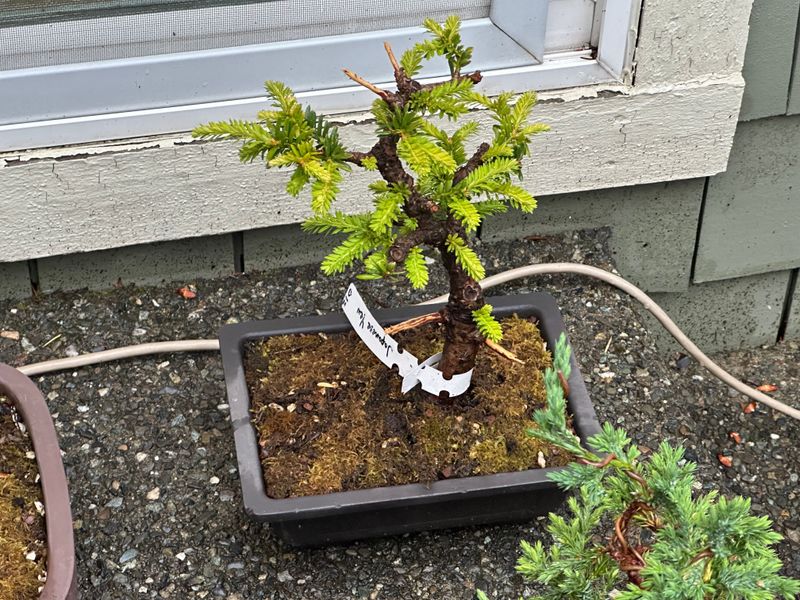
Taxus cuspidata 'Monloo'
Japanese Yew
Dense evergreen conifer with fine branching and good needle retention; excellent for formal styles.
Now: Mid Spring
- watering
- Daily check for moisture. Don’t let dry out.
- fertilization
- Continue feeding every 2 weeks with slow-release or organic fertilizer.
- pruning
- Pinch back new growth for finer ramification.
- wiring
- Adjust or remove wire to avoid scarring on soft wood.
- bud shoot management
- Direct energy by thinning overly dense new buds.
- pests disease
- Check undersides for spider mites, especially during dry spells.
- propagation
- Take hardwood or semi-ripe cuttings late in this phase.
- development
- Maximize ramification and secondary branching.
Care Guide
Placement
Full sun to partial shade
Handles both sun and partial shade well; prefers sheltered locations.
Watering
Moderate
Even moisture; tolerates some dryness once established.
Fertilization
Balanced
Slow-release in spring; avoid heavy summer feeding.
Pruning
Maintenance throughout growing season; structural in spring
Clip new growth to refine pads; responds well to pinching.
Wiring
Spring or Autumn
Wood sets well but can scar - check wire often.
Repotting
Every 3-5 years
Repot in early spring with minimal root disturbance.
Propagation
Cuttings or seed
Semi-hardwood cuttings with hormone root well.
Winter: Cold hardy; avoid drying winds in exposed areas.
Summer: Watch for spider mites in hot, dry conditions.
Zone 8b: Avoid repotting in wet winter
Seasonal Calendar
Late Dormancy02-15 — 03-10
- watering
- Water only if soil is completely dry. Monitor for freeze-thaw cycles in container.
- pests disease
- Inspect for scale and spider mites overwintering. Treat with dormant oil spray if needed.
- winter protection
- Keep protected in cold frame or unheated shelter to avoid root freeze.
- development
- Plan structural changes. Yews tolerate heavy work in spring.
Early Spring03-11 — 04-15
- watering
- Increase watering frequency as dormancy breaks.
- fertilization
- Start balanced feed (e.g., 10-10-10) to stimulate new growth.
- repotting
- Ideal window for root pruning and repotting older trees.
- pruning
- Structural pruning ideal now before bud break.
- wiring
- Wire early before lignification begins. Avoid cracking inner bark.
- bud shoot management
- Monitor for bud swelling; pinch new shoots if internodes extend.
- pests disease
- Monitor for needle blight or aphids. Spray preventive fungicide if necessary.
- winter protection
- Gradual exposure to outdoor air.
- wound management
- Apply wound sealant to large cuts to prevent drying.
- deadwood carving
- Begin jin/shari while wood is still soft.
- development
- Heavy styling and structural refinement begins.
Mid Spring04-16 — 05-10Now
- watering
- Daily check for moisture. Don’t let dry out.
- fertilization
- Continue feeding every 2 weeks with slow-release or organic fertilizer.
- pruning
- Pinch back new growth for finer ramification.
- wiring
- Adjust or remove wire to avoid scarring on soft wood.
- bud shoot management
- Direct energy by thinning overly dense new buds.
- pests disease
- Check undersides for spider mites, especially during dry spells.
- propagation
- Take hardwood or semi-ripe cuttings late in this phase.
- development
- Maximize ramification and secondary branching.
Late Spring05-11 — 05-31
- watering
- Water thoroughly in warm, dry periods.
- fertilization
- Final spring fertilization round.
- pruning
- Light cleanup and refinement pruning.
- wiring
- Check wire tension. Branches may harden quickly.
- pests disease
- Monitor for fungal needle blight. Maintain airflow.
- summer protection
- Consider partial shade in heat waves.
- deadwood carving
- Continue carving while wood is fresh.
- development
- Refinement work only. Avoid heavy stress.
Early Summer06-01 — 06-30
- watering
- Increased demand. Water early or late to avoid evaporation.
- fertilization
- Resume feeding monthly with lower nitrogen.
- pruning
- Light maintenance. Do not defoliate.
- wiring
- Wiring possible but less ideal as wood stiffens.
- bud shoot management
- Pinch back elongated summer shoots.
- pests disease
- Monitor heat-stressed trees for pest buildup.
- summer protection
- Provide shade cloth to prevent needle scorch.
- deadwood carving
- Avoid power tools in heat; work in cool periods.
- propagation
- Take semi-hardwood cuttings.
- development
- Encourage compact growth. Maintain structure.
Mid Summer07-01 — 08-10
- watering
- High heat requires consistent moisture. Mulch surface if needed.
- fertilization
- One final low-nitrogen feed can be given early.
- pruning
- Minimal intervention. Focus on health.
- pests disease
- Watch for root rot and mites in heat.
- summer protection
- Shade and airflow essential.
- propagation
- Continue softwood or semi-ripe cuttings.
Late Summer08-11 — 08-31
- watering
- Slightly reduce watering as temps begin to drop.
- fertilization
- Apply final potassium-rich fertilizer to strengthen wood.
- pests disease
- Clear any fallen debris. Fungal risks rise with damp.
- development
- Let growth mature naturally.
Early Fall09-01 — 09-30
- watering
- Check every few days. Soil drying slows.
- pruning
- Light shaping possible. Avoid heavy cuts.
- wiring
- Good time for fall wiring as branches lignify.
- pests disease
- Clean up plant surface and remove any pests before cold.
- winter protection
- Begin preparing cold frame or wind protection.
Mid Fall10-01 — 10-31
- watering
- Reduce further. Avoid root saturation from rainfall.
- wiring
- Finish any last wiring before hard dormancy.
- pests disease
- Final checks for fungal or pest issues.
- winter protection
- Move to sheltered location before frost.
Late Fall11-01 — 11-15
- watering
- Water minimally. Only if dry to 1–2" depth.
- pests disease
- Inspect bark and leaf bases for overwintering bugs.
- winter protection
- Provide mulch around pot base or elevate container.
Early Winter11-16 — 12-31
- watering
- Once every 2 weeks or when fully dry.
- pests disease
- Treat bark with dormant spray if scale was a prior issue.
- winter protection
- Maintain stable cold frame conditions.
Mid Winter01-01 — 01-31
- watering
- Water only during dry spells; avoid wet frozen soil.
- pests disease
- No active pests but inspect monthly.
- winter protection
- Ensure protection from snow loading and drying winds.
- development
- Design planning. Review photos, structure.
Late Winter02-01 — 02-14
- watering
- Increase slightly as temps warm. Prep for bud swell.
- repotting
- Begin repot prep for early March if tree is vigorous.
- winter protection
- Open shelters on warm days for airflow.