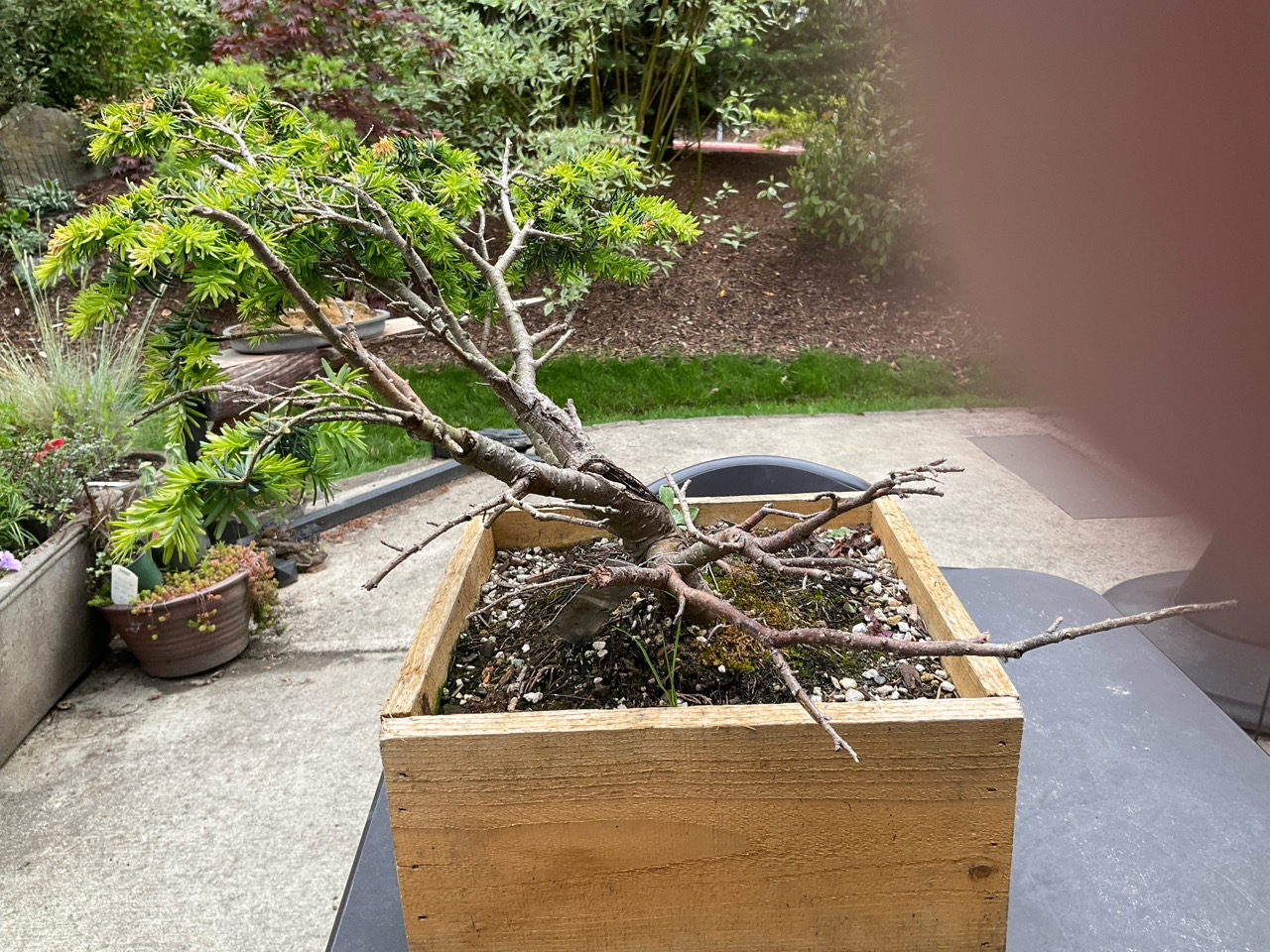
Tsuga canadensis
Canadian Hemlock
Graceful native conifer with fine needles and flowing habit; excellent for literati or natural styles.
Now: Mid Spring
- watering
- Maintain even moisture. Avoid overhead watering new shoots.
- fertilization
- Increase frequency. Organic slow-release preferred.
- repotting
- End of safe window. Avoid if candles elongate.
- pruning
- Refine silhouette lightly if needed.
- wiring
- Adjust or remove if biting occurs.
- bud shoot management
- Allow shoots to extend fully.
- pests disease
- Check undersides of foliage weekly.
- propagation
- Softwood cuttings can begin late in this phase.
- development
- Push fine ramification with shoot control.
Care Guide
Placement
Partial shade to full sun
Protect from hot afternoon sun; prefers cool roots.
Watering
Moderate to high
Keep moist but never waterlogged; sensitive to drought.
Fertilization
Balanced
Fertilize in early spring and late summer.
Pruning
Maintenance throughout growing season; structural in spring
Remove vigorous leaders; encourage lateral growth.
Wiring
Spring or Autumn
Flexible but slow to set - leave wire on longer.
Repotting
Every 3-5 years
Repot as new growth emerges; protect from wind post-repot.
Propagation
Cuttings or seed
Layering is reliable; cuttings root with care.
Winter: Protect roots in containers from deep freeze.
Summer: Provide humidity and shade to reduce needle drop.
Zone 8b: Watch for spider mites (Jul-Aug); Prevent rot in wet Nov-Jan
Seasonal Calendar
Late Dormancy02-15 — 03-10
- watering
- Minimal watering required. Water every 2–3 weeks if dry.
- repotting
- Begin evaluating rootbound trees for early spring repotting.
- pests disease
- Check for adelgid eggs or spider mites. Treat with dormant oil if necessary.
- winter protection
- Maintain wind protection. Protect from desiccation.
- deadwood carving
- Plan but don’t carve. Wood is fragile in cold.
- development
- Review silhouette and branch structure.
Early Spring03-11 — 04-15
- watering
- Begin regular watering as buds swell. Don’t allow roots to dry.
- fertilization
- Start weak acid-based feeding as new growth emerges.
- repotting
- Primary repotting time, before candles extend.
- pruning
- Remove downward/inward growth before push. Avoid hard cuts.
- wiring
- Wire primary and secondary branches before they stiffen.
- pests disease
- Watch for woolly adelgid; treat early.
- winter protection
- Begin transitioning out of cold frame.
- wound management
- Use cut paste on large wounds only.
- deadwood carving
- Initial jins can be done on dead twigs.
- development
- Early styling and shaping begin here.
Mid Spring04-16 — 05-10Now
- watering
- Maintain even moisture. Avoid overhead watering new shoots.
- fertilization
- Increase frequency. Organic slow-release preferred.
- repotting
- End of safe window. Avoid if candles elongate.
- pruning
- Refine silhouette lightly if needed.
- wiring
- Adjust or remove if biting occurs.
- bud shoot management
- Allow shoots to extend fully.
- pests disease
- Check undersides of foliage weekly.
- propagation
- Softwood cuttings can begin late in this phase.
- development
- Push fine ramification with shoot control.
Late Spring05-11 — 05-31
- watering
- Daily watering likely required. Sensitive to drying out.
- fertilization
- Maintain feeding to support foliage development.
- pruning
- Candle pinching begins late in this phase for refinement.
- wiring
- Avoid excessive bending of brittle growth.
- bud shoot management
- Pinch back overly vigorous shoots.
- pests disease
- Watch for rust or fungal spotting in humid weather.
- summer protection
- Provide partial shade midday.
- display
- Delicate foliage can make for an attractive late spring display.
Early Summer06-01 — 06-30
- watering
- Daily watering required, sometimes twice in hot spells.
- fertilization
- Continue balanced feeding. Avoid overfeeding.
- pruning
- Pinch extending shoots to maintain shape.
- bud shoot management
- Control apical dominance by tip pinching.
- pests disease
- Spider mites and adelgids active. Use horticultural oil with care.
- summer protection
- Filtered light or shade cloth essential in midafternoon.
- propagation
- Take cuttings early in this phase.
- development
- Push for fine foliage pads and backbudding.
Mid Summer07-01 — 08-10
- watering
- Monitor twice daily. Do not let dry.
- fertilization
- Switch to lower nitrogen mix to harden growth.
- pruning
- Only minor adjustments or shoot pinching.
- pests disease
- High vigilance for mites and mildew.
- summer protection
- Essential. Avoid leaf scorch with shading.
- development
- Let growth stabilize. Avoid pushing new growth now.
Late Summer08-11 — 08-31
- watering
- Reduce slightly if temperatures drop, but monitor carefully.
- fertilization
- One final feeding low in nitrogen to support buds.
- pruning
- Avoid pruning. Allow buds to harden.
- pests disease
- Clear dead foliage. Check for lingering pests.
- summer protection
- Ease off shading gradually.
Early Fall09-01 — 09-30
- watering
- Water consistently as temps drop. Hemlock dislikes dry spells.
- pruning
- Light cleanup pruning acceptable.
- wiring
- Begin fall wiring session.
- pests disease
- Clean benches and remove leaf litter.
- winter protection
- Plan protection strategy.
- deadwood carving
- Dry wood is easier to work now.
Mid Fall10-01 — 10-31
- watering
- Decrease slightly but do not allow roots to dry.
- wiring
- Continue structural wiring.
- pests disease
- Final clean-up and pest monitoring.
- winter protection
- Begin moving to protected area if early frost threatens.
Late Fall11-01 — 11-15
- watering
- Reduce to match dormancy. Do not allow desiccation.
- wiring
- Remove wire if cutting in.
- winter protection
- Place into cold frame or unheated shelter.
Early Winter11-16 — 12-31
- watering
- Water sparingly, only if dry and above freezing.
- pests disease
- Dormant pest inspection.
- winter protection
- Maintain humidity and airflow. Avoid wind exposure.
Mid Winter01-01 — 01-31
- watering
- Only during mild spells if soil is dry.
- pests disease
- Inspect foliage tips for mite activity.
- winter protection
- Keep covered but ventilate during warm days.
- development
- Sketch styling adjustments for spring.
Late Winter02-01 — 02-14
- watering
- Begin increasing water slightly as growth stirs.
- repotting
- Prep tools and soil. Repotting may begin end of this phase.
- winter protection
- Transition slowly to open air if no frost.