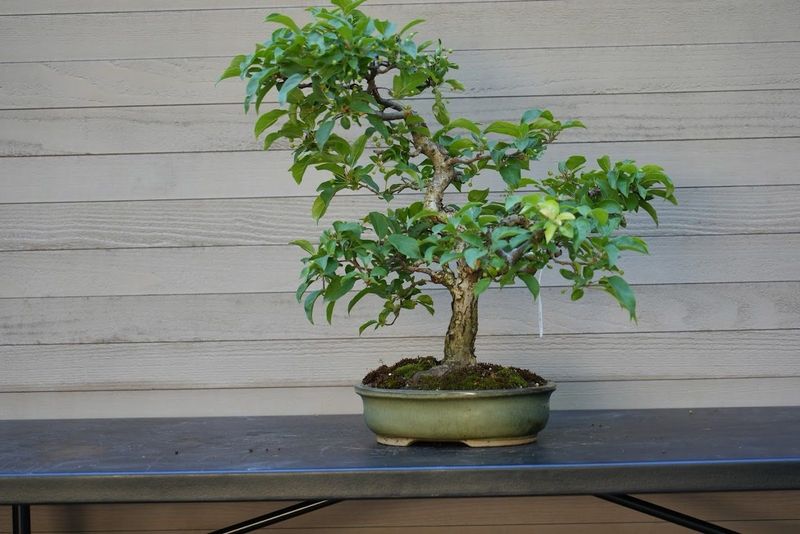
Hall's Crabapple 1
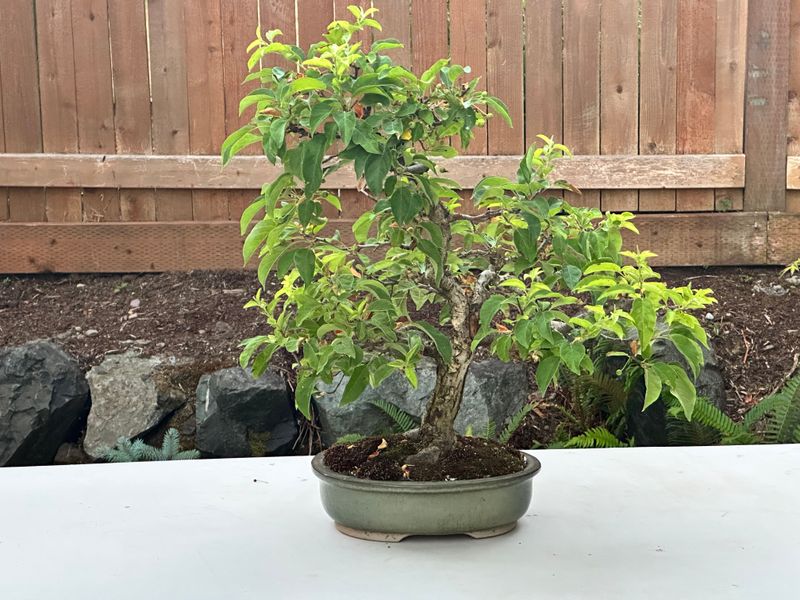
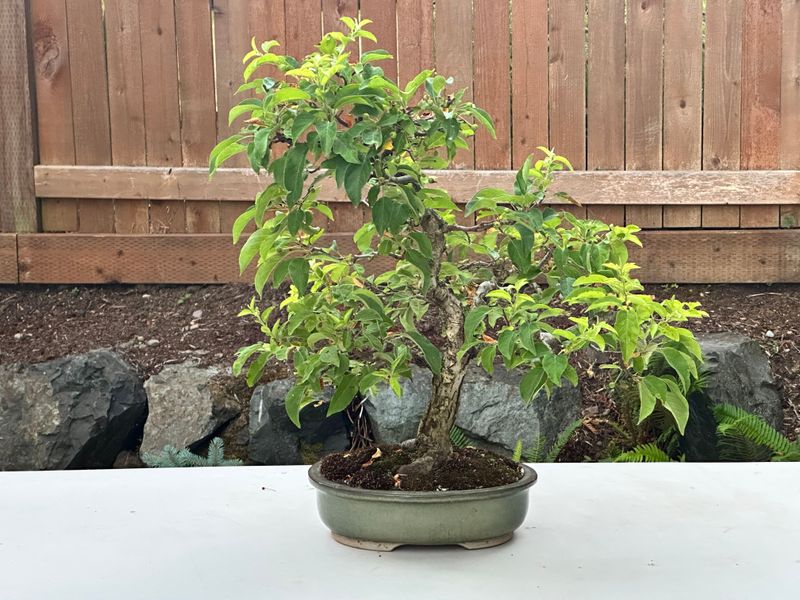
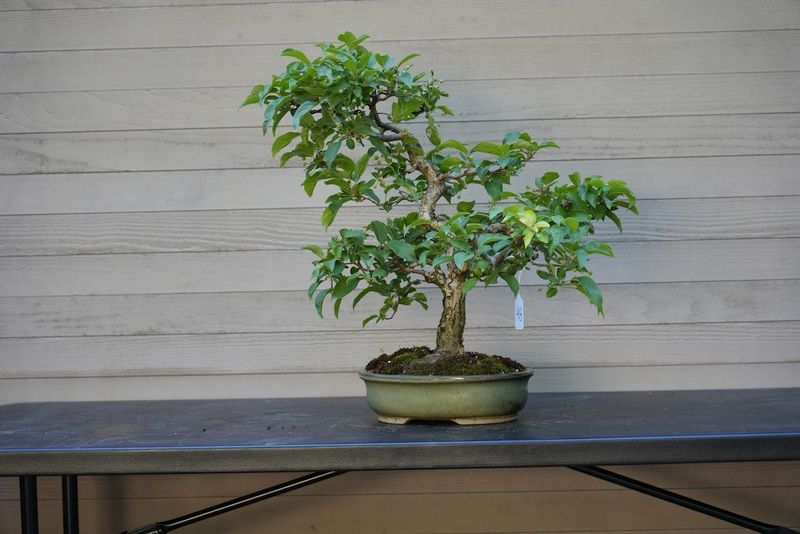
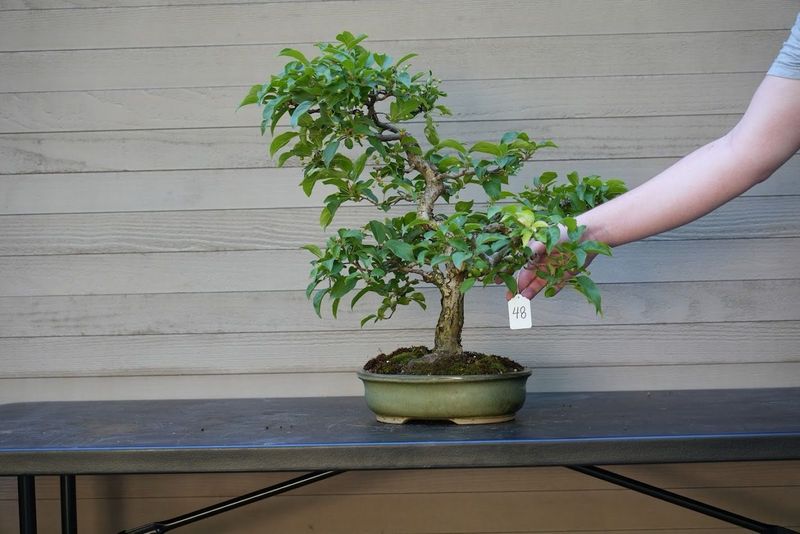
Malus halliana (Hall's Crabapple)Crabapple from 2025 PSBA Auction
Bonsai
- Acquired
- Jun 7, 2025
- Training since
- Jun 1, 2015
- Origin
- Jun 1, 2003
- Provenance
- Crabapple - Informal Upright (Submitted by Ben Nguyen). This 24" tall crabapple has been in development for 22 years, with the past 10 years spent in bonsai-specific training. Styled informally upright and planted in a Japanese production pot, it shows maturity in both structure and styling. Though no formal provenance was provided, its age and styling indicate long-term cultivation and intentional refinement. The lack of additional notes suggests the tree was submitted based on the strength of its form and established character.
This crabapple bears its years gracefully, with a strong trunk and a canopy that flows in soft tiers - suggesting wind, light, and the passage of time. Originally styled by Ben Nguyen and developed over more than two decades, the tree now stands at 24 inches tall and fills its green Japanese production pot with quiet authority.
The tree’s informal upright posture is confident but never stiff. Its bark has begun to coarsen gently, hinting at age. Ramification is solid, with branch structure that shows refinement without losing character. Its spring flowers, when they come, are delicate and fleeting - worth every wait.
There’s strength here, but also joy. The tree feels lifted, light-hearted, even playful in its movement. You can imagine it blooming wildly one season, then calmly fruiting the next. It’s a tree that wants to perform, but only for those who linger.
### A 10-Year Plan for {{title}}
This tree will need attention to rhythm. *Bloom, leaf, fruit, rest. Repeat.*
#### Years 1–2: Foundation & Health
* Stabilize root health and water balance - these first years are about finding the tree’s rhythm in my garden. Guidance from Ben B. was that this is a thirsty tree and trives when actually sitting in a water tray. My question is whether {{title}} can adjust to life on drier ground.
* Improve branch structure gradually, reducing bar branches and thick crossing limbs, but without interrupting bloom strength. Potentially encouraging budding at optimal locations for long-term development.
* Allow light fruiting, but thin clusters if the tree is overproducing. I want to preserve energy.
* Build trust with the tree: light pruning after bloom, consistent watering before fruit set, minimal wiring to prevent bite.
* Observe flowering and growth habits - which branches bloom best, which leaf first? I need to learn the tree’s language.
#### Years 3–5: Refinement & Character
* Focus on ramification: clip-and-grow to develop tighter nodes and interior buds.
* Gently expose or enhance nebari, consider root grafts.
* Support the tree's asymmetry: follow its natural tilt or lean in apex and branching. Crabapples *should* feel windswept, not perfect.
* Develop a gentle taper in each branch, and refine silhouette to feel airy and inviting. Allow any new branching to run freely to thicken as rapidly as possible, wiring as needed for cohesiveness.
* Train lower branches to hold shape, but let upper branches retain movement—this keeps it youthful and natural.
* Let it flower fully once per year and watch what the tree prioritizes when I let it speak freely.
#### Years 6–8: Artistic Identity
* Begin shaping for seasonal balance: winter structure, spring bloom, summer foliage, autumn fruit.
* Possibly upgrade to a finer, handmade pot - low-gloss or muted glaze to contrast fruit and blossom.
* Encourage slight hollowing or age if the tree allows. Old crabapples often show what they’ve lost as well as what they’ve kept.
#### Years 9–10: Show Preparation & Legacy
* Decide if it will be exhibited - not just when, but how. My hope is that this tree has four full seasons.
* Refine fruit and flower timing. Time fertilization and pruning accordingly.
* Dial in balance between energy and restraint: never too sparse, never overloaded.
Seasonal Care — Mid Spring
- watering
- Daily in warm spells; avoid extremes.
- fertilization
- Continue with low-nitrogen, high-potassium feed.
- repotting
- Finish any repotting early in this phase.
- pruning
- Light tip pruning or shoot thinning only.
- wiring
- Adjust or remove wire to avoid scarring.
- bud shoot management
- Pinch to reduce internode length.
- pests disease
- Monitor for aphids, powdery mildew, and caterpillars.
- wound management
- Inspect all prior wounds for healing progress.
- development
- Allow healthy growth to build strength.
- display
- Show blooming specimens mid-phase.
Care History4 entries
Observation
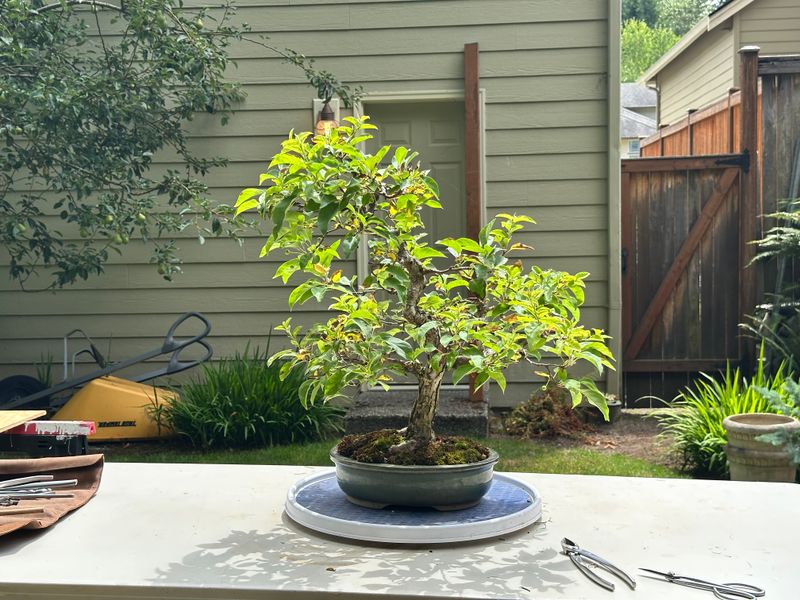
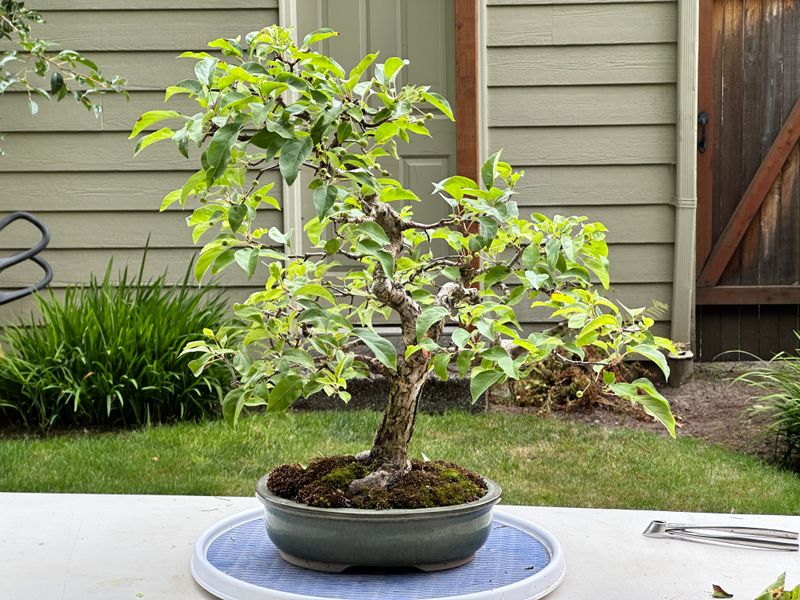
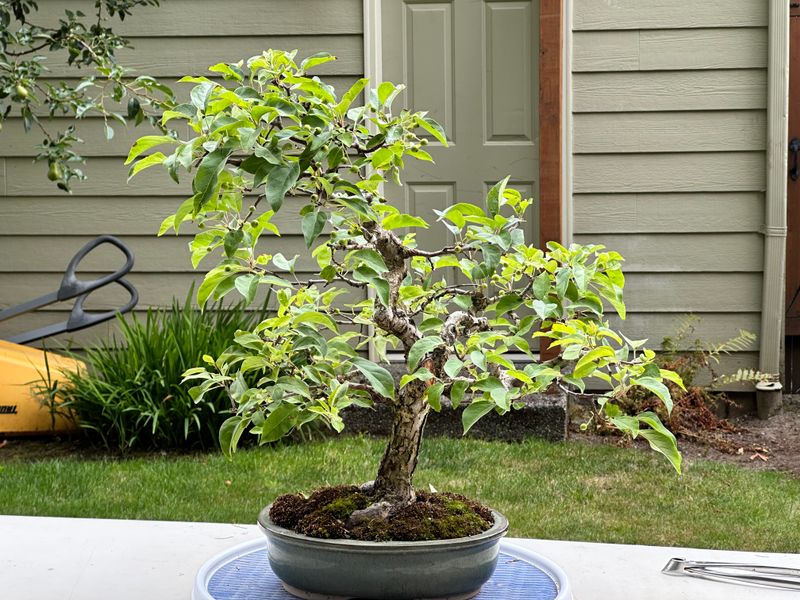
Observation
Observation
Other — Acquired
Purchased from 2025 PSBA Auction for $550 (Ben B)
BenchMalus halliana — Quick Reference
- Placement
- Full sun
- Watering
- Moderate to high
- Repotting
- Every 2-3 years
- Pruning
- Structural in early spring, maintenance mid-season
- Fertilization
- Balanced
- Wiring
- Late spring to early summer