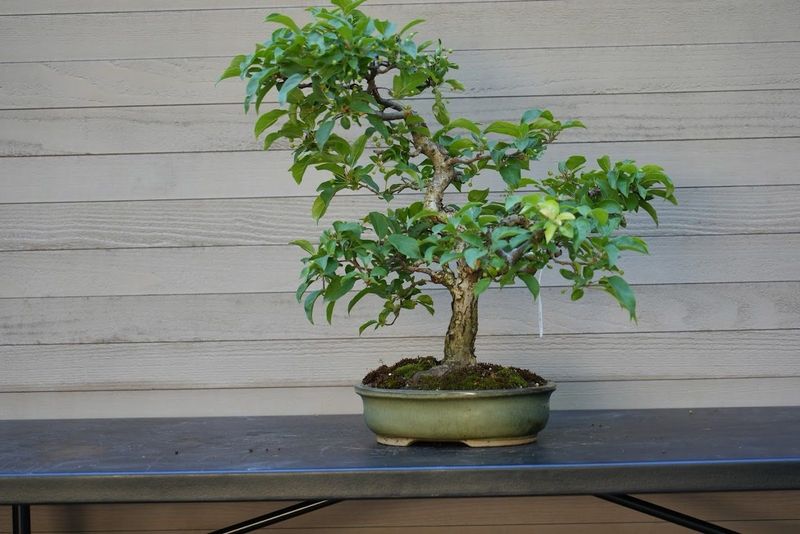
Malus halliana
Hall's Crabapple
Deciduous flowering and fruiting tree with delicate flowers and fine ramification; excellent for seasonal displays.
Now: Mid Spring
- watering
- Daily in warm spells; avoid extremes.
- fertilization
- Continue with low-nitrogen, high-potassium feed.
- repotting
- Finish any repotting early in this phase.
- pruning
- Light tip pruning or shoot thinning only.
- wiring
- Adjust or remove wire to avoid scarring.
- bud shoot management
- Pinch to reduce internode length.
- pests disease
- Monitor for aphids, powdery mildew, and caterpillars.
- wound management
- Inspect all prior wounds for healing progress.
- development
- Allow healthy growth to build strength.
- display
- Show blooming specimens mid-phase.
Care Guide
Placement
Full sun
Requires full sun for optimal flowering and fruit development.
Watering
Moderate to high
Keep moist during bloom; reduce watering after fruit set.
Fertilization
Balanced
Feed in early spring and again post-bloom for energy recovery.
Pruning
Structural in early spring, maintenance mid-season
Prune after bloom and before fruit set to preserve flowers.
Wiring
Late spring to early summer
Young branches flexible; remove wire before bite occurs.
Repotting
Every 2-3 years
Repot in early spring; reduce no more than 1/3 of roots.
Propagation
Cuttings or seed
Cuttings root slowly; air layering effective on mature wood.
Winter: Cold-hardy; ensure root protection in small pots.
Summer: Water generously during flowering and fruiting periods.
Zone 8b: Protect buds from late frost
Seasonal Calendar
Late Dormancy02-15 — 03-10
- watering
- Minimal; keep soil slightly moist but not wet.
- pruning
- Structural pruning can begin before bud swell.
- bud shoot management
- Monitor bud swelling to time repotting.
- pests disease
- Check for overwintering scale or fungus.
- winter protection
- Maintain protection from hard frost.
- wound management
- Seal pruning cuts to prevent infection.
- development
- Plan for spring structural adjustments.
Early Spring03-11 — 04-15
- watering
- Increase as growth resumes; don’t let soil dry.
- fertilization
- Begin light, balanced fertilizer after leaf-out.
- repotting
- Best window for repotting before full leaf expansion.
- pruning
- Refine structural branches; avoid hard pruning post-bloom.
- wiring
- Wire before growth hardens; be gentle with young shoots.
- bud shoot management
- Pinch vigorous shoots to redirect energy.
- pests disease
- Watch for aphids and early fungal infections.
- winter protection
- Remove protection once frost risk ends.
- wound management
- Seal all cuts to avoid fire blight risk.
- propagation
- Graft or take hardwood cuttings before full leaf-out.
- development
- Shape for structure and future ramification.
Mid Spring04-16 — 05-10Now
- watering
- Daily in warm spells; avoid extremes.
- fertilization
- Continue with low-nitrogen, high-potassium feed.
- repotting
- Finish any repotting early in this phase.
- pruning
- Light tip pruning or shoot thinning only.
- wiring
- Adjust or remove wire to avoid scarring.
- bud shoot management
- Pinch to reduce internode length.
- pests disease
- Monitor for aphids, powdery mildew, and caterpillars.
- wound management
- Inspect all prior wounds for healing progress.
- development
- Allow healthy growth to build strength.
- display
- Show blooming specimens mid-phase.
Late Spring05-11 — 05-31
- watering
- Check twice daily in heat or windy days.
- fertilization
- Switch to balanced or potassium-rich fertilizer.
- pruning
- No heavy pruning; remove water shoots and suckers.
- wiring
- Light wiring on lignifying branches.
- bud shoot management
- Remove crowded or crossing shoots.
- pests disease
- Continue insect and fungal patrols.
- summer protection
- Prepare for shade if heat spikes.
- wound management
- No major cuts unless necessary.
- propagation
- Begin softwood cuttings late in phase.
- development
- Let shoots run to thicken lower branches.
Early Summer06-01 — 06-30
- watering
- Daily or more; avoid soggy conditions.
- fertilization
- Regular low-nitrogen feeding continues.
- pruning
- Leaf and shoot pruning to encourage ramification.
- wiring
- Wire secondary branches carefully.
- defoliation
- Partial defoliation possible for refinement.
- bud shoot management
- Pinch to maintain silhouette.
- pests disease
- High risk for mildew, aphids, and caterpillars.
- summer protection
- Use shade cloth if sun-scorch occurs.
- wound management
- Avoid heavy cuts due to infection risk.
- propagation
- Softwood cuttings root well now.
- development
- Focus on refining canopy.
Mid Summer07-01 — 08-10
- watering
- Multiple times a day during heatwaves.
- fertilization
- Reduce frequency if growth slows.
- pruning
- Only minor trimming; avoid heavy stress.
- wiring
- Only clip-and-grow; avoid wire burns.
- bud shoot management
- Manage strong apex shoots.
- pests disease
- Fire blight and scale may appear—act quickly.
- summer protection
- Maintain airflow and shading.
- propagation
- Semi-hardwood cuttings can be taken.
- development
- Let energy rebuild after early pruning.
Late Summer08-11 — 08-31
- watering
- Steady, consistent watering; reduce evening water.
- fertilization
- Resumes with balanced mix as temps cool.
- pruning
- Light structural corrections; avoid shock.
- wiring
- Start checking earlier wiring for bite.
- bud shoot management
- Maintain silhouette and taper.
- pests disease
- Inspect undersides of leaves regularly.
- summer protection
- Reduce midday sun exposure.
- propagation
- Graft onto rootstock or try late cuttings.
Early Fall09-01 — 09-30
- watering
- Reduce slightly as temperatures drop.
- fertilization
- Apply potassium-rich fertilizer to harden growth.
- pruning
- Remove unwanted shoots and suckers.
- wiring
- Begin light wiring of new growth.
- bud shoot management
- Final shaping before dormancy.
- pests disease
- Watch for mildew and mites during transitions.
Mid Fall10-01 — 10-31
- watering
- Reduce frequency with leaf drop.
- fertilization
- Stop fertilizing by mid-October.
- pruning
- No heavy pruning—tree preparing for dormancy.
- wiring
- Wire visible lignified growth for winter hold.
- pests disease
- Remove fallen leaves; clean soil surface.
- winter protection
- Begin preparing mulch or protection.
Late Fall11-01 — 11-15
- watering
- Occasional watering depending on weather.
- wiring
- Finish all wiring for overwinter shaping.
- pests disease
- Inspect and clean before winter storage.
- winter protection
- Move to protected location if freezing occurs.
Early Winter11-16 — 12-31
- watering
- Only if dry; avoid saturation.
- pests disease
- Check for pests overwintering in bark.
- winter protection
- Keep roots from hard freeze.
- development
- Rest phase.
Mid Winter01-01 — 01-31
- watering
- Rare; monitor for desiccation.
- pests disease
- Occasional inspection for rot or mold.
- winter protection
- Maintain cover or mulch over pot.
- development
- Dormant phase.
Late Winter02-01 — 02-14
- watering
- Slight increase if warm, dry air persists.
- repotting
- Begin staging soil and tools for early work.
- bud shoot management
- Monitor buds for swelling—repot when they begin to move.
- winter protection
- Monitor forecast for late freezes.
- development
- Ready for seasonal reset.