Canadian Hemlock 1

042-HemlockCanadian-001

Canadian Hemlock 1

Canadian Hemlock

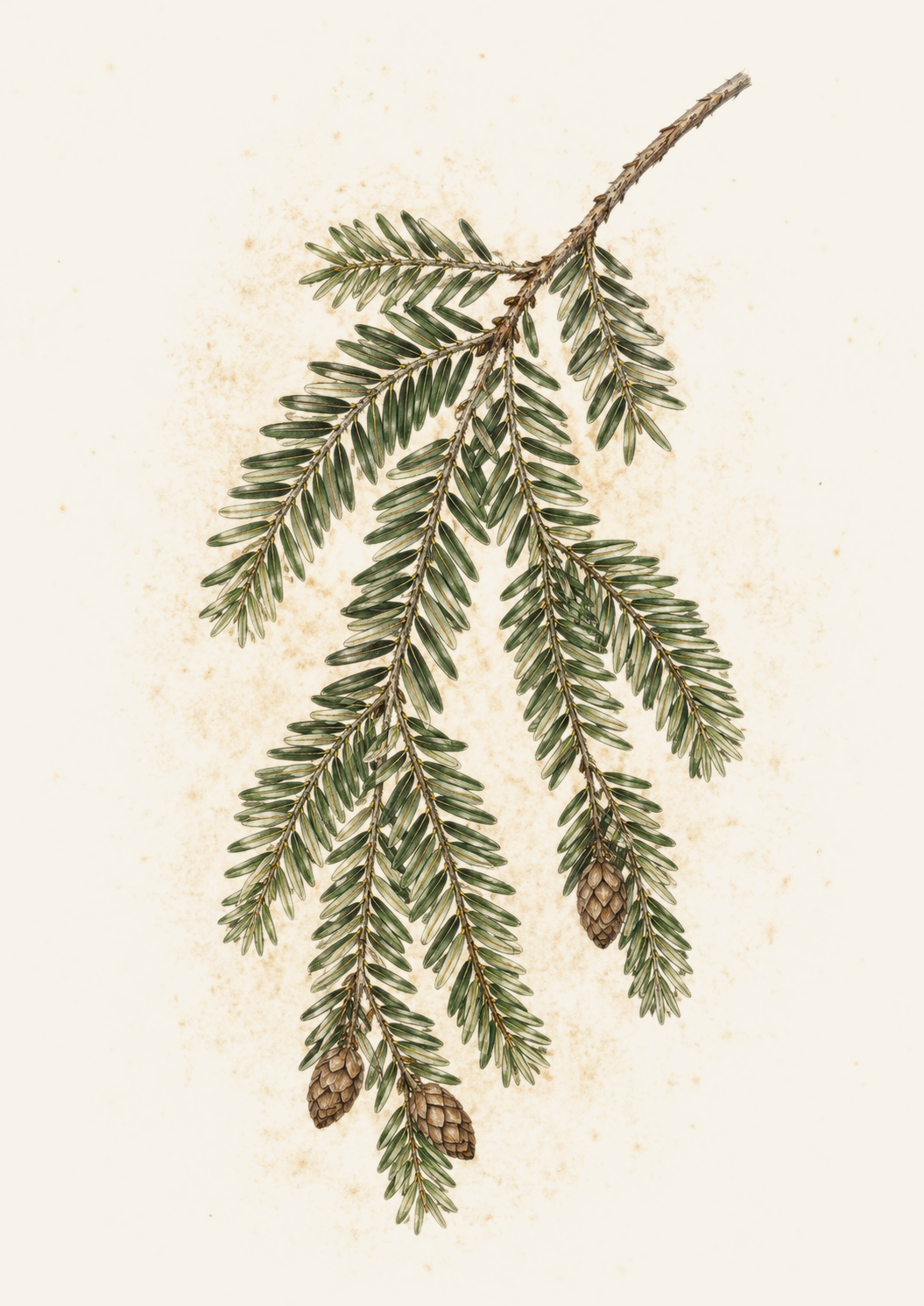
Canadian Hemlock · Tsuga canadensis

YamadoriDied

Open tasks1 overdue

Mid Summer
  • Other · Air layer added

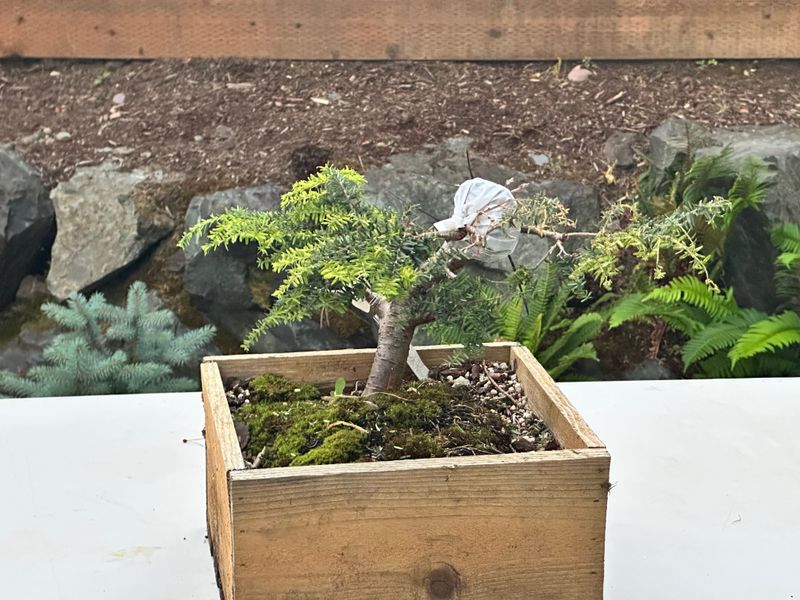
    Air layer added to top

    Overdue · 2025-09-15

Resolve overdue items mindfully — log as done, done late, deliberately skipped, or honestly missed.

Tree facts

Acquired
2024-06-01
Training started
2020-04-15
Origin
2004-03-01
Last touched
2025-10-23
Container
—
Style
—
Size
—
Exhibition-ready
No

2024 PSBA Silent Auction (Millie Russell)

Current care

Mid Summer
Watering
Monitor twice daily. Do not let dry.
Fertilization
Switch to lower nitrogen mix to harden growth.
Pruning
Only minor adjustments or shoot pinching.
Pests Disease
High vigilance for mites and mildew.
Summer Protection
Essential. Avoid leaf scorch with shading.
Development
Let growth stabilize. Avoid pushing new growth now.
View full seasonal calendar →

Recent activity

6
  • 2025-10-23Observation
    Back YardFinal air layer attempt looks to have failed. This tree didn't make it.
  • 2025-07-13Observation
  • 2025-06-09Other
    BenchAir layer added to top
  • 2025-05-31Other
    BenchMoved from hot courtyard to backyard
  • 2024-06-20Wired
    BenchYikes, this tree is super brittle, at least it is in June. Sadness.
  • 2024-06-01Acquired
    Purchased at the 2024 PSBA Silent Auction from Millie
View full timeline →

About this tree

Read full story →

This tree… oh, this tree.

{{title}} is not a bonsai in triumph, not yet. She’s a story of fragility and devotion—of heartbreak met with compassion. A tree abandoned in a silent auction, almost overlooked, and rescued not for her promise, but because no one else would. That’s how her next chapter begins.

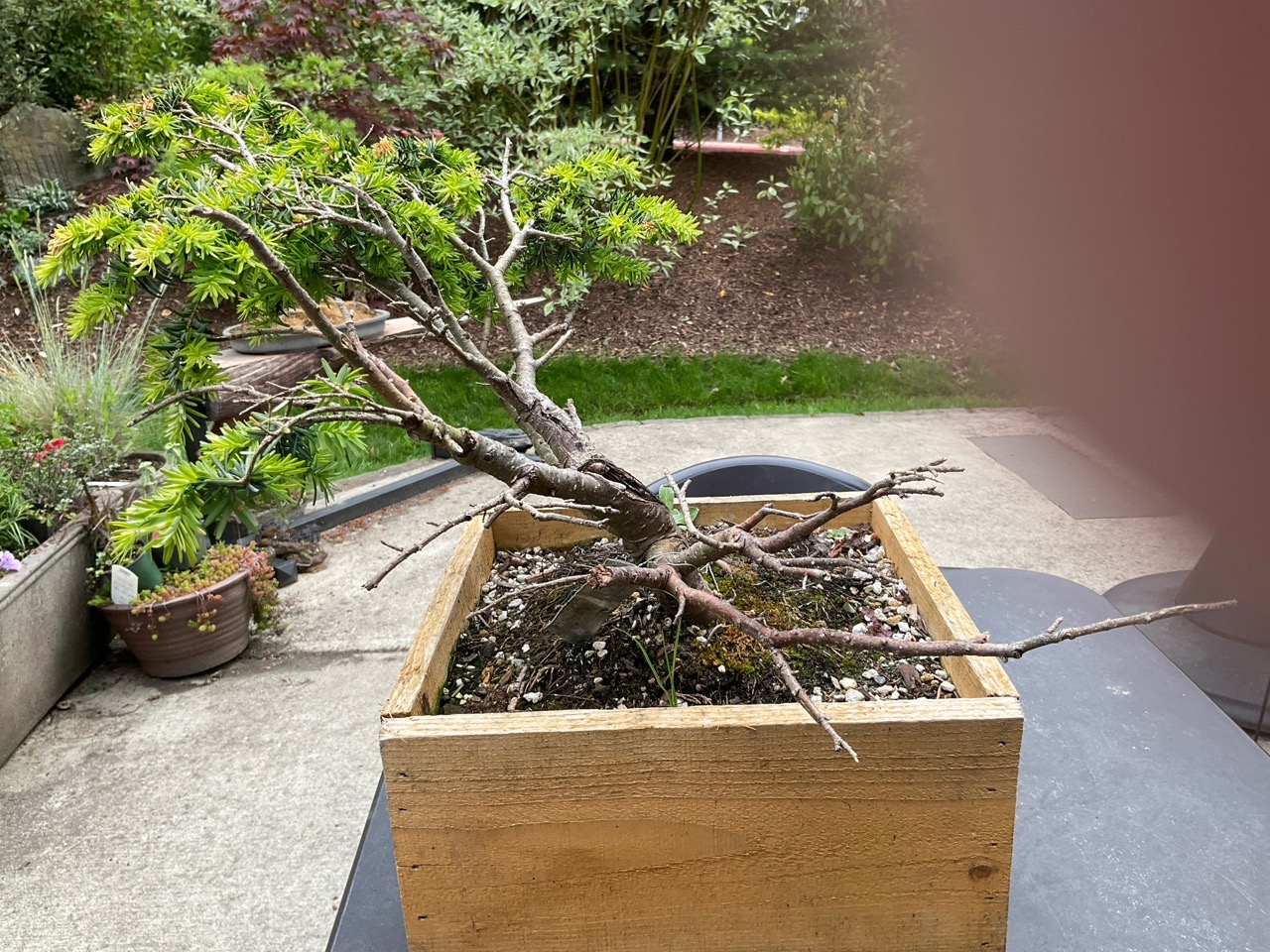
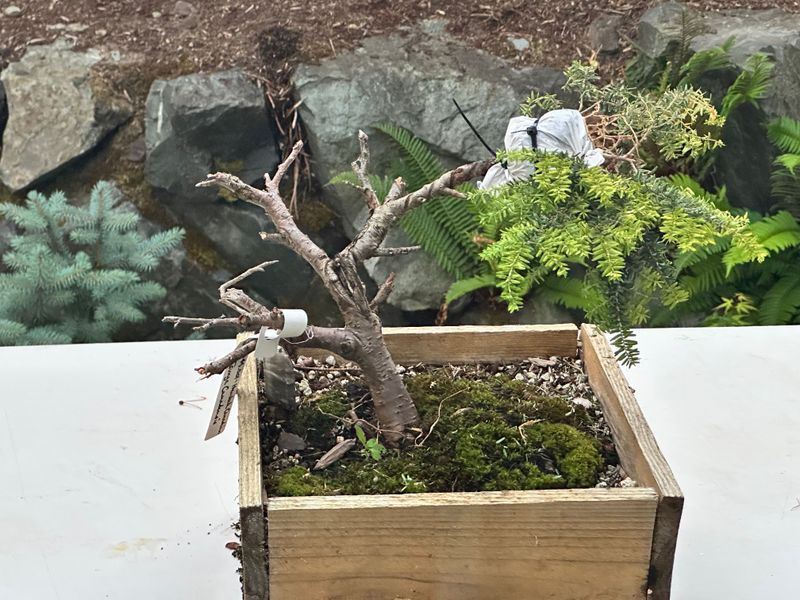
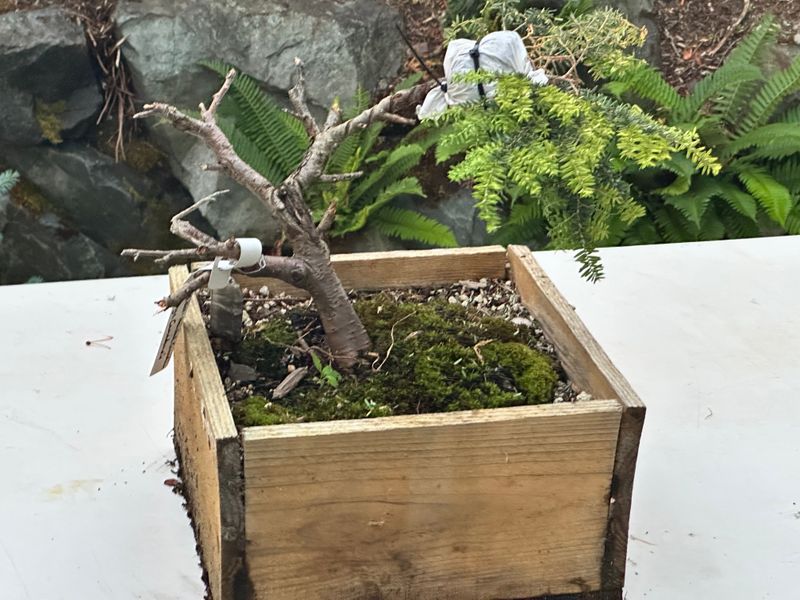
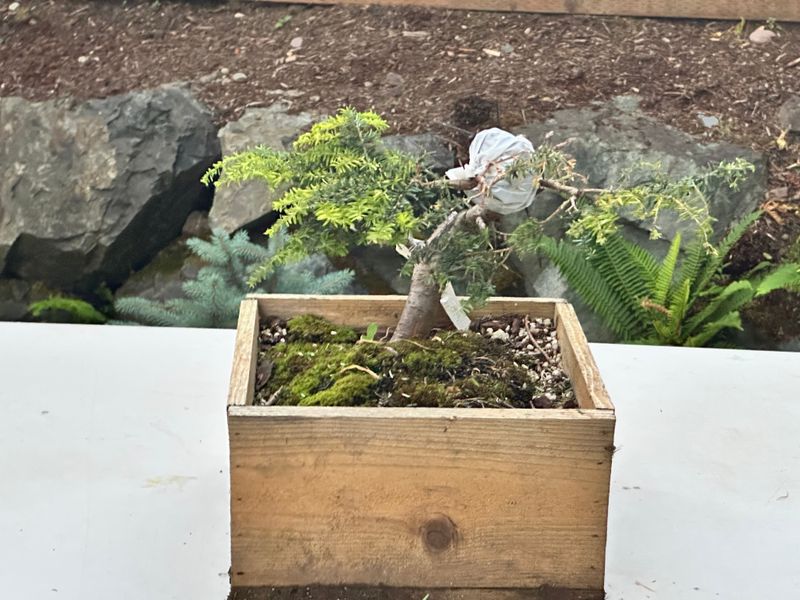
Her backstory: She’s clearly yamadori. And she’s been met with hurt and loss since collection - several of her branches were broken and dead prior to falling into my care.

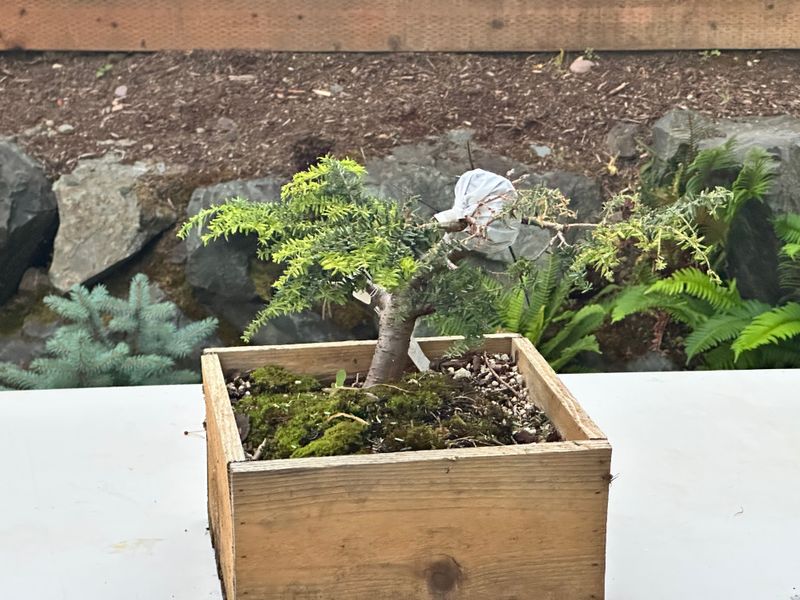
She’s brittle. Painfully so. Touch her wrong and she snaps. Two major branches lost already—not to negligence, but to how easily she breaks. Wiring feels like working with sorrow itself. And yet… there’s still green. Still push. Still life. Her last major surviving branch is now wrapped in hopeful layers of plastic and sphagnum moss, her would-be rebirth. In success perhaps I’ll call her Phoenix; otherwise Sadness. She’s not asking for perfection—just patience. Just care. Just one more chance. I’m asking for resilience and the opportunity to keep her going in a fresh start.

She’s no longer typical for her species. She doesn’t flow gracefully as she once did when spied by an intrepid yamadori hunter. She doesn’t whisper with soft needles or elegant cascade. She clings, clutches, holds on.

But maybe that’s the beauty. Not every tree tells a story of refinement. Some tell of survival. And this one, should she make it, will be more than a bonsai. She’ll be a testament. A lived experience that says: I endured.

Let that be her voice.

And in time—whether she flourishes anew, or ends her arc with grace, someone cared. In this garden of curated beauty and ancient strength, there was one quiet hemlock who got her second chance.

My 10-year plan for this fragile little lady

She is a survivor’s bonsai, and her beauty will lie not in technical mastery, but in the quiet dignity of having lived through something. That dignity is rare. And if I’m lucky (and patient) it’s what she’ll show the world.

She’s mine now. But really, I’m hers. And I’m all she’s got. Slow and steady. This tree has earned her pacing, and deserves nothing rushed or forced. The next ten years aren’t about what she becomes in show terms—they’re about what she recovers, reclaims, and reveals.

Here’s how I’d lay it out, not as a fixed path, but as a rhythm to dance with:

Years 1–2 (2025–2026): Recovery and Air Layering

  • Goal: Survival. Root development. Quiet strength.
  • I’ll let the air layer run untouched until late spring 2026, even if roots form sooner. Hemlocks are notoriously slow to commit, and I want a strong, healthy system before any separation.
    • I just have to work out how to deal with frost over winter. Research to do…
  • Mist in hot weather, maintain even moisture, and protect from wind. The canopy’s small, but the roots are the priority now.
  • Keep her on the ground partialy under the bench, out of the hottest rays of the sun. Direct morning light only.
  • Once roots are healthy and vigorous (watching for push in the branch above the layer), I’ll sever the air layer and pot it up without disturbing the moss, letting her adjust gradually.
  • No wire. No styling. No “next step.” Only health.

Years 3–5 (2027–2029): Establishment and Light Direction

  • Once the new air-layered tree is potted and strong, start basic clip-and-grow shaping, just enough to encourage structure and direction.
  • Select 2–3 primary branches that hint at a future design, and encourage their growth with minimal pruning.
  • Remove weak or awkward buds gradually, not to “style,” but to reduce competition and prevent clutter.
  • Let the tree decide where it wants to push and where it doesn’t. She’s been through enough and I don’t believe I’ll need to force balance or symmetry. Embrace her quirks.

Years 6–8 (2030–2032): Architecture and Identity

  • Begin to refine taper and movement through continued clip-and-grow (not for control, but for encouragement).
  • Introduce negative space: remove what interrupts flow.
  • Thinking about her voice. Is she a literati whispering of wind? A low slant telling of heavy snows? A proud informal upright? Her growth will suggest the answer.
  • If a branch rebels but thrives, I’ll honor it. Let her choose her shape.

Years 9–10 (2033–2034): Refinement Without Expectation

  • By now, her form will speak clearly. I’ll have branch density building, texture returning to bark, and a story written in calligraphy, not block letters.
  • I’ll focus on light maintenance pruning, building in short branchlets and gently shortening extensions, still without wire. She was once wild and resists domestication.
  • Consider a gentle pot upgrade, if roots allow, and only to something that offers visual harmony. Should she get this far, she should shine through.
  • I’ll try to remember to sit with her more than I style her. Let her be a teacher.
  • Timeline
  • Photos
  • Story

Timeline

6 events

Tree died2025-12-01
2025
  • 2025-10-23 07:45Observation
    Back Yard

    Final air layer attempt looks to have failed. This tree didn't make it.

  • 2025-07-13 21:03Observation
    • Canadian Hemlock 1 — Observation — stereoscopic 3D
    • Canadian Hemlock 1 — Observation — 2025-07-13
    • Canadian Hemlock 1 — Observation — 2025-07-13
    • Canadian Hemlock 1 — Observation — 2025-07-13
  • 2025-06-09 19:00OtherAir layer added
    Bench

    Air layer added to top

    Follow-up due 2025-09-15 · Overdue

  • 2025-05-31 19:00OtherRelocated
    Bench

    Moved from hot courtyard to backyard

2024
  • 2024-06-20 19:00Wired
    Bench

    Yikes, this tree is super brittle, at least it is in June. Sadness.

  • 2024-06-01 22:00Acquired

    Purchased at the 2024 PSBA Silent Auction from Millie

    • Canadian Hemlock 1 — Acquired — 2024-06-01

Photos

July 2025

  • Canadian Hemlock 1 — Observation — 2025-07-14
  • Canadian Hemlock 1 — Observation — 2025-07-14
  • Canadian Hemlock 1 — Observation — 2025-07-14
  • Canadian Hemlock 1 — Observation — 2025-07-14 — stereoscopic 3D
    ◉ 3D

May 2024

  • Canadian Hemlock 1 — cover photoCover

Story

This tree… oh, this tree.

{{title}} is not a bonsai in triumph, not yet. She’s a story of fragility and devotion—of heartbreak met with compassion. A tree abandoned in a silent auction, almost overlooked, and rescued not for her promise, but because no one else would. That’s how her next chapter begins.

Her backstory: She’s clearly yamadori. And she’s been met with hurt and loss since collection - several of her branches were broken and dead prior to falling into my care.

She’s brittle. Painfully so. Touch her wrong and she snaps. Two major branches lost already—not to negligence, but to how easily she breaks. Wiring feels like working with sorrow itself. And yet… there’s still green. Still push. Still life. Her last major surviving branch is now wrapped in hopeful layers of plastic and sphagnum moss, her would-be rebirth. In success perhaps I’ll call her Phoenix; otherwise Sadness. She’s not asking for perfection—just patience. Just care. Just one more chance. I’m asking for resilience and the opportunity to keep her going in a fresh start.

She’s no longer typical for her species. She doesn’t flow gracefully as she once did when spied by an intrepid yamadori hunter. She doesn’t whisper with soft needles or elegant cascade. She clings, clutches, holds on.

But maybe that’s the beauty. Not every tree tells a story of refinement. Some tell of survival. And this one, should she make it, will be more than a bonsai. She’ll be a testament. A lived experience that says: I endured.

Let that be her voice.

And in time—whether she flourishes anew, or ends her arc with grace, someone cared. In this garden of curated beauty and ancient strength, there was one quiet hemlock who got her second chance.

My 10-year plan for this fragile little lady

She is a survivor’s bonsai, and her beauty will lie not in technical mastery, but in the quiet dignity of having lived through something. That dignity is rare. And if I’m lucky (and patient) it’s what she’ll show the world.

She’s mine now. But really, I’m hers. And I’m all she’s got. Slow and steady. This tree has earned her pacing, and deserves nothing rushed or forced. The next ten years aren’t about what she becomes in show terms—they’re about what she recovers, reclaims, and reveals.

Here’s how I’d lay it out, not as a fixed path, but as a rhythm to dance with:

Years 1–2 (2025–2026): Recovery and Air Layering

  • Goal: Survival. Root development. Quiet strength.
  • I’ll let the air layer run untouched until late spring 2026, even if roots form sooner. Hemlocks are notoriously slow to commit, and I want a strong, healthy system before any separation.
    • I just have to work out how to deal with frost over winter. Research to do…
  • Mist in hot weather, maintain even moisture, and protect from wind. The canopy’s small, but the roots are the priority now.
  • Keep her on the ground partialy under the bench, out of the hottest rays of the sun. Direct morning light only.
  • Once roots are healthy and vigorous (watching for push in the branch above the layer), I’ll sever the air layer and pot it up without disturbing the moss, letting her adjust gradually.
  • No wire. No styling. No “next step.” Only health.

Years 3–5 (2027–2029): Establishment and Light Direction

  • Once the new air-layered tree is potted and strong, start basic clip-and-grow shaping, just enough to encourage structure and direction.
  • Select 2–3 primary branches that hint at a future design, and encourage their growth with minimal pruning.
  • Remove weak or awkward buds gradually, not to “style,” but to reduce competition and prevent clutter.
  • Let the tree decide where it wants to push and where it doesn’t. She’s been through enough and I don’t believe I’ll need to force balance or symmetry. Embrace her quirks.

Years 6–8 (2030–2032): Architecture and Identity

  • Begin to refine taper and movement through continued clip-and-grow (not for control, but for encouragement).
  • Introduce negative space: remove what interrupts flow.
  • Thinking about her voice. Is she a literati whispering of wind? A low slant telling of heavy snows? A proud informal upright? Her growth will suggest the answer.
  • If a branch rebels but thrives, I’ll honor it. Let her choose her shape.

Years 9–10 (2033–2034): Refinement Without Expectation

  • By now, her form will speak clearly. I’ll have branch density building, texture returning to bark, and a story written in calligraphy, not block letters.
  • I’ll focus on light maintenance pruning, building in short branchlets and gently shortening extensions, still without wire. She was once wild and resists domestication.
  • Consider a gentle pot upgrade, if roots allow, and only to something that offers visual harmony. Should she get this far, she should shine through.
  • I’ll try to remember to sit with her more than I style her. Let her be a teacher.

Current care

Mid Summer
Watering
Monitor twice daily. Do not let dry.
Fertilization
Switch to lower nitrogen mix to harden growth.
Pruning
Only minor adjustments or shoot pinching.
Pests Disease
High vigilance for mites and mildew.
Summer Protection
Essential. Avoid leaf scorch with shading.
Development
Let growth stabilize. Avoid pushing new growth now.
View full seasonal calendar →

Recent activity

6
  • 2025-10-23Observation
    Back YardFinal air layer attempt looks to have failed. This tree didn't make it.
  • 2025-07-13Observation
  • 2025-06-09Other
    BenchAir layer added to top
  • 2025-05-31Other
    BenchMoved from hot courtyard to backyard
  • 2024-06-20Wired
    BenchYikes, this tree is super brittle, at least it is in June. Sadness.
  • 2024-06-01Acquired
    Purchased at the 2024 PSBA Silent Auction from Millie
View full timeline →

Paths onward

BackThe Canadian Hemlock benchAll the benches, by species or by rank.ReferenceCanadian Hemlock, the speciesCare profile, seasonal calendar, placement and watering notes.TodayThe AlmanacThis tree has 1 open follow-up — see it with today’s asks.
Mossy Spot · PNW · Zone 8bgrow slowly
Mossy Spot❧The Garden❧Canadian Hemlock❧Canadian Hemlock 1
81° Clear · Mid Summer
Sign in